1/1

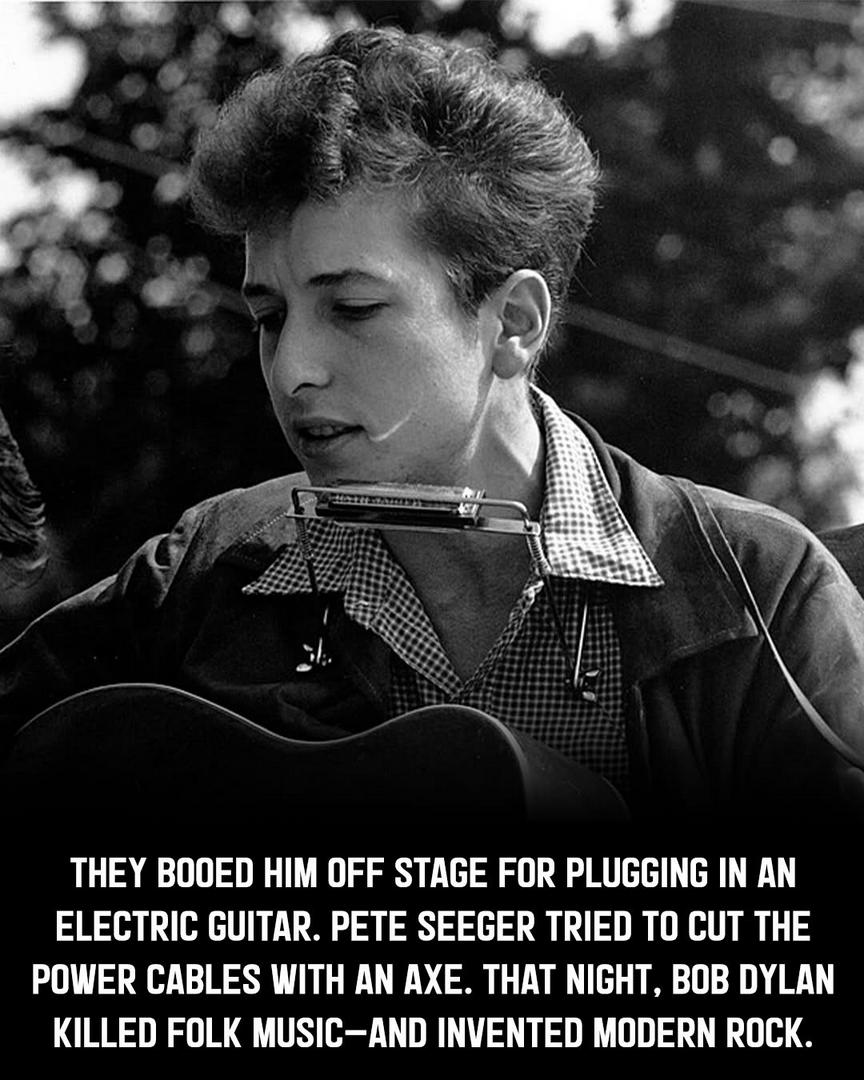
They booed him off stage for plugging in an electric guitar. Pete Seeger tried to cut the power cables with an axe. That night, Bob Dylan killed folk music—and invented modern rock. July 25, 1965. Newport Folk Festival, Rhode Island. Bob Dylan was 24 years old and already a legend. For three years, he'd been the voice of a generation—the folk music poet who wrote "Blowin' in the Wind" and "The Times They Are a-Changin'," songs that became anthems for civil rights and anti-war movements. Folk purists worshipped him. They saw him as their prophet, their messiah, the keeper of an authentic American tradition stretching back to Woody Guthrie. Folk music had rules. Acoustic guitars only. Traditional structures. Songs about social justice, working people, and political struggle. No commercial compromise. No sellout moves. Dylan had followed those rules. But by 1965, he was listening to the Beatles, the Rolling Stones, and the electric blues that moved his body in ways acoustic folk never could. He wanted to plug in. He wanted to turn up the volume. He wanted to rock. But the folk community saw electric music as corporate corruption—the enemy of authentic expression, the sound of shallow pop commercialism. Newport Folk Festival was their cathedral. Their sacred space. The place where folk music remained pure. Dylan was scheduled to headline Backstage, Dylan rehearsed with a rock band—Mike Bloomfield on electric guitar, Al Kooper on organ, Jerome Arnold on bass, Sam Lay on drums. They were loud. Distorted. Raw. Pete Seeger, the godfather of American folk music, heard the sound check and was horrified. He reportedly told festival organizers the music was too loud, too distorted, that it was ruining everything folk music stood for. Some accounts say he threatened to cut the power cables with an axe. Others say he actually grabbed an axe and had to be physically restrained.
2026-05-26
write a comment...