1/1

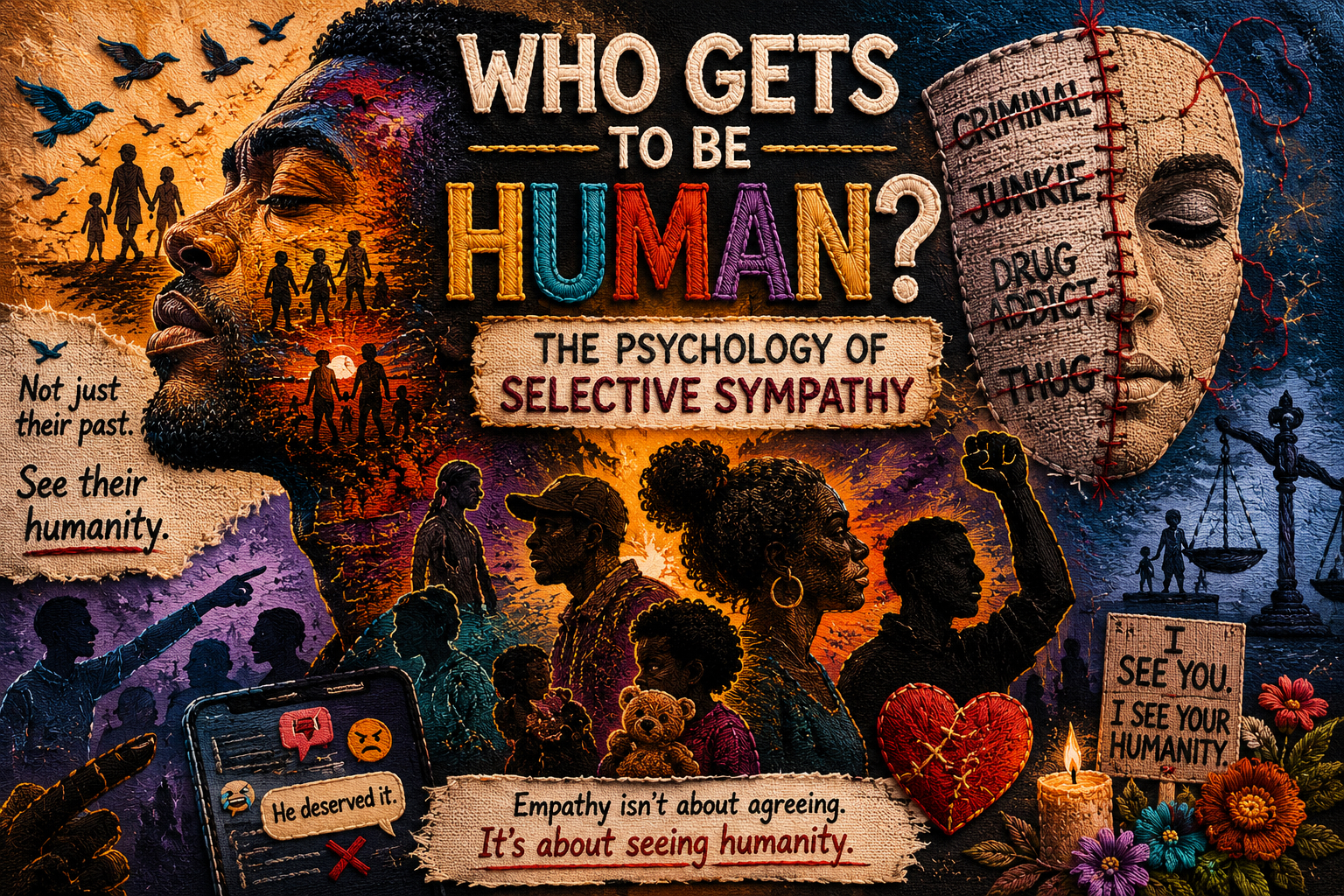
Some deaths are treated like tragedies. Others are treated like verdicts. When people discuss George Floyd, the conversation often shifts quickly from how he died to who people say he was. “Criminal.” “Junkie.” “Drug addict.” “Thug.” Psychologically, these labels do more than describe. They create distance. They allow people to reduce a human being to a category, which makes empathy easier to withhold. That is the deeper issue. Not whether George Floyd was perfect. Not whether he made mistakes. The real question is why some people are allowed to be complicated after death, while others are reduced to their worst moment. This is dehumanization. When someone is seen as fully human, we recognize pain, trauma, struggle, family, fear, and dignity. But when someone is dehumanized, they become a symbol, a stereotype, or a warning sign. And once that happens, cruelty becomes easier. The same addiction that gets called “a battle” in one person may get called “proof of worthlessness” in another. The same troubled past that earns sympathy for one person may erase sympathy for someone else. That difference is the sympathy gap. Humans do not always distribute compassion fairly. We often give more grace to people we identify with and more judgment to people we see as outsiders. So maybe the question is not whether George Floyd was flawed. He was human. The question is why his flaws made some people feel comfortable mocking his death. Why do some people get remembered as troubled, complicated, wounded, or lost, while others are flattened into a label? Who gets grace after death? Who gets dignity? And who has to be perfect before they are allowed to be mourned? That answer says less about the dead. It says everything about us.
2026-05-27
write a comment...