1/1

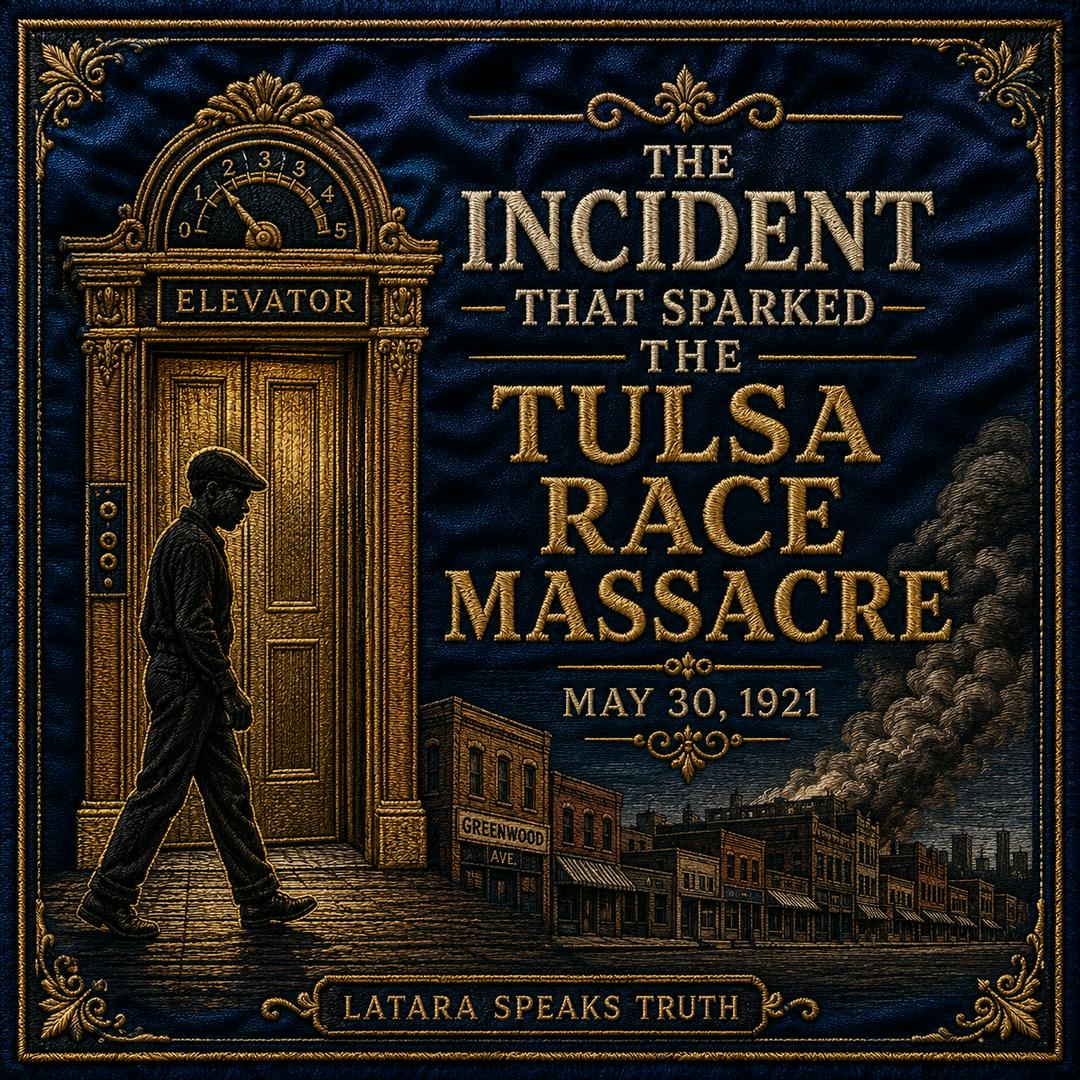
On May 30, 1921… The Incident That Sparked the Tulsa Race Massacre On May 30, 1921, a 19-year-old Black shoeshiner named Dick Rowland entered an elevator in downtown Tulsa, Oklahoma, operated by a young white woman named Sarah Page. What happened inside the elevator remains unclear. Witnesses reported hearing a scream, and Rowland quickly left the building. A store clerk contacted authorities, and Rowland was later accused of assault. The accusation spread rapidly throughout Tulsa. Newspapers published sensational reports, and rumors began circulating across the city. By the following day, tensions had escalated as crowds gathered outside the courthouse where Rowland was being held. What began as an unverified accusation would soon lead to one of the deadliest acts of racial violence in American history. Over the next 24 hours, a white mob attacked Tulsa’s Greenwood District, a thriving Black community often called “Black Wall Street.” Homes, businesses, churches, schools, and professional offices were destroyed. Hundreds of people were injured, and modern estimates suggest as many as 300 people may have been killed. Thousands were left homeless as more than 35 blocks of Greenwood were devastated. Today, the events of May 30 remind us how quickly rumors, fear, and misinformation can spiral into tragedy. The story of Greenwood is not only a story of destruction. It is also a story of a community whose success was targeted, whose history was nearly erased, and whose legacy continues to be remembered more than a century later. #OnThisDay #BlackHistory #TulsaRaceMassacre
Tulsa, Oklahoma • 3 days ago

Veronica
So sad...He probably didn't even do anything to that white woman....Very sad abuse of humans that bleed the same color as us all....RED...God will have the last judgement...🙏🙏🙏
3d
Mcalester, OK
Reply
2
More comments ...
write a comment...