1/1

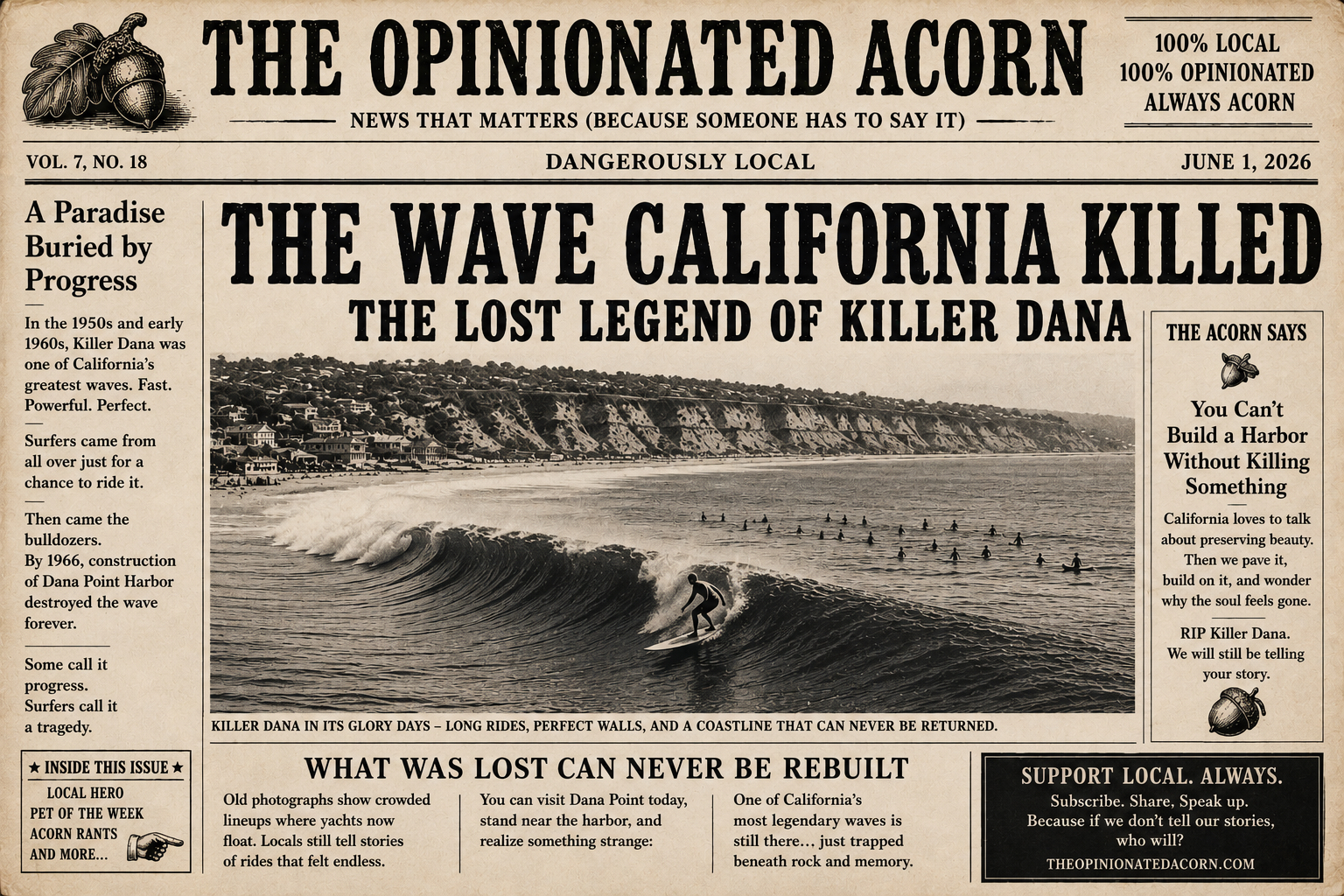
📰 The Opinionated Acorn: “The Wave California Killed — The Lost Legend of Killer Dana” Before luxury yachts, tourist selfies, and postcard harbor views, Southern California hid a surfing paradise many old-timers still talk about like a dead friend. Its name? Killer Dana. Located near present-day Dana Point Harbor, Killer Dana wasn’t just another surf break — it was considered one of California’s greatest waves. In the 1950s and early 1960s, surfers described it as long, powerful, and almost perfectly shaped. Some rides reportedly stretched hundreds of yards. On a good day, surfers could carve through fast walls of water beneath dramatic bluffs lined with beach shacks and old California charm. Then California did what California sometimes does best: It built over it. In the 1960s, construction began on Dana Point Harbor. Massive rock jetties and harbor engineering permanently changed the coastline. By 1966, the legendary wave was effectively gone. Buried. Destroyed. Erased by progress. To surfers, this wasn’t just environmental change — it was the death of a cultural landmark. Imagine bulldozing Yankee Stadium, but for wave riders. Why “Killer” Dana? Despite the name, the wave’s reputation came from its powerful speed and demanding rides, not a body count. Surfers respected it… and feared wiping out on it. Decades later, surf historians, photographers, and aging wave riders still mourn what was lost. Old photographs show crowded lineups where yachts now bob peacefully in the harbor. You can visit Dana Point today, stand near the harbor, watch the boats, and realize something strange: One of California’s most legendary waves is still there… just trapped beneath concrete, rock, and memory. California didn’t lose Killer Dana to nature. We built over paradise ourselves.
Dana Point, California • 1 days ago
write a comment...