1/1
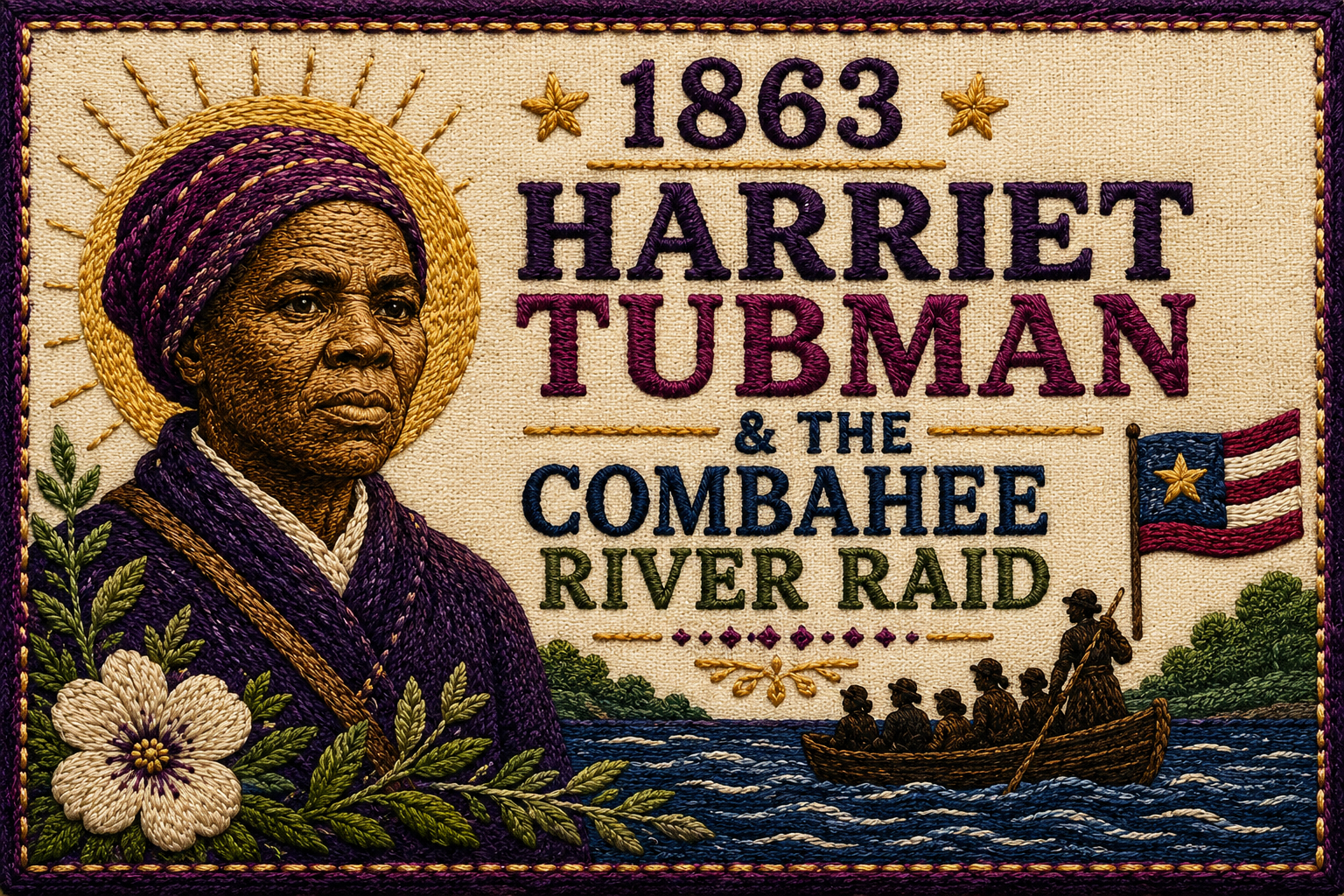
On June 2, 1863, Harriet Tubman played a pivotal role in one of the most remarkable freedom missions of the Civil War. Known by many for her work on the Underground Railroad, Tubman’s service did not end there. During the war, she worked for the Union Army as a scout, spy, nurse, and guide. In South Carolina, Tubman helped gather intelligence, plan, and guide the Combahee River Raid. Working alongside Union Colonel James Montgomery and Black Union soldiers of the 2nd South Carolina Volunteers, she helped lead Union forces up the Combahee River, where enslaved men, women, and children were waiting for an opportunity to escape bondage. As Union gunboats moved along the river, hundreds of enslaved people rushed from nearby plantations toward the sound of freedom. Families climbed aboard the vessels, leaving behind the fields, homes, and system that had held them captive. More than 700 enslaved people gained their freedom during the raid. The mission also disrupted Confederate operations by destroying supplies, transportation routes, and plantation resources along the river. It was both a military strike and a freedom mission. (National Park Service) This moment matters because it reveals Harriet Tubman as far more than a conductor on the Underground Railroad. She was a strategist. She gathered intelligence. She understood the terrain, the people, and the risks involved. She was not simply waiting for history to change. She helped make it happen. Harriet Tubman’s courage has been celebrated for generations, but the Combahee River Raid reminds us just how significant her contributions were during the Civil War. Her work helped make possible one of the largest liberation missions of the war and brought freedom to hundreds of people seeking a new life. (Black Past) That is not just history. That is legacy. #HarrietTubman #BlackHistory #OnThisDay #CivilWarHistory #LataraSpeaksTruth
South Carolina • 11 hours ago

Janet Hall
Sure the young generation is ignorant of this & history in general. Reason we have a TRAITOR in the WH.
19m
Connellsville, PA
Reply

Suzette Aldridge
she's always been a hero of mine
3h
King of Prussia, PA
Reply

Julianna Dorsey
A HERO RIHP🙏🙏🙏
2h
Rockmart, GA
Reply
1
More comments ...
write a comment...