1/1

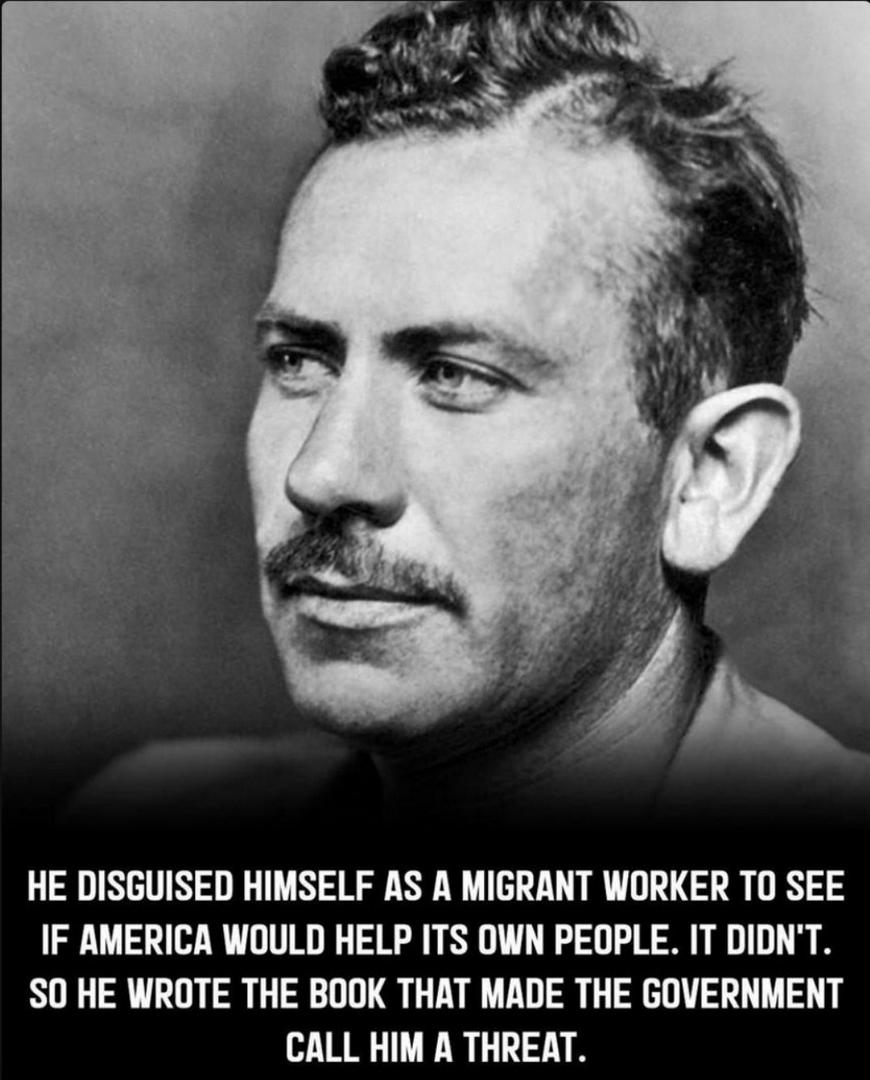
He disquised himself as a miarant worker to see if America would help its own people. It didn`t. So he wrote the book that made the government call him a threat The Great Depression had turned America into a gravevard of dreams. Dust storms b uried entire farms in Oklahoma, Kansas, Texas. Families packed everything they owned into broken-down trucks and headed west to California, chasing rumors of work of food. of survival They called them "Okies." Newspapers called them dirty. Politicians called them criminals. Growers called them cheap labor. Nobody called them Americans. John Steinbeck was already a successfu writer living comfortably in California when he started hearing the stories. Thousands of families livina in ditches. Children duing of malnutrition. Workers paid pennies to pick fruit until their hands bled He could havewritten about it from a distance. Interviewed a few people. Done some research. Written a nice, safe article. Instead, he did something crazy. He disguised himself as one of them. Steinbeck borrowed a battered old car, put on worn-out clothes. and drove into the San Joaquin Valley. He didn't tell people who he was. No notebooks in sight. No camera. No press credentials. Just another desperate man looking for work. For weeks, he lived in the migrant camps He slept in tents that leaked when it rained He ate whatever scraps he could find. He stood in lines with hundreds of men, all begging for iobs that paid five cents an hour -if they were lucky He watched mothers sing lullabies to hungry children beside dving campfires He saw families torn apart when only one person could get work. He witnessed men-farmers who had ownedland, who had built lives with their hands-reduced to begging for food their children were too weak to eat "You have no idea how terrifying hunger sounds when it cries." he wrote in his secret notebook. "He changes the shape of a man's face." Every night, by lantern light, Steinbeck filled pages with what he'd seen.
2 days ago
write a comment...