1/1

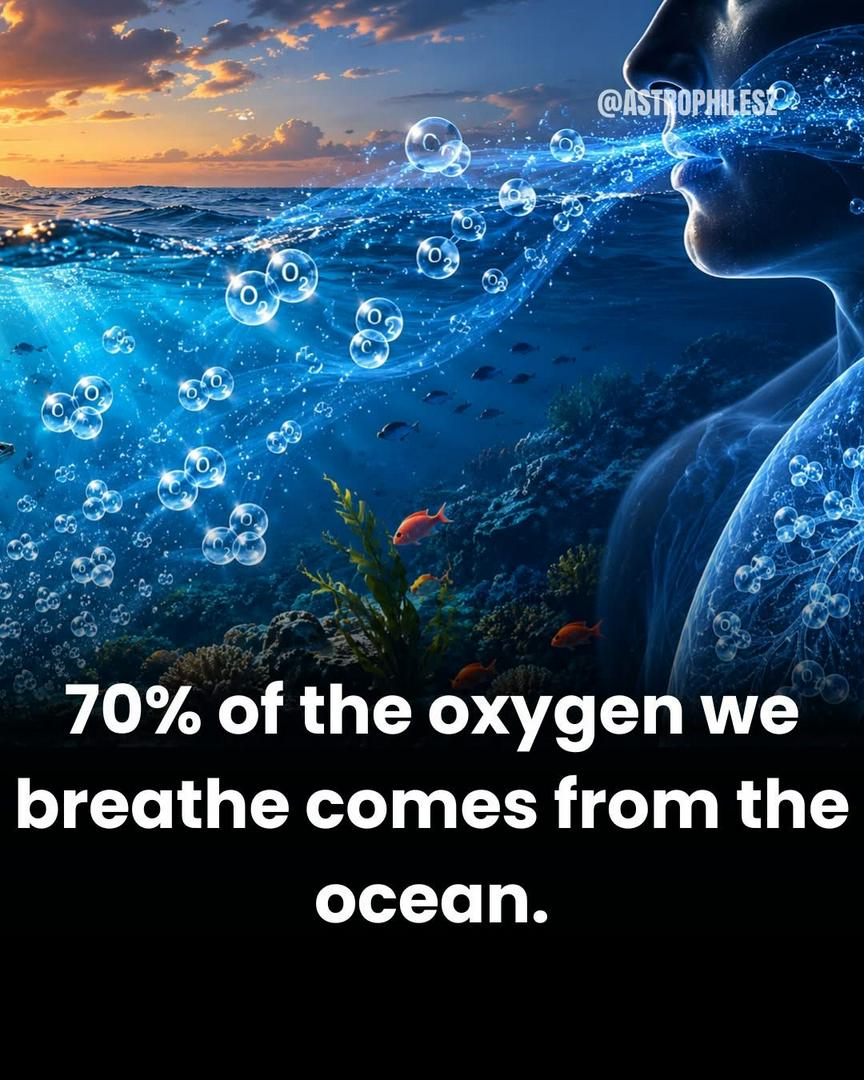
Every breath you take is mostly ocean. Not from trees. Not from forests. The majority of the oxygen in Earth's atmosphere is produced by the sea, specifically by phytoplankton, microscopic organisms drifting through the upper layers of the ocean that collectively perform more photosynthesis than all the world's forests combined. Phytoplankton are not plants in the way most people picture them. They are single-celled organisms, some bacterial, some more complex, that use sunlight and dissolved carbon dioxide to produce energy, releasing oxygen as a byproduct. They are invisible to the naked eye individually, but from space they are visible as vast blooms of color stretching across ocean surfaces for hundreds of kilometers. The most significant contributor is a bacterium called Prochlorococcus, discovered only in 1986. It is estimated to be the most abundant photosynthetic organism on Earth, responsible on its own for a significant fraction of global oxygen production. It was unknown to science until forty years ago and remains poorly understood despite its outsized role in keeping the atmosphere breathable. The 70 percent figure is a widely cited estimate, though some researchers put the range between 50 and 80 percent depending on methodology and season. What is not disputed is that the ocean is the dominant oxygen-producing system on the planet. This matters enormously in the context of ocean health. Rising sea temperatures, ocean acidification from absorbed carbon dioxide, and nutrient pollution all affect phytoplankton populations. Some studies have documented declines in phytoplankton abundance in warmer ocean regions over recent decades, though the full picture remains an active area of research. The Amazon is often called the lungs of the Earth. That description was always incomplete. The real lungs are underwater, and they are under pressure.
2 days ago
write a comment...