1/1

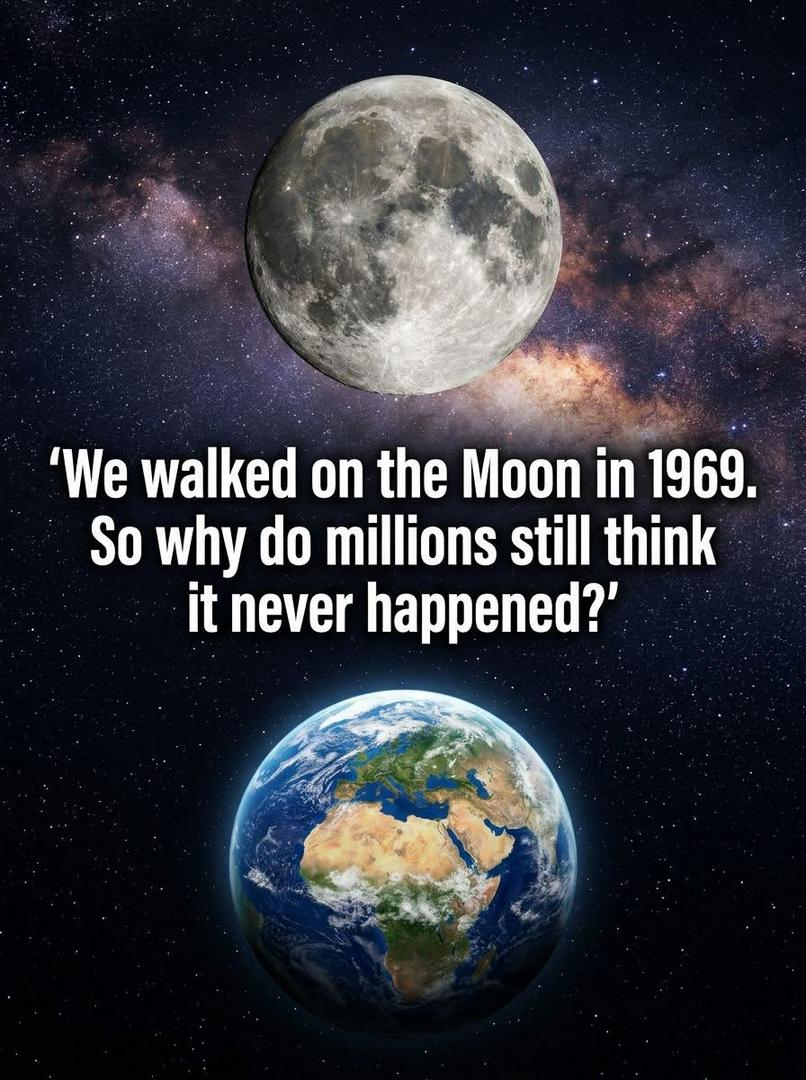
More than half a century after Apollo 11, the first Moon landing remains one of the most closely examined events in modern history—and one of the most persistent subjects of conspiracy theories. On July 20, 1969, NASA astronauts Neil Armstrong and Buzz Aldrin became the first humans to walk on the lunar surface, while Michael Collins remained in lunar orbit aboard the command module. Since then, the missions have been supported by an extensive body of independent evidence, including lunar rock samples studied by scientists around the world, spacecraft tracking records from multiple countries, photographs, telemetry data, and retroreflectors that still enable precise laser measurements between Earth and the Moon. Questions and skepticism have surrounded the Apollo program for decades, but repeated scientific investigations have found no credible evidence that the Moon landings were staged. Many of the claims circulated over the years—such as the appearance of the flag, shadows, or the absence of stars in photographs—are well understood through the physics of lighting, camera exposure, and the Moon's airless environment. The Apollo missions remain a landmark achievement in science, engineering, and human exploration, demonstrating what is possible when evidence, innovation, and determination come together. 📸 Credit: NASA #Apollo11 #MoonLanding #SpaceHistory
6 days ago
write a comment...