1/1

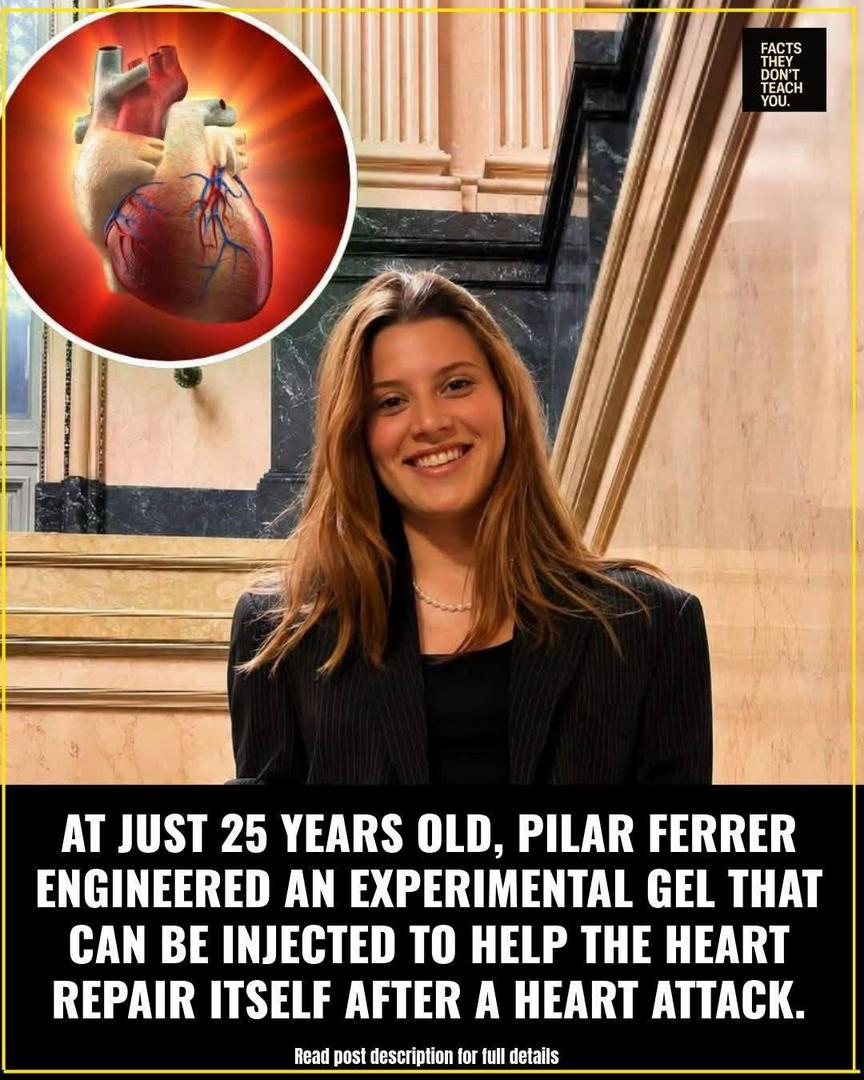
A 25-year-old scientist is working on one of cardiology’s greatest challenges: helping the heart heal itself after a heart attack. When a heart attack cuts off blood flow, heart muscle cells can begin dying within a matter of hours. Unlike organs such as the skin or liver, the heart has only a very limited ability to regenerate. Instead of growing new muscle, the damaged area is usually replaced by scar tissue that cannot contract like healthy heart tissue. Over time, this permanent scarring can reduce the heart’s pumping ability and increase the risk of chronic heart failure. Pilar Ferrer, a biologist and graduate of Favaloro University in Argentina, is developing an experimental hydrogel through her startup, Amnova Biotech. Inspired by the amniotic membrane a placental tissue already used in regenerative medicine the injectable gel is designed to act as a temporary scaffold inside damaged heart tissue, supporting the body’s natural repair processes instead of allowing the injury to heal primarily through scarring. Early studies in sheep have produced promising results, with treated animals showing smaller areas of damaged tissue and better heart function after therapy. Even so, the research is still at an early stage. Human clinical trials are not expected to begin until around 2028, and many treatments that perform well in animal studies do not ultimately achieve the same success in human patients. If future studies confirm these results, the approach could change the way doctors treat heart attack damage. Rather than simply managing the long-term effects of scar tissue, it may one day become possible to help rebuild healthier heart muscle. Would you like to see future heart attack treatments focus on repairing damaged heart tissue instead of treating permanent scarring?
8 hours ago
write a comment...