1/1
![VV [ truth]](https://ui.prt.news/t3qao65f9jlc.jpeg)
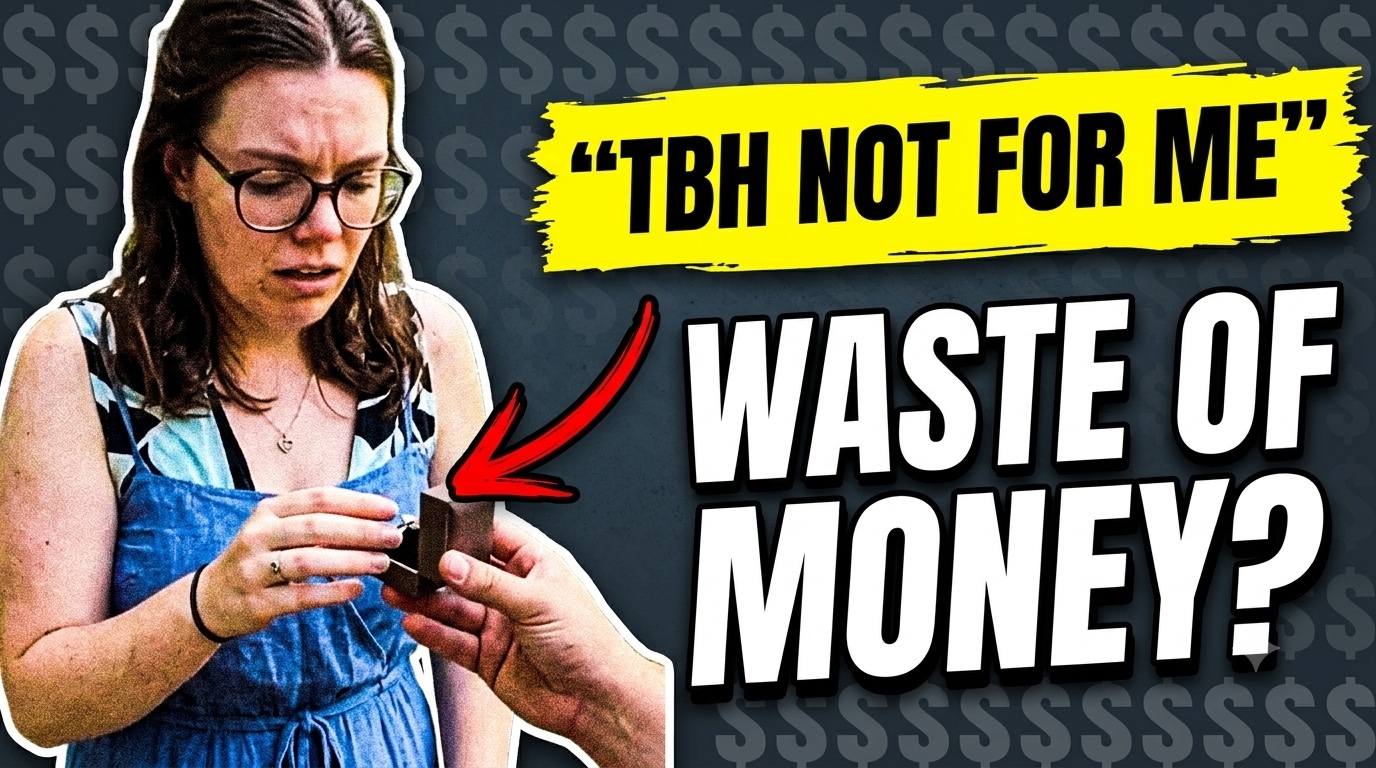
The $13 Billion Marketing Trick: Why Are We Still Dropping Thousands on Engagement Rings? A viral video recently captured a woman reacting to her new engagement ring with honesty: "It’s so pretty, but tbh not for me." The clip racked up millions of views and thousands of heated comments. Half the internet branded her ungrateful, while the other half asked a much bigger question: Why are we still spending small fortunes on shiny rocks in the first place? The truth is, the "tradition" of dropping thousands of dollars on a diamond engagement ring isn't an ancient custom. It’s one of the most successful corporate marketing campaigns in human history. Before the late 1930s, diamond rings were rare, reserved mostly for royalty. Gems like sapphires, rubies, and simple gold bands were far more common. But when global diamond prices plummeted during the Great Depression, the De Beers diamond cartel hired a New York ad agency to salvage their bottom line. They launched a massive campaign that placed diamonds on Hollywood stars, targeted high schoolers, and created the iconic slogan: "A Diamond Is Forever." They didn't stop there—De Beers literally invented the rule that a man should spend two to three months’ salary on a ring to prove his love and financial readiness. Fast forward to today, and that 1930s sales tactic is still draining bank accounts. In an economy where young couples are struggling with high interest rates, sky-high rent, and saving for a home down payment, blowing $5,000 to $10,000+ on a single piece of jewelry makes less sense than ever. It’s no surprise lab-grown diamonds and alternative gemstones are exploding in popularity. People are realizing that love shouldn't be measured by an ad agency's spending quota. What about you? Would you rather have a classic diamond, a cheaper alternative, or skip the pricey ring entirely to put that cash toward a home or a trip?
4 hours ago
write a comment...