1/1

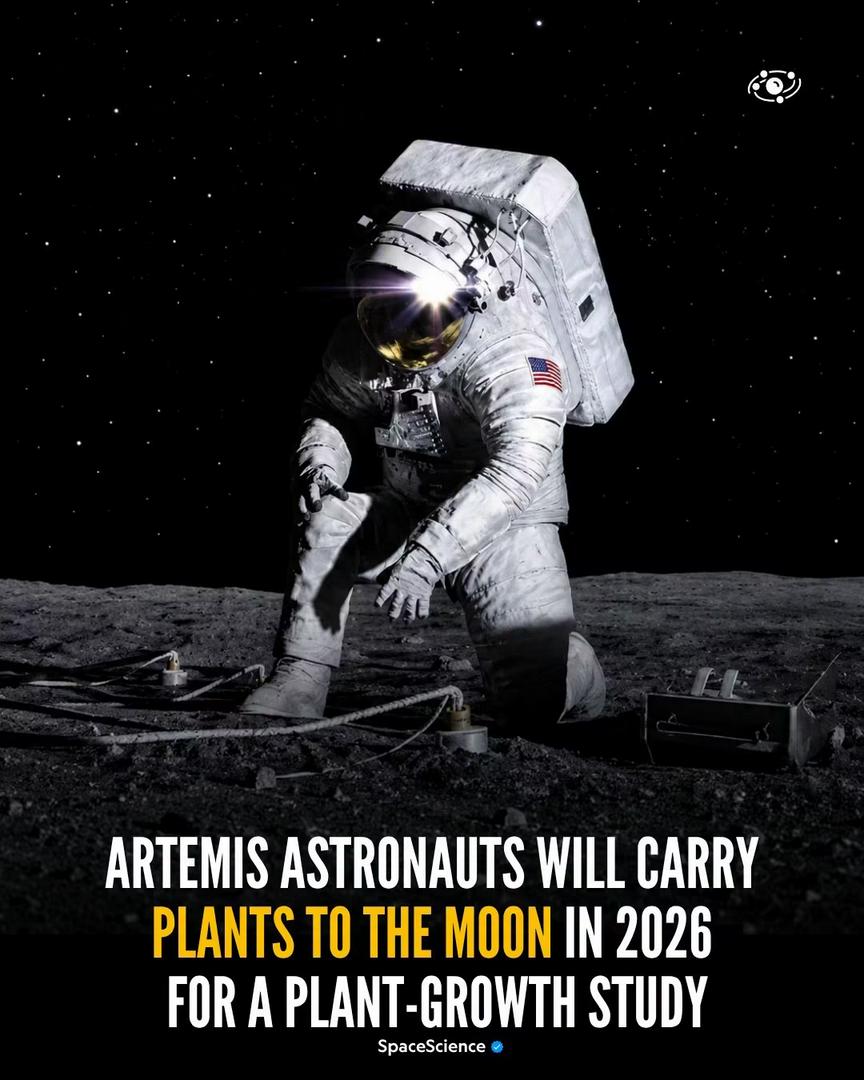
NASA Plans to Grow Plants on the Moon During Artemis 3. For the first time in more than half a century, astronauts are preparing to return to the lunar surface—and they may bring something unexpected with them: plants. NASA has selected LEAF, the Lunar Effects on Agricultural Flora experiment, as one of the first science investigations planned for deployment during the Artemis 3 mission. The experiment will study how plants grow and respond to the Moon's unique environment, including reduced gravity and space radiation. LEAF will monitor plant photosynthesis, growth, and stress responses while collecting environmental data. Scientists hope the results will reveal whether growing plants on the Moon could eventually help provide food and contribute to life-support systems for future lunar crews. The plants won't be the first to reach the Moon. China's Chang'e 4 mission carried cotton seeds to the lunar far side in 2019, where a cotton seed successfully sprouted before the experiment ended. But LEAF would take the idea much further by studying plant growth under the actual lunar surface environment. Artemis 3 is also expected to deploy two other important experiments near the Moon's south pole. LEMS will use autonomous seismometers to monitor moonquakes and study the Moon's interior, while LDA will investigate the electrical properties of lunar soil and look for clues about frost or possible ice deposits. The lunar south pole is particularly important because permanently shadowed regions there are believed to contain water ice—a potentially valuable resource for future astronauts. If Artemis 3 goes according to plan, these experiments could mark an important step toward something much bigger: learning how to grow food and support human life beyond Earth. One day, the first lunar garden could become part of a permanent human presence on the Moon.
4 hours ago
write a comment...