1/1

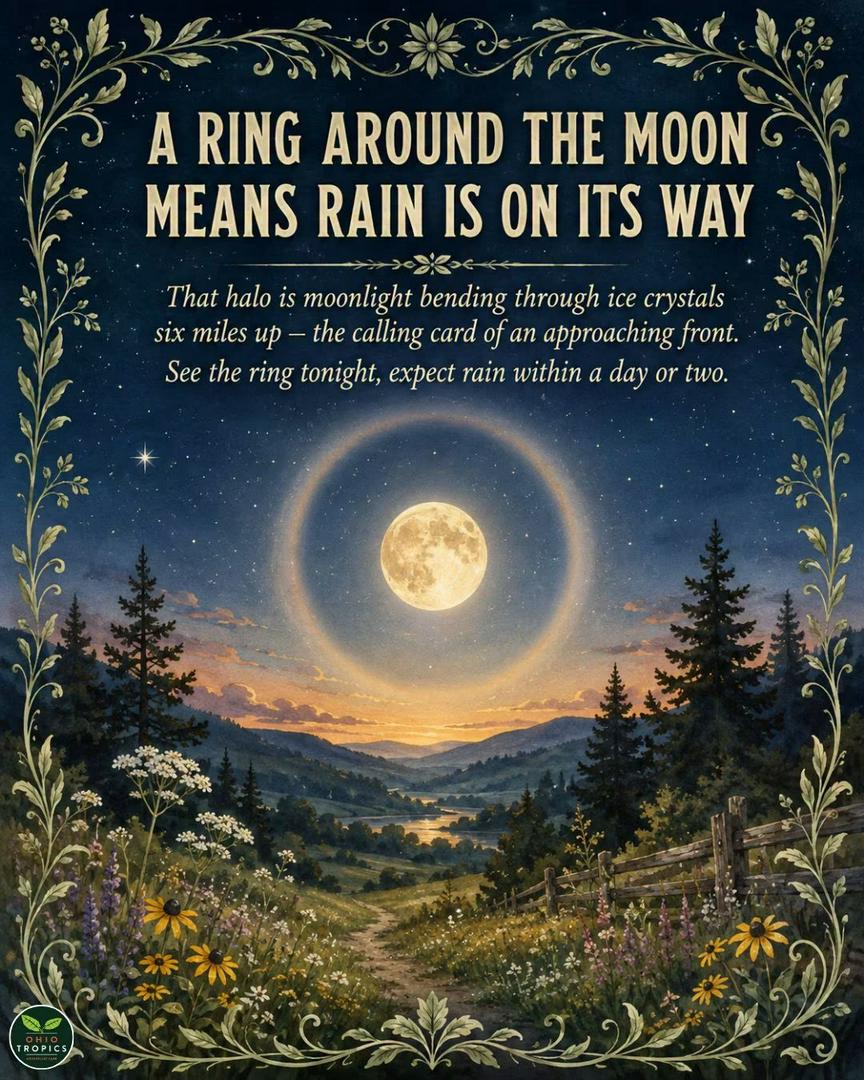
A ring around the moon means rain is on its way, and this is one of the more scientifically reliable pieces of weather folklore out there. That glowing halo is called a 22 degree halo, and it forms when moonlight passes through millions of tiny ice crystals suspended in high altitude cirrostratus clouds, roughly five to six miles up in the atmosphere. As light travels through these hexagonal ice crystals, it bends, or refracts, at a consistent angle of 22 degrees, creating that perfect ring you see encircling the moon. The reason this connects so reliably to incoming rain is what cirrostratus clouds typically represent in weather patterns. These thin, high altitude clouds are often the leading edge of an approaching warm front or low pressure system, arriving well ahead of the thicker, lower clouds that eventually bring rain or snow. So when you see that ring, you are essentially seeing the atmospheric preview of a system that is still hours to a couple days away, moving in ahead of the actual precipitation. This same phenomenon happens around the sun during the day, though it is much harder to look directly at and notice. The moon version is easier to observe because you can look right at it without discomfort, which is likely part of why this particular saying became so widespread in weather folklore across many cultures. It is worth noting this is a probabilistic signal, not a guarantee. Not every halo is followed by rain, since the front bringing those cirrostratus clouds can sometimes weaken or shift before it arrives. But compared to a lot of old weather sayings, this one has a genuine, well understood atmospheric mechanism behind it, which makes it a satisfying one to actually explain rather than just repeat.
3 hours ago
write a comment...