1/1

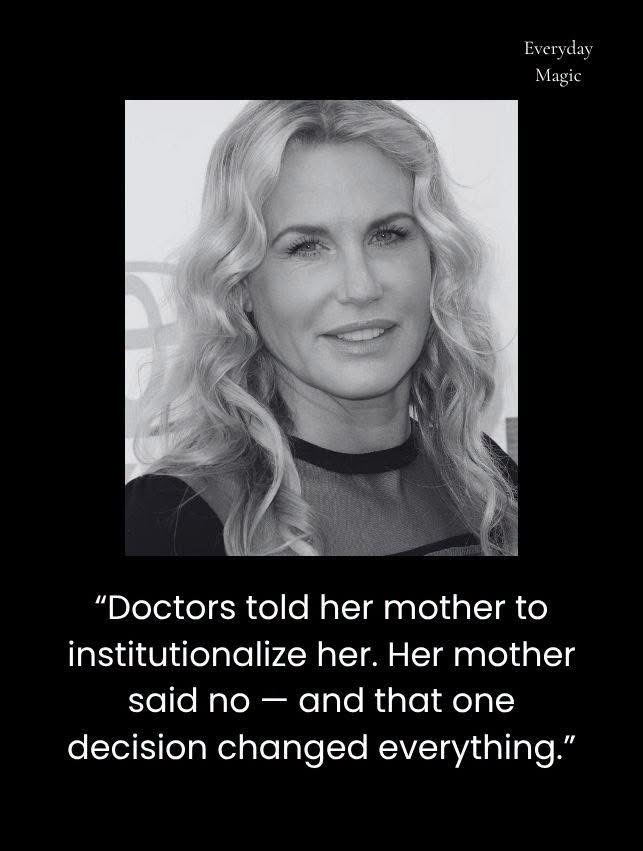
Doctors told Daryl Hannah’s mother there were only two paths forward: medicate her daughter, or place her in an institution. Born in Chicago in 1960, Daryl experienced the world differently from an early age. She rocked to self-soothe, struggled with eye contact, and found classrooms and crowds genuinely overwhelming. At the time, autism was poorly understood, especially in girls, and the medical advice her family received reflected that. Rather than accept it, her mother, Susan, pulled her back from that path entirely, giving Daryl a calmer environment, more time, and room to simply be herself rather than forcing her to conform. Daryl has spoken about that choice with real gratitude, saying plainly that without it, she’d likely still be institutionalized today. Within that freedom, she found movies. Struggling with insomnia as a kid, she spent many nights watching old films, and the screen became a kind of safe doorway into understanding people and emotions from a distance, without the unpredictability of live conversation. Acting eventually gave her something similar — a way to step into a character who already had a voice and a place in the story, rather than having to work out how to behave as herself. At seventeen, she moved to Los Angeles to pursue acting, a genuinely brave move for someone who found public attention frightening. She made her screen debut in 1978, and by 1982 was cast as Pris in Blade Runner, a performance that made her unforgettable. Two years later, Splash made her one of the most recognizable actresses in Hollywood, and more major roles followed in films like Roxanne, Wall Street, and Steel Magnolias. From the outside, she looked perfectly suited to fame. Behind the scenes, she was often genuinely terrified. Red carpets, talk shows, and premieres — the exact events that came with success.
18 days ago
write a comment...