1/1

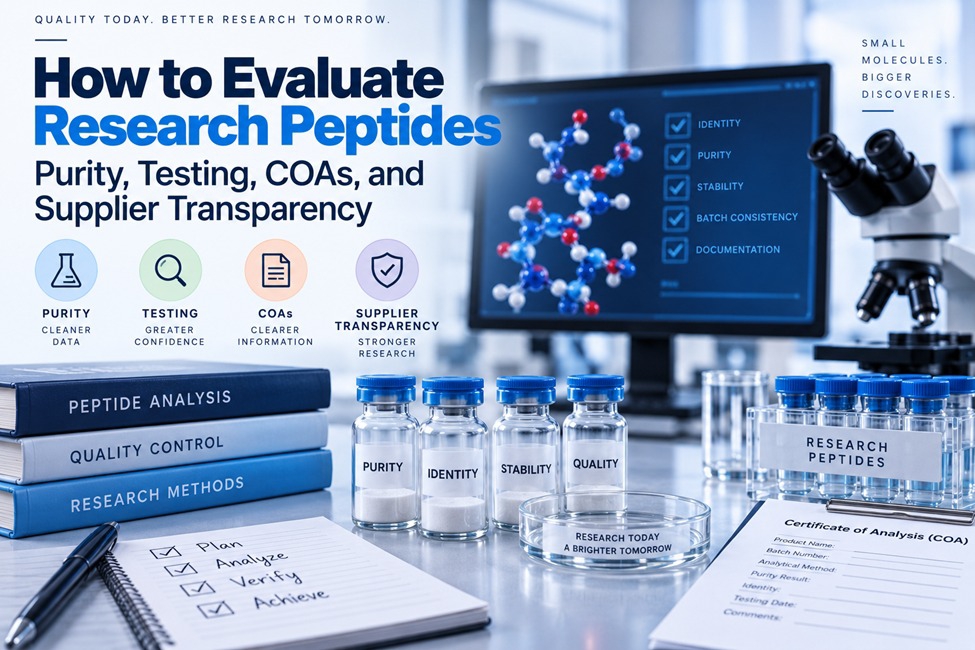
<h1 style="padding-left: 50px;"><strong>How to Evaluate Research Peptides: Purity, Testing, COAs, and Supplier Transparency</strong></h1> <p style="line-height: 1.30; font-size: 19px;"><p style="padding-left: 50px;"><a href="https://nextwavepeptides.com/">Research peptides </a>can be valuable tools in molecular biology, biochemistry, and other areas of laboratory science. They help researchers investigate biological interactions, examine molecular pathways, and explore how changes in structure influence activity. But obtaining a peptide is only one part of conducting reliable research. The quality of the material and the documentation supporting it can have a direct impact on how confidently results are interpreted.</p> <img src="https://i.ibb.co/4ZNRjH5R/Screenshot-14-9-2026-203255.jpg" alt="" width="900" height="890" /> <img src="https://i.ibb.co/pvKr0h1K/Screenshot-14-9-2026-203315.jpg" alt="" width="900" height="1110" /> <img src="https://i.ibb.co/PzgcjDS9/Screenshot-14-9-2026-203334.jpg" alt="" width="900" height="1141" /> <img src="https://i.ibb.co/35WRWt66/Screenshot-14-9-2026-203353.jpg" alt="" width="900" height="1028" /> <p style="padding-left: 50px;">Evaluating <a href="https://nextwavepeptides.com/">research peptides</a> requires more than reading a product name or a purity claim. Researchers should consider identity, purity, potency, stability, batch consistency, and the quality of the supporting documentation. A well-understood COA, clear labeling, traceable records, and transparent testing information can help reduce uncertainty and support more reliable laboratory work. By distinguishing analytical evidence from promotional language—and research materials from approved medicines—researchers can make better-informed decisions and interpret peptide-related findings more responsibly.</p>
2 hours ago
write a comment...