1/1

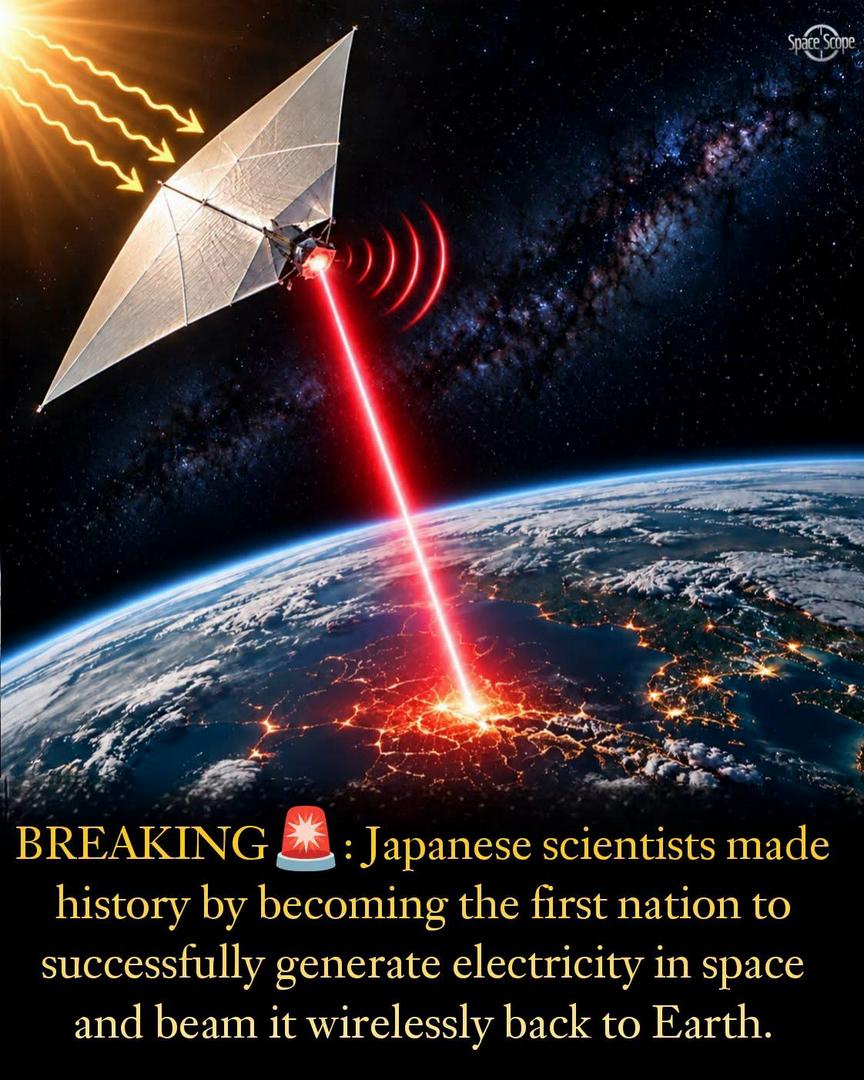
The concept shown here is known as Space-Based Solar Power (SBSP) or Space Solar Power Systems (SSPS). The idea is to place large solar-power systems in space, collect sunlight, convert the energy into microwaves or laser beams, and transmit it wirelessly to receiving stations on Earth, where it can be converted back into electricity. Japan, through JAXA, has been researching this technology since the 1980s. JAXA has investigated microwave and laser-based wireless power transmission, large space structures, space solar cells, and technologies needed to operate such systems safely in orbit. JAXA has already demonstrated wireless microwave power transmission on Earth. In a March 2015 outdoor demonstration, a 5.8 GHz microwave system transmitted power across approximately 55 meters. The experiment used about 1.8 kW of transmitted power and received approximately 320–340 W under the stated test conditions. The attraction of space-based solar power is that sunlight in space is available without the interruptions caused by night and ordinary weather, and solar radiation there is stronger than at Earth's surface. However, turning the concept into a practical power system requires major advances in efficient and safe energy transmission, huge space structures, orbital assembly and maintenance, transportation costs, and beam-control technology. Importantly, the image's claim that Japan has already generated electricity in space and successfully beamed it back to Earth as a practical power system is misleading. JAXA currently describes SSPS as an ongoing research and development program, with practical realization targeted for the latter half of the 21st century. Source: JAXA — Space Solar Power Systems (SSPS), Microwave Wireless Power Transmission Research, and Ground Demonstration Testing. #SpaceSolarPower #JAXA #WirelessPower #SolarEnergy #SpaceTechnology
3 hours ago
write a comment...