1/1

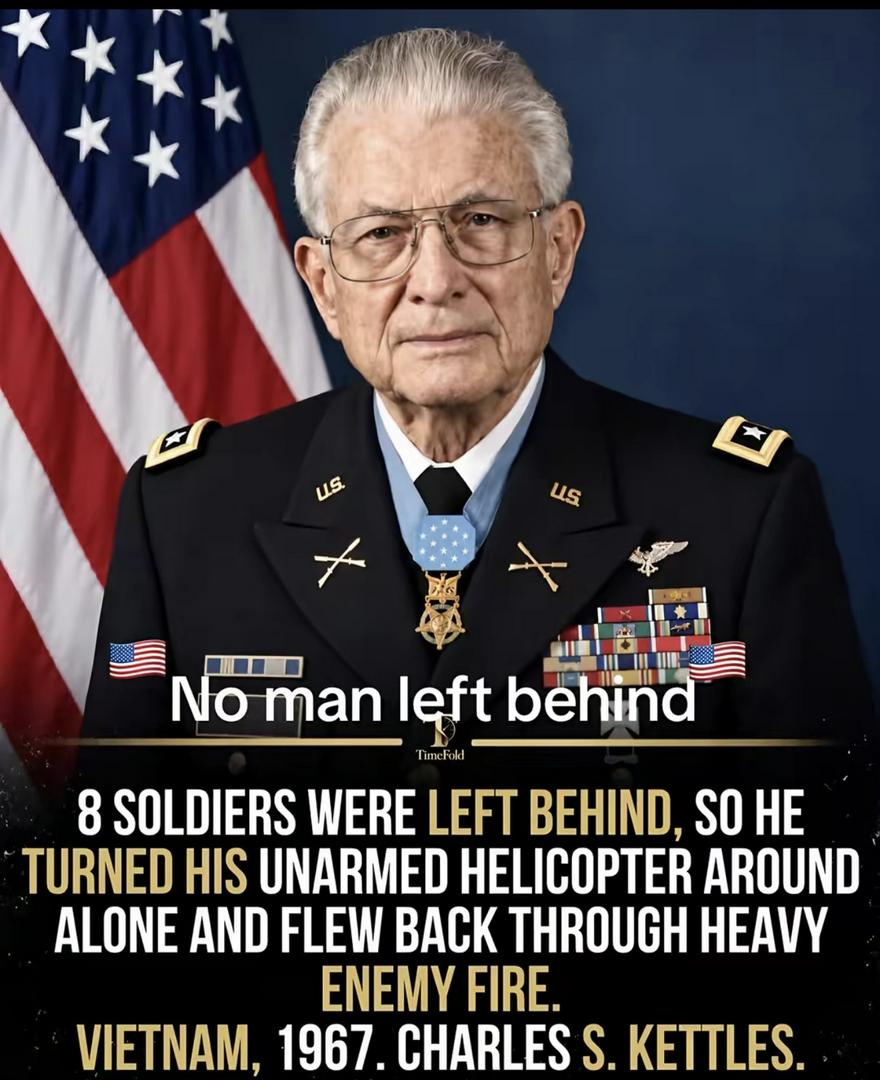
Charles Kettles thought the final evacuation was complete when the radio call came. Eight American soldiers had been left behind. The other helicopters were already leaving. Air and artillery support had withdrawn. Kettles turned around alone. Congressional Medal of Honor Society It was May 15, 1967, near Duc Pho, Vietnam. Earlier that day, an American airborne infantry unit had become trapped while fighting a much larger enemy force. Major Kettles volunteered to lead six UH-1D Hueys into the area, bringing reinforcements and evacuating wounded soldiers. Enemy fire hammered the landing zone. Kettles landed anyway. Then he returned a second time. His helicopter was badly damaged and leaking fuel, but he managed to get it back to base. Congressional Medal of Honor Society By evening, 44 American soldiers still needed extraction. Kettles found another helicopter and went back for a third mission. The evacuation began. Then Kettles was told everyone was aboard, and the helicopters departed. They weren't. Eight soldiers had been providing cover and couldn't reach the aircraft. Kettles received the message after takeoff. He broke formation. Just one unarmed Huey returning to the landing zone. Congressional Medal of Honor Society Enemy forces concentrated their fire on his helicopter. The aircraft was badly damaged as the eight stranded soldiers ran aboard. Now 13 people were packed inside. He moved the helicopter along the ground, building enough forward speed until he could finally force the damaged aircraft into the air. Then he flew everyone back to safety. U.S. Army Kettles initially received the Distinguished Service Cross. Nearly half a century later, his actions were reconsidered. On July 18, 2016, President Barack Obama presented the 86-year-old retired lieutenant colonel with the Medal of Honor.
2 days ago
write a comment...