1/1

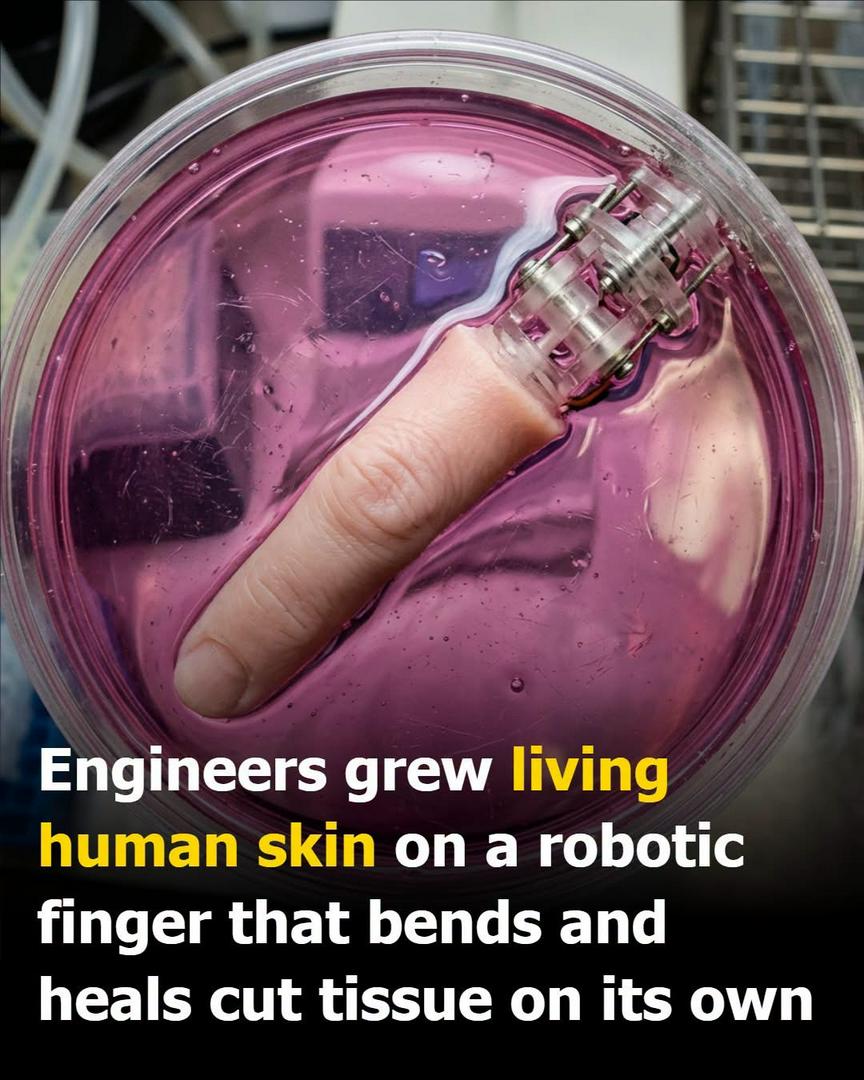
Most artificial limbs rely on silicone or plastic to mimic human hands. A research team at the University of Tokyo tried something entirely different by growing actual human skin cells directly over a mechanical joint. Biohybrid engineer Shoji Takeuchi and his team bathed a robotic finger in a collagen solution of dermal fibroblasts before layering human keratinocytes on top to form an outer epidermis. The resulting tissue flexes seamlessly around moving joints, forming natural knuckle creases instead of tearing. When researchers sliced the outer layer and placed a collagen patch over the cut, the living cells merged the material back together and repaired the wound within seven days. While the tissue currently needs to stay wet to survive, the technology moves us closer to prosthetic limbs that can actually feel and repair themselves.
10 hours ago
write a comment...