1/1

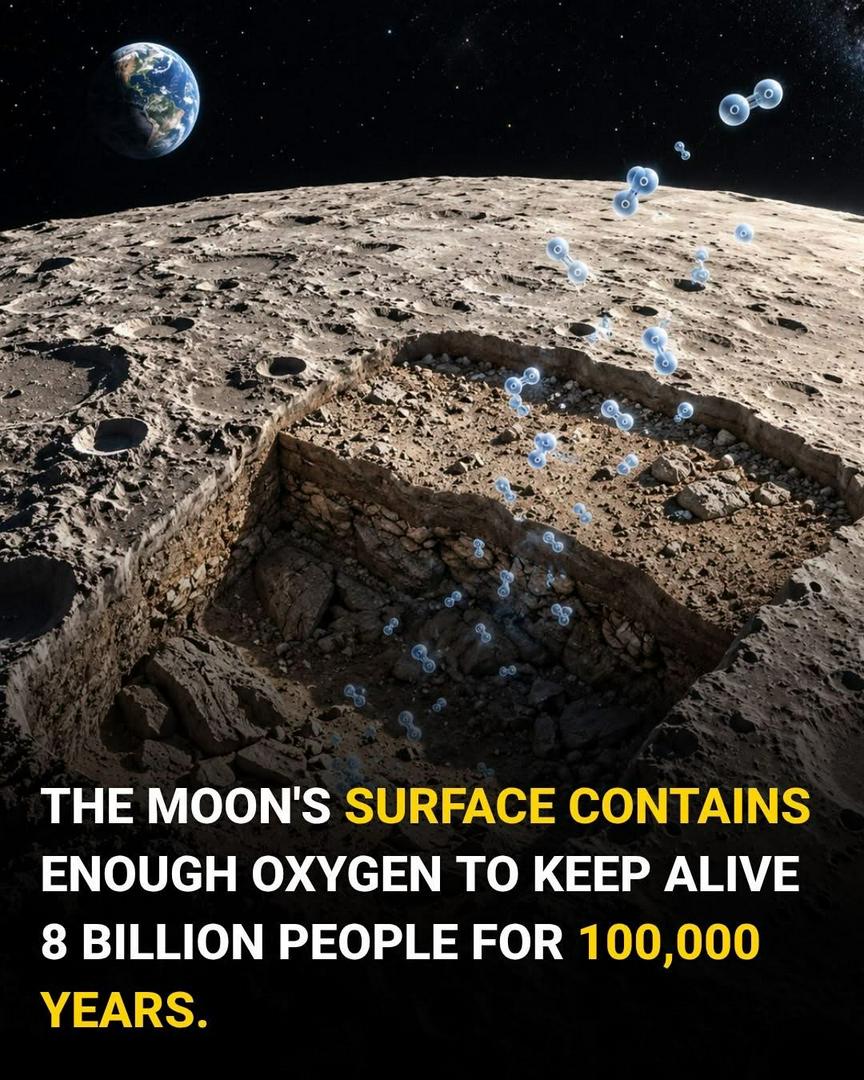
🚨🌕 The Moon contains an enormous amount of oxygen — but almost none of it is available as breathable gas. Around 40–45% of lunar regolith is oxygen by mass, chemically bound inside minerals and glass. That means the Moon has a huge theoretical oxygen resource, but extracting it requires industrial processing. One estimate by soil scientist John Grant calculated that a cubic metre of lunar regolith could contain roughly 630 kg of oxygen. Under highly idealized assumptions about processing the upper layers of lunar soil across the Moon, the theoretical quantity could support billions of people for an extraordinarily long time. But this is a calculation of total oxygen contained in lunar material — not oxygen that could realistically be harvested today. Researchers are investigating technologies that could extract oxygen from lunar regolith because the resource could be valuable for both life support and rocket propulsion. Producing oxygen on the Moon could eventually reduce the amount of oxygen that future lunar missions would need to launch from Earth. The challenge is enormous: lunar soil must be mined, processed and heated or chemically treated to separate oxygen from minerals, requiring substantial energy and infrastructure. So the Moon isn't an enormous ready-made oxygen tank. It's more like a massive mineral resource that future lunar industries could potentially turn into oxygen. 🚀 Source: Southern Cross University / The Conversation
5 hours ago
write a comment...