1/1

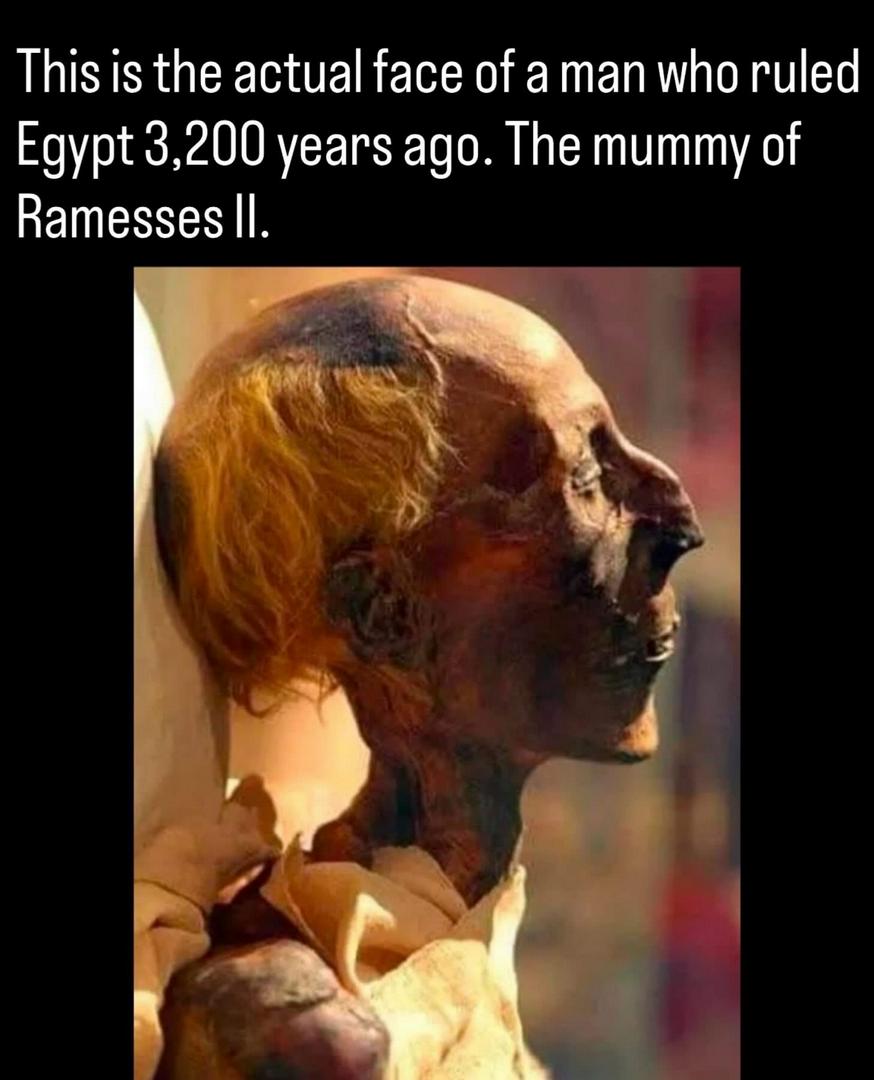
More than 3,000 years after his death, one of ancient Egypt’s greatest pharaohs was given something he never needed in life: an international journey. Ramesses II ruled Egypt for about 66 years, from roughly 1279 to 1213 BC, making his reign one of the longest in ancient Egyptian history. He fought the Hittites at the famous Battle of Kadesh and later helped establish a peace agreement with them that is often described as one of the earliest known written peace treaties. His reign was also an age of enormous construction. Among the monuments associated with him are the colossal temples at Abu Simbel, whose massive statues still stand today. Ramesses is believed to have fathered a remarkably large number of children, perhaps around 100, and he outlived many of them. He died at roughly 90 years old and was originally buried in the Valley of the Kings. But his journey did not end there. As tomb robbery became an increasing threat, ancient priests moved his mummy more than once, eventually hiding him with other royal mummies in a secret cache near modern Luxor. The hiding place remained undiscovered until 1881. Then, nearly a century later, Ramesses II traveled again. In 1976, his mummy was sent to France for conservation after concerns about fungal deterioration. When he arrived in Paris, he was treated with extraordinary ceremony, including a formal military reception. French researchers examined the ancient remains in detail. Studies of his mummy suggested that Ramesses had reddish hair during life, although the exact appearance of his hair thousands of years ago is difficult to reconstruct with certainty. Researchers also found evidence of severe age-related disease, including arthritis and dental problems. He stood approximately 1.7 meters tall—around 5 feet 7 inches. And despite the countless stories surrounding his journey to France, one of the most famous is simply not true. The viral claim that Egypt issued Ramesses II a passport identifying his occu
5 hours ago
write a comment...