1/1

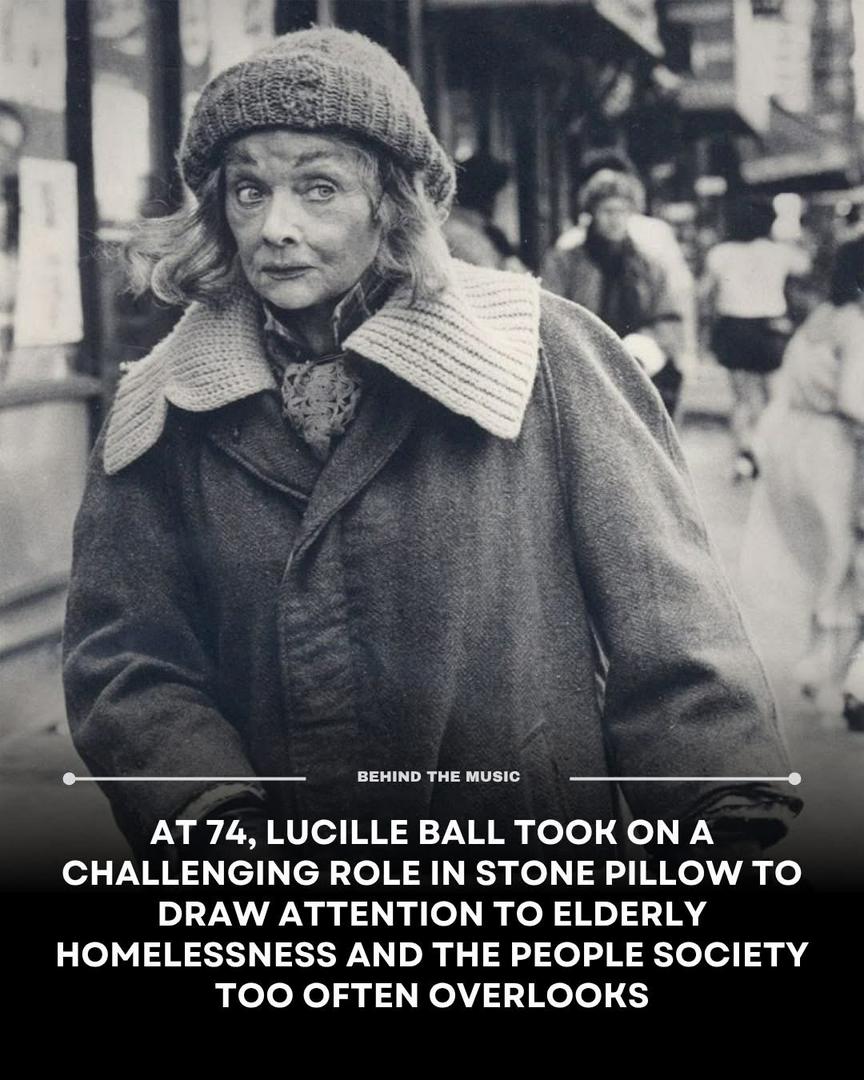
At 74, America’s most beloved comedian put on filthy clothes and slept on heating grates. She was hospitalized for it. Critics hated it. She did it anyway—because someone had to. November 5, 1985. Millions of Americans tuned into CBS expecting Lucille Ball to do what she had done better than anyone for half a century: make them laugh. Instead, they saw Lucy—their Lucy—almost unrecognizable. No red hair. No glamour. No perfectly timed slapstick. Just a 74-year-old woman in rags, pushing a shopping cart filled with everything she owned, sleeping on Manhattan streets, invisible to the people stepping over her. Lucille Ball was playing Florabelle, a homeless elderly woman in the TV movie Stone Pillow. She named the character after her grandmother, Flora Belle Hunt—a pioneer woman who had survived hardships Lucy never forgot. America didn’t know how to react. For fifty years, Lucille Ball had been the face of American comedy. She built an empire. She became the first woman to own a major television studio. She made three generations laugh until they cried. At 74, she was rich beyond imagination. She could have spent her final years accepting lifetime achievement awards, appearing on talk shows, protecting the legend. Instead, she chose the most difficult role of her life. The script for Stone Pillow landed on her desk in 1985. It told the story of elderly homeless women—the ones society refused to see. Women sleeping on heating grates, pushing shopping carts, dismissed as “bag ladies.” In 1980s America, homelessness was exploding. Television largely ignored it. And almost no one talked about elderly women living on the streets—abandoned by families, failed by systems, erased by society. Lucy saw something others didn’t: a chance to use her fame for something that mattered. She knew the risks. She knew audiences didn’t want to see their Lucy dirty, broken, heartbreaking. She knew critics might savage her. She knew it could tarnish the image she’d spent decades building. S
6 hours ago

Guest
Wow I never knew, gonna see that one, thnx
1h
Reply
More comments ...
write a comment...