1/1

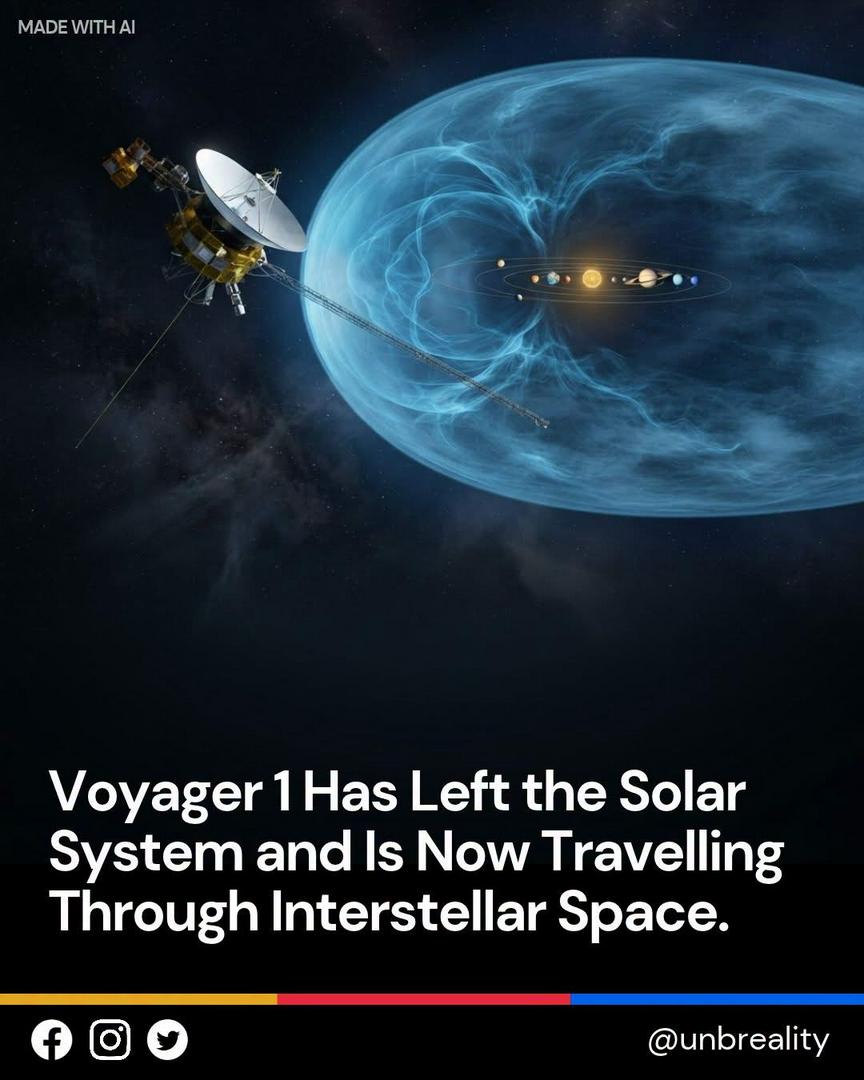
A MACHINE BUILT IN THE 1970s IS NOW THE MOST DISTANT HUMAN MADE OBJECT IN HISTORY. NASA’s Voyager 1 spacecraft launched on September 5, 1977, back when personal computers were primitive and the Walkman had not yet been released. Nearly half a century later, this small robotic explorer is travelling through interstellar space, farther from Earth than any other human made object. In August 2012, Voyager 1 crossed the heliopause, the boundary where the Sun’s protective bubble of solar particles and magnetic fields gives way to the interstellar environment. It was the first spacecraft ever to reach this region, where it continues to study magnetic fields, charged particles and plasma waves between the stars. And somehow, after travelling billions of kilometres, Voyager 1 is still communicating with Earth. Its signals travel at the speed of light, yet the immense distance means a message takes around 23 hours to arrive. NASA expects the spacecraft to reach a distance of one light day from Earth in November 2026, meaning its signal will take a full day to make the journey.
4 hours ago
write a comment...