1/1

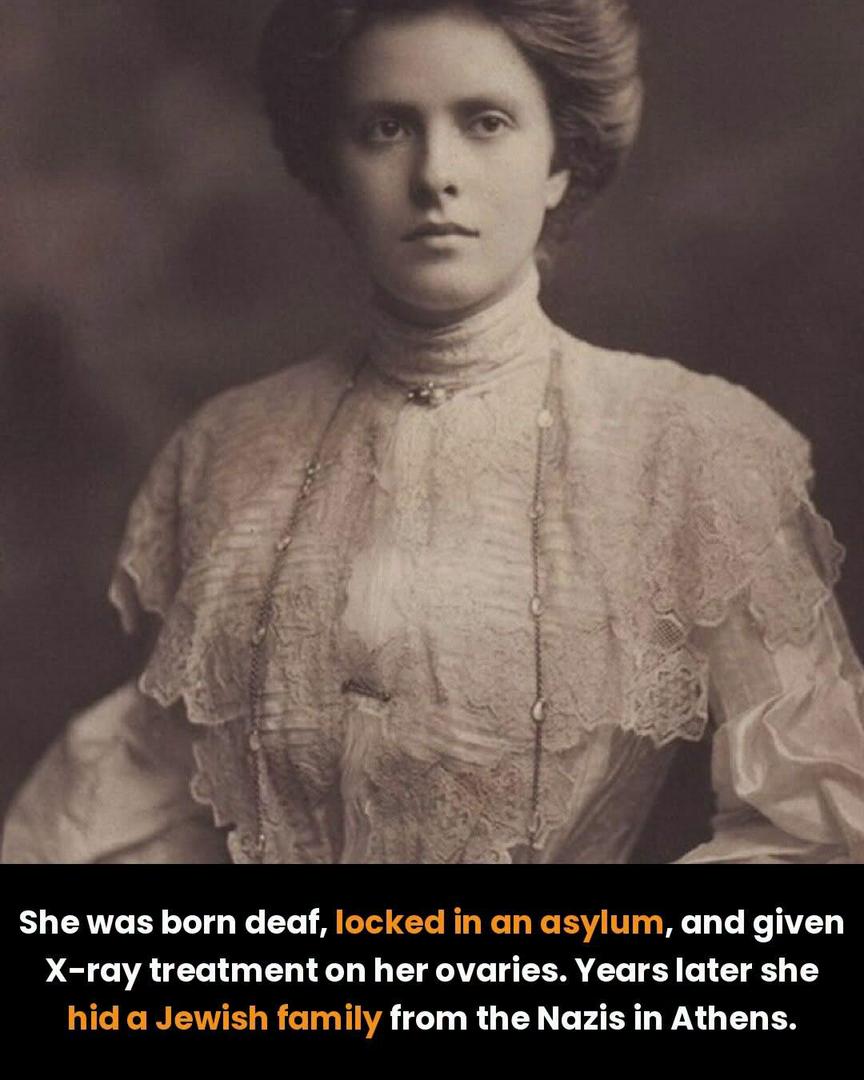
She was born deaf, in a room at Windsor Castle in 1885, the great-granddaughter of Queen Victoria. Her name was Princess Alice of Battenberg. She learned to lip-read in more than one language, and she spoke English and German well enough that most people never guessed. She married Prince Andrew of Greece and Denmark and raised a family that included a son named Philip, later the Duke of Edinburgh. In 1937, her daughter Cecilie died in a plane crash. By accounts of the time, Alice never fully recovered from the loss. In 1930, she had already been diagnosed with schizophrenia and institutionalized. She had begun to speak of religious visions and of messages from God. Her doctors saw a symptom. Her family, in the end, agreed. One treatment she was subjected to is often attributed to Sigmund Freud's circle: X-ray exposure of the ovaries, based on the theory that suppressing her sexuality would calm her mind. Accounts differ on the exact details, but the logic of the era is clear enough. She was kept away from her children for years. Her husband lived elsewhere. Her son grew up in other people's houses. When she was finally released, she was a woman most of Europe had stopped expecting anything from. She went to Athens. During the Nazi occupation of Greece, Alice sheltered members of the Cohen family, a Jewish family, in her home. By most accounts, she kept them hidden while German officers moved through the city. One account says that when she was questioned, she used her deafness as cover and simply did not seem to understand. It is a story often told, and it fits what she was. She never spoke much about it afterward. Decades later, she was recognized as Righteous Among the Nations, the honor Israel gives to non-Jews who risked their lives to save Jews. She died in 1969 at Buckingham Palace, in a room her son had made sure was hers.
5 days ago
write a comment...