1/1

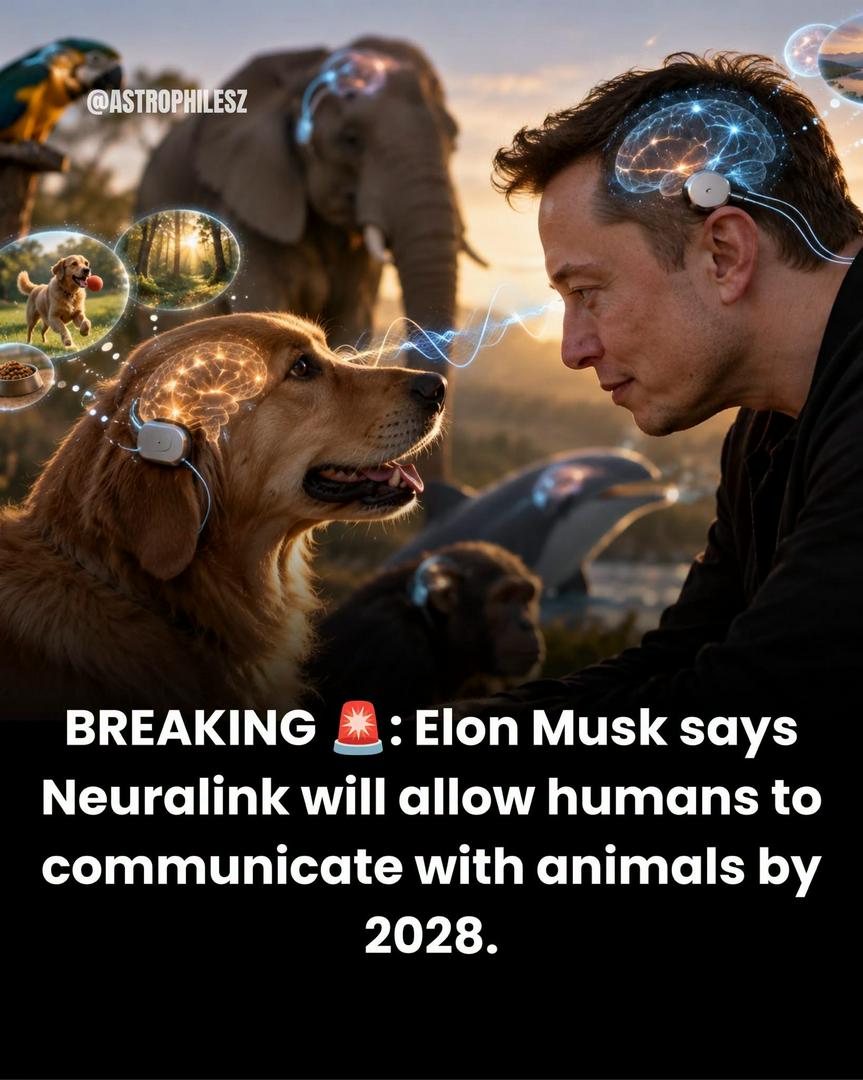
Elon Musk has suggested that Neuralink could eventually allow humans to communicate directly with animals, potentially changing how we understand other species. Neuralink is developing brain-computer interfaces that connect the human brain to external devices using tiny electrodes implanted in brain tissue. The technology records electrical activity from neurons and uses computer algorithms to interpret patterns associated with intentions, such as moving a cursor or controlling a digital device. In human trials, Neuralink has demonstrated that people with paralysis can control computers using signals from their brains. However, communicating with animals presents a much greater scientific challenge. Animals experience the world differently from humans. Dogs rely heavily on smell, bats use echolocation, and dolphins communicate through complex combinations of sounds and movements. Their brains process information differently, meaning scientists cannot simply translate animal neural activity into human language. Researchers are already using artificial intelligence to study animal communication. Projects involving whales, dolphins, birds, and other species are investigating whether machine learning can identify meaningful patterns in their vocalizations. Scientists have also demonstrated brain-computer interfaces in animals, but these experiments do not establish that humans can understand an animal’s thoughts. Even if researchers successfully decoded certain neural signals, identifying basic intentions such as hunger, fear, or movement would be very different from holding a conversation. The proposed 2028 timeline remains speculative. There is currently no demonstrated technology capable of translating complex thoughts directly between humans and other species. Nevertheless, advances in neuroscience and artificial intelligence could eventually help researchers better understand how animals perceive, communicate, and interact with their environments. Sourc
3 hours ago
write a comment...