1/1

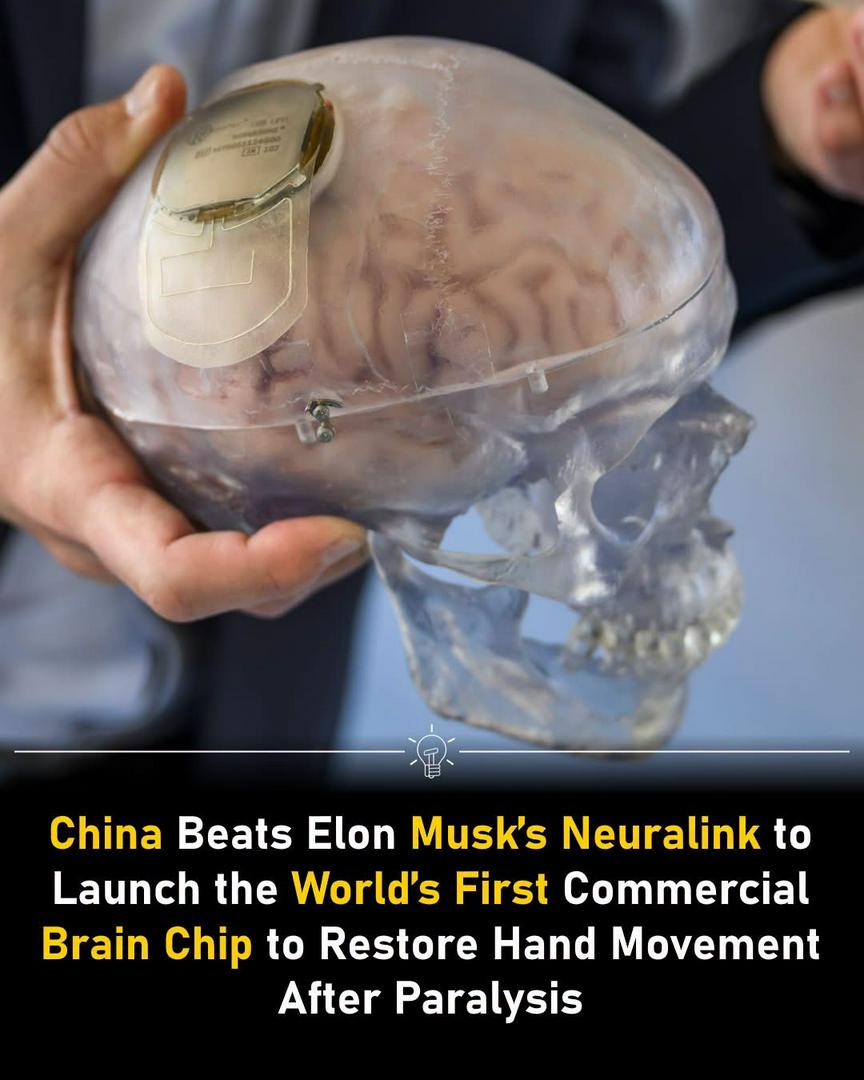
China has approved the world’s first invasive brain-computer interface (BCI) implant for commercial medical use, marking a major milestone in neurotechnology. Developed by Shanghai-based Neuracle Medical Technology, the device is designed to help people with paralysis regain some hand movement. The coin-sized implant, called NEO, records electrical signals from the brain when a patient thinks about moving their hand. Software decodes these signals and sends commands to a robotic glove that helps the user open and close their hand to grasp objects. The device is intended for adults with certain spinal cord injuries who cannot grip objects but retain some upper-arm movement. Unlike experimental systems that penetrate brain tissue, NEO’s electrodes sit beneath the skull but outside the brain’s protective covering. The approval gives China an early commercial lead over Elon Musk’s Neuralink, whose brain implants remain under clinical investigation in the United States. However, NEO has a more limited medical application, and its approval does not mean China has surpassed Neuralink in every aspect of brain-computer interface technology. Sources: Scientific American Nature Biotechnology Nature
22 hours ago
write a comment...