1/1

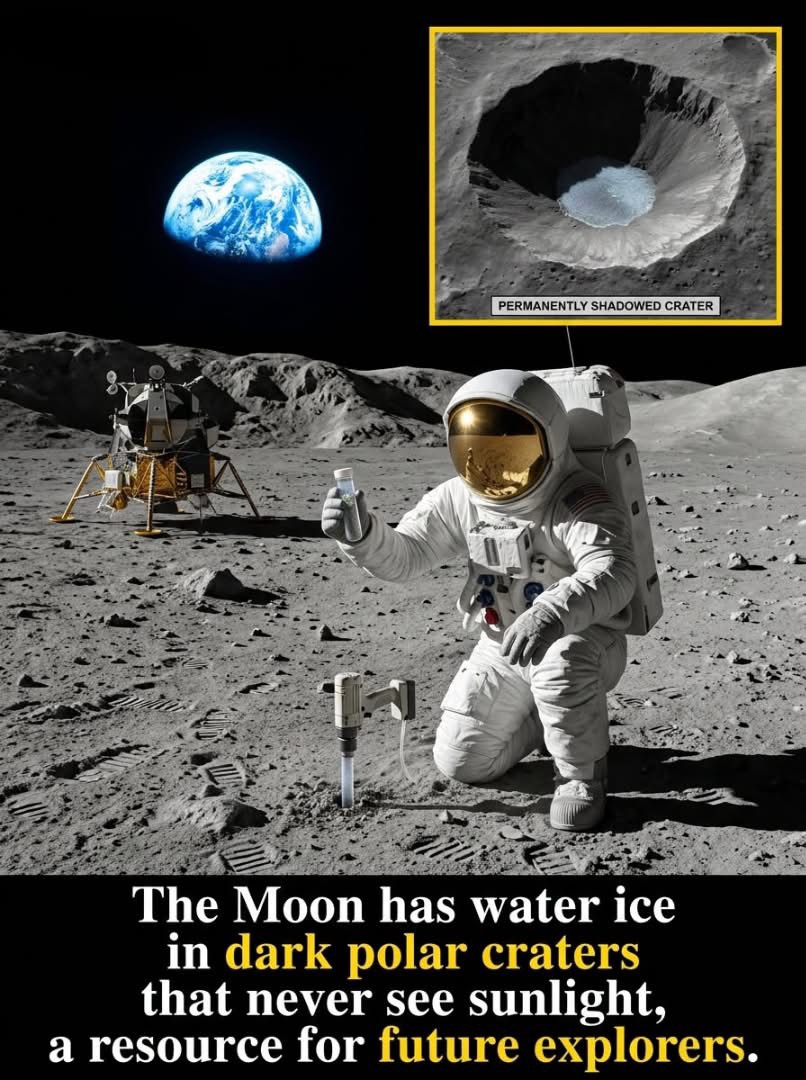
WATER ICE ON THE MOON: A RESOURCE FOR FUTURE EXPLORERS Some craters near the Moon’s poles have floors that never receive sunlight, and temperatures there are as low as about -230°C, cold enough to trap water ice for billions of years. In 2009, NASA’s LCROSS probe hit the crater Cabeus and found water in the dust that was thrown up, and India’s Chandrayaan-1 radar and instruments also found evidence of ice. In 2020, the airborne SOFIA telescope also detected water molecules on the sunlit surface. Water can be used for drinking, for breathing air and for rocket fuel, so it is a main reason that the Artemis program aims for the lunar south pole.
10 hours ago
write a comment...