1/1

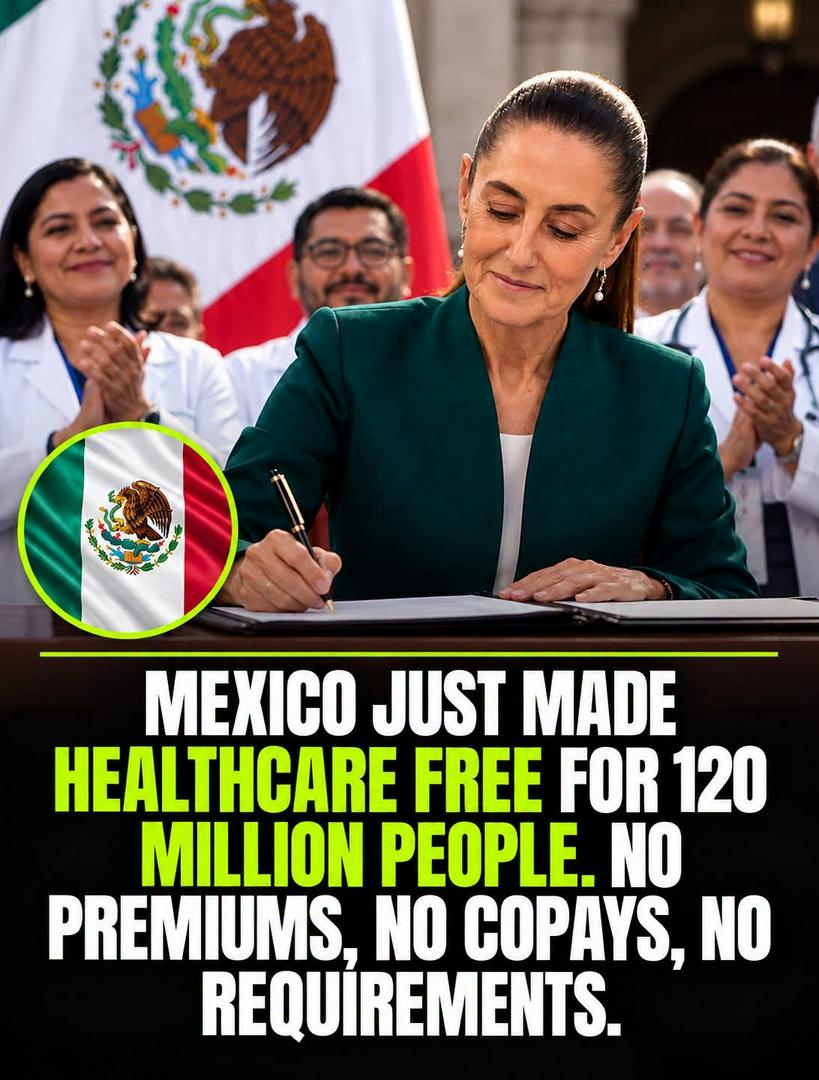
🏥 Mexico Is Building a Universal Health Service So Patients Can Get Care at Any Public Hospital Imagine having a medical emergency and being able to go to the nearest public hospital, no matter which health system you belong to. That's the goal of a big change coming to Mexico's public health care. 🇲🇽 How it works today In Mexico, public health care is split into several separate systems. Many private-sector workers are covered by IMSS. Government employees often use ISSSTE. People without formal jobs usually rely on IMSS-Bienestar. Workers at Pemex, the state oil company, have their own medical services. In most cases, patients have had to go to the system they belong to, even if another hospital is closer. 📜 A new "Universal Health Service" In April 2026, President Claudia Sheinbaum's government published a decree creating a new Universal Health Service, according to Mexican newspaper El Imparcial. The plan connects these public systems so patients can get care across them. When one institution treats another's patient, the patient's home institution pays it back. The service is meant to cover everyone, whether or not they have health insurance. 🗓️ The rollout The plan will start in phases. Starting January 1, 2027, the first phase includes: 🚑 Free emergency care at the nearest public medical unit 🤰 Care for high-risk pregnancies ❤️ Fast-response care for heart attacks and strokes 💊 Continued treatment for cancer, kidney failure, HIV and hemophilia 💉 Vaccines and basic primary care Starting July 1, 2027, the second phase is set to add lab tests, X-rays, CT scans, ultrasounds, MRIs and radiation therapy. People will register for a new health credential. According to El Imparcial, it includes a QR code linked to the patient's medical record. Mexico's public hospitals have struggled with medicine shortages. In October 2026, Sheinbaum herself
3 hours ago
write a comment...