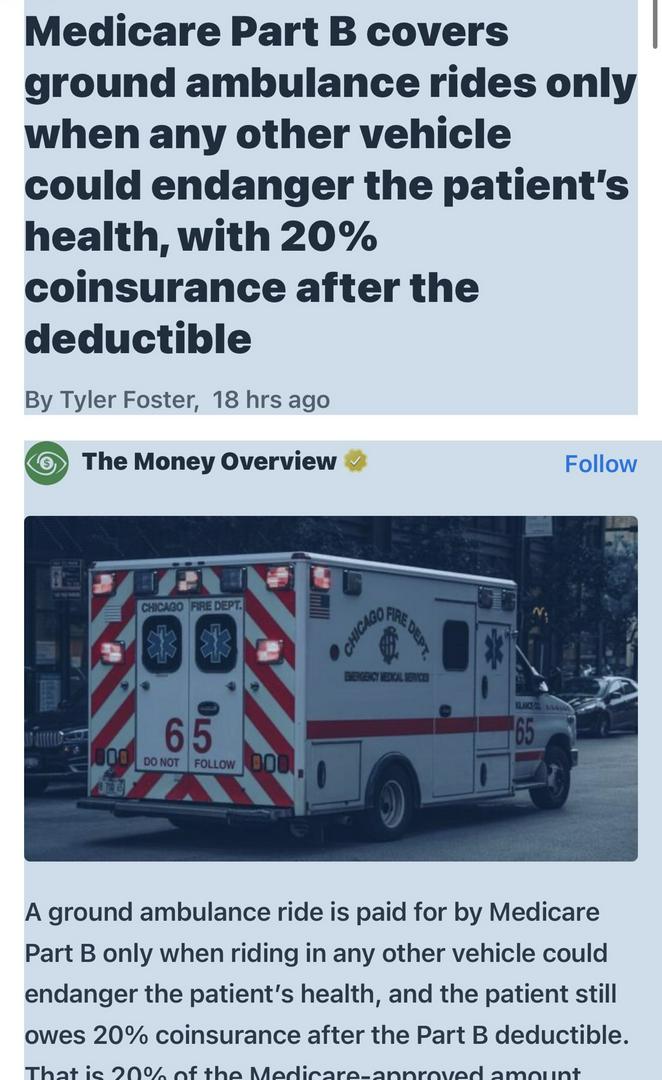
1/1

Health Medicare Part B covers ground ambulance rides only when any other vehicle could endanger the patient’s health, with 20% coinsurance after the deductible A ground ambulance ride is paid for by Medicare Part B only when riding in any other vehicle could endanger the patient’s health, and the patient still owes 20% coinsurance after the Part B deductible. That is 20% of the Medicare-approved amount, with Medicare paying the rest when the trip meets the rules. The tests are about the patient’s condition, the destination and the paperwork. The standard is stricter than whether a patient could not drive. Federal rules say coverage applies only when the patient’s condition makes other means of transportation contraindicated, and the condition must require both the ambulance trip and the level of service billed. If another method of transport could be used without endangering the patient’s health, Medicare makes no payment. Where the ambulance can take the patient Coverage also depends on the destination. Medicare.gov says ground transport must go to the nearest appropriate medical facility able to give the care needed, meaning a hospital, critical access hospital, rural emergency hospital or skilled nursing facility. The Medicare Benefit Policy Manual spells out what happens when a patient prefers a farther hospital. Going farther solely to see a specific physician does not make that hospital the nearest appropriate facility, and when the trip exceeds the limit, Medicare’s partial payment is based on the trip to the nearest appropriate one. A facility without an available bed is not considered appropriate, though contractors presume beds are available unless the evidence shows otherwise.
1 hours ago
write a comment...