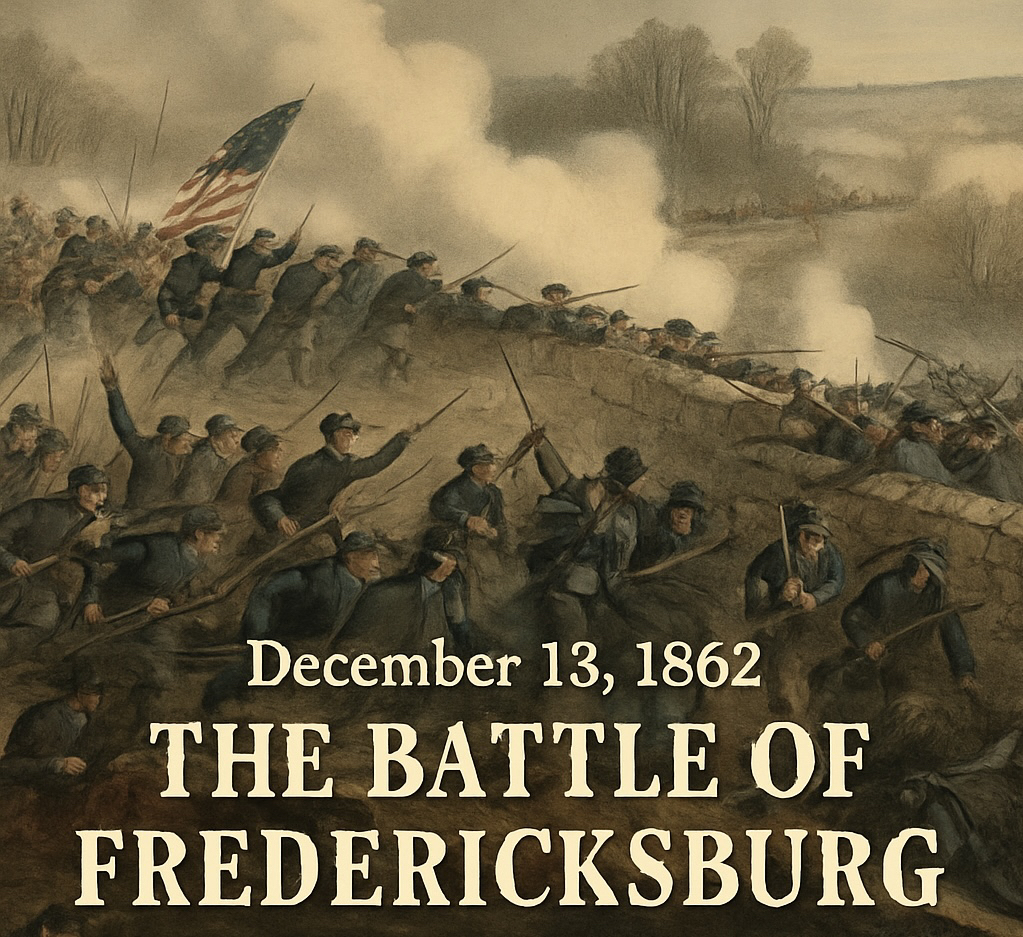
The Battle of Fredericksburg on December 13, 1862 unfolded during one of the most consequential pauses in American history. The Emancipation Proclamation had been announced but would not take effect for another three weeks, placing this battle squarely in the gap between declared freedom and enforced freedom. That timing matters.
Although the soldiers fighting at Fredericksburg were overwhelmingly white, the consequences of the Union’s defeat fell heavily on enslaved people. Every failed campaign delayed the collapse of the Confederacy, extending the lifespan of slavery in the South. Union losses did not just cost lives on the battlefield, they prolonged bondage beyond it.
Enslaved Black people in Virginia were also directly entangled in this campaign. They were forced to build fortifications, transport supplies, cook, clean, and provide labor for Confederate forces. They were not passive observers of the war. They were coerced infrastructure sustaining it.
Fredericksburg’s staggering casualties intensified Northern pressure on Union leadership. Repeated bloodshed made emancipation less of a political abstraction and more of a moral and strategic necessity. That shift helped open the door to Black enlistment in 1863, altering the direction of the war and the meaning of freedom itself.
Fredericksburg was not a Black-led battle, but it was part of the chain reaction that led to Black soldiers fighting for their own liberation and the formal destruction of slavery. History is not only about who is visible in the moment, but about who bears the cost while the nation decides who it will become.
#December13
#OnThisDay
#CivilWarHistory
#BattleOfFredericksburg
#AmericanHistory
#HistoryMatters
#UntoldHistory
#HiddenHistory
#HistoricalContext