Tag Page BlackHistory

#BlackHistory
LataraSpeaksTruth

The Little Girl Who Moved a Nation

Ruby’s story hits like a drumbeat through history. Picture a tiny first-grader in 1960, rolling up to William Frantz Elementary in New Orleans with U.S. marshals flanking her like she’s the nation’s smallest superhero. Crowds spit hate, but Ruby? She keeps it moving, lunchbox swinging, spirit unbroken. Inside, every classroom is empty because white parents pulled their kids out. Only one teacher, Barbara Henry… has the backbone to teach her. So Ruby learns alone, day after day, in a school built for hundreds. Outside, the noise stays ugly, but Ruby prays for the people yelling at her. Wild level of grace for a six-year-old, honestly. That walk didn’t just open a school door. It cracked open the future. Ruby stood steady so generations of kids could sit together and learn without fear. Her steps still echo. Her courage still teaches. Her story? Still shaking the room. #RubyBridges #BlackHistory #AmericanHistory #CivilRightsEra #EducationHistory #LataraSpeaksTruth

The Little Girl Who Moved a Nation
✅CHAUNCEYDATGUY

Black Panther Huey P. Newton (1942–1989): The Revolutionary Voice That Empowered a Generatio

Huey Percy Newton, born on February 17, 1942, in Monroe, Louisiana, became one of the most influential figures in the American civil rights movement. Raised in Oakland, California, Newton faced the harsh realities of racial inequality firsthand. Out of those experiences, he developed a deep commitment to justice and community empowerment. In 1966, alongside Bobby Seale, he co-founded the Black Panther Party for Self-Defense. Their mission was bold and unapologetic—protect Black communities from police brutality and challenge systems that thrived on oppression. Newton served as the Party’s Minister of Defense, helping shape its powerful image and mission across the nation. Under his leadership, the Panthers launched transformative community programs like Free Breakfast for Children, health clinics, education initiatives, and legal aid services. These “survival programs” were built on love and self-determination, serving as blueprints for social reform that continue to inspire movements today. Newton also co-wrote the Ten-Point Program, a declaration of the community’s right to freedom, housing, employment, and safety. His sharp intellect and unwavering resolve made him a symbol of resistance, though his life was not without controversy and struggle. On August 22, 1989, Newton’s life was tragically cut short in Oakland at the age of 47. Yet his legacy lives on. His ideas about power, equality, and self-respect still echo through generations, reminding us that the fight for justice never truly ends. #HueyPNewton #BlackPantherParty #CivilRights #ChaunceyDatGuy #Oakland #BlackHistory

Black Panther Huey P. Newton (1942–1989): The Revolutionary Voice That Empowered a GeneratioBlack Panther Huey P. Newton (1942–1989): The Revolutionary Voice That Empowered a GeneratioBlack Panther Huey P. Newton (1942–1989): The Revolutionary Voice That Empowered a GeneratioBlack Panther Huey P. Newton (1942–1989): The Revolutionary Voice That Empowered a GeneratioBlack Panther Huey P. Newton (1942–1989): The Revolutionary Voice That Empowered a GeneratioBlack Panther Huey P. Newton (1942–1989): The Revolutionary Voice That Empowered a Generatio
LataraSpeaksTruth

Edwin C. Berry was born in 1854 in Oberlin, Ohio and would grow into one of the most successful Black hoteliers of his era. His story is one of discipline, skill, and a refusal to be boxed in by the limits placed on Black ambition during the late nineteenth and early twentieth century. Berry trained as a barber first, a field where Black men were often able to build steady clientele and earn financial stability. That experience taught him how to read people, manage money, and understand the rhythm of business. Those skills opened the door to something bigger. He moved to Athens, Ohio where he took a bold step. He purchased and transformed a modest boarding house into what became the Hotel Berry, a respected establishment that drew travelers from across the region. At a time when segregation blocked Black travelers from many accommodations, Berry created a place known for its order, comfort, and professionalism. His hotel earned praise from both Black and white patrons which was rare for the period. People noted the elegance of the space and the discipline with which Berry ran it. His success was not just about hospitality. It showed what strong Black leadership looked like during a time when opportunities were limited and racial barriers were constant. Berry built wealth, provided jobs, and raised the standard for what Black owned businesses could achieve. His life stands as a reminder that history is filled with stories of Black excellence that shaped communities long before these contributions were fully acknowledged. Berry’s legacy still inspires people who understand how hard he had to work to build what he built. #EdwinCBerry #BlackHistory #AmericanHistory #AthensOhio #HotelBerry #LataraSpeaksTruth

LataraSpeaksTruth

January 15 marks the birth of Martin Luther King Jr., born in 1929. This date is not symbolic fluff. It is a historical anchor. A reminder that disciplined thought, moral clarity, and strategic pressure can destabilize entire systems. Dr. King was not accidental. He was trained. Educated. Deliberate. A Morehouse scholar with a doctorate who understood power, language, timing, and optics. He knew how to force a nation to confront its contradictions without throwing a punch. That restraint made his challenge impossible to ignore. From Montgomery to Birmingham to Selma, his leadership moved civil rights from protest signs into federal law. He did not just inspire conscience. He altered policy. That distinction matters. Movements run on passion. Progress runs on strategy. King mastered both. January 15 is not about a dream stripped of context. It is about intellect, courage, and accountability. It is about a man who understood that justice delayed was not accidental, and that pressure applied intelligently and without apology bends history. Today, we do not soften him. We remember him whole. The thinker. The tactician. The man who knew exactly what he was doing. #MLKDay #MartinLutherKingJr #CivilRights #BlackHistory #SocialJustice

LataraSpeaksTruth

On This Day: November 29, 1961 — When the Freedom Riders Refused to Back Down

On this day in 1961, Freedom Riders were still rolling through the Deep South, long after the headlines tried to pretend the movement had “settled down.” The cameras had moved on. The danger hadn’t. Another group left New Orleans and headed straight into Mississippi, a place already infamous for jailing, beating, and shadowing anyone who dared to challenge segregation. They knew exactly what kind of storm they were walking into. And still, they stepped onto that bus. McComb wasn’t some sleepy pin on a map. It was one of the most hostile towns in the state… a place where activists were stalked, threatened, arrested, and sometimes worse, all for sitting in the wrong waiting room. That didn’t stop them. Their goal was simple: force the South to follow the law that already existed. The Supreme Court had ruled. The ICC had ordered desegregation of interstate travel. Mississippi just shrugged and said, “Not here.” These late-1961 rides didn’t come with a media circus or crowds chanting in the streets. What they did come with was quiet, stubborn courage, the kind that doesn’t need applause to stand firm. The riders were confronted, arrested, and pushed back at every turn, but they kept moving anyway. And that persistence mattered. Every arrest, every challenge, every mile traveled added pressure that eventually left the federal government out of excuses. The law was on the books. These riders made sure it was enforced. It’s a reminder that history isn’t built only from the bold moments everyone remembers. Sometimes it’s shaped by the steady footsteps of people who refuse to let injustice sit untouched. They kept riding… town by town, bus by bus… until the barriers cracked. #FreedomRiders #BlackHistory #CivilRightsMovement #OnThisDay #HistoryMatters #KnowYourHistory #LataraSpeaksTruth

On This Day: November 29, 1961 — When the Freedom Riders Refused to Back DownOn This Day: November 29, 1961 — When the Freedom Riders Refused to Back Down
LataraSpeaksTruth

On January 6, 1941, A. Philip Randolph made a move that rarely gets credited the way it should. He formally escalated plans for what became the March on Washington Movement, not as a ceremony, not as a speech tour, but as a direct threat. One hundred thousand Black workers would descend on Washington, D.C., during wartime, to expose racial discrimination inside the very defense industries claiming to protect democracy. This was not a symbolic march. It was an economic pressure campaign. Randolph understood leverage. Defense factories were booming as the U.S. prepared for World War II, yet Black workers were routinely excluded from skilled positions and union membership. Randolph made it clear that the government could not preach freedom abroad while enforcing exclusion at home. The threat worked. Faced with the possibility of a mass protest that would embarrass the administration on a global stage, President Franklin D. Roosevelt acted. Later that year, he issued Executive Order 8802, banning racial discrimination in defense industries and federal contracts and establishing the Fair Employment Practices Committee to enforce it. There was no televised showdown. No viral slogan. No sudden moral awakening. This change happened because Randolph was willing to apply pressure where it hurt…labor, production, and international reputation. The march itself was ultimately called off, but the goal had already been achieved. This is one of those moments in history that later gets softened. The policy change is remembered. The discomfort that forced it is not. But make no mistake, this didn’t “just happen.” It happened because Randolph was prepared to embarrass the federal government during wartime and understood that quiet leverage often moves the needle faster than loud applause. That is how power actually shifts. #BlackHistory #January6 #APhilipRandolph #MarchOnWashingtonMovement #LaborHistory #AmericanHistory #HiddenHistory #CivilRightsHistory #EconomicPressure

LataraSpeaksTruth

🚌Before Rosa Sat, Claudette Already Had.

Nine months before Rosa Parks made history, a 15-year-old girl named Claudette Colvin refused to give up her seat on a Montgomery bus. She was young, bold, and fearless, but the movement wasn’t ready to rally behind her. They called her “too rebellious,” “too dark,” “too unpolished.” So when Rosa Parks, a seasoned activist and NAACP secretary, made that same choice, the world finally paid attention. Not because the act was new… but because society decided who was allowed to represent it. Rosa knew the risk. She knew the story before hers. And she made her moment count, turning one woman’s refusal into a movement’s awakening. 🕊️ She passed away on this day in 2005, but her courage, and Claudette’s… still ripple through every generation learning that “quiet” does not mean “compliant”. #ClaudetteColvin #RosaParks #BlackHistory #CivilRights #LataraSpeaksTruth #WomenOfCourage #HiddenFigures #KnowYourHistory #BlackExcellence #LegacyAndTruth

🚌Before Rosa Sat, Claudette Already Had.
LataraSpeaksTruth

On December 4, 1950, Ensign Jesse LeRoy Brown, the first Black man to complete U.S. Navy flight training and serve as a naval aviator, was shot down while flying close air support during the Korean War near the Chosin Reservoir. He crash landed in the snow, badly injured and trapped in the wreckage, while his wingman, Thomas J. Hudner Jr., made a desperate rescue attempt, even crash landing nearby to try to reach him. Brown did not survive, and his remains were never recovered, but his legacy did not end on that frozen mountainside. He became a permanent symbol of excellence earned through barriers, and a reminder that service, skill, and courage have always been bigger than the limits people tried to place on them. #ThisDayInHistory #KoreanWar #USNavy #NavalAviation #MilitaryHistory #JesseLBrown #BlackHistory #ChosinReservoir

LataraSpeaksTruth

Remembering James A. Hood

James A. Hood born November 10, 1942, was one of the first two Black students to enroll at the University of Alabama, forcing the nation to confront its deep racial divide. When Governor George Wallace tried to physically block his entry, Hood didn’t back down. He walked forward, calm but determined, making history with each step. After leaving the university for his safety, Hood continued his education and later earned his master’s degree from the same school he once fought to enter. He spent his life working in education and public service, proving that courage doesn’t end with one act of defiance… it becomes a lifelong mission. On his birthday, we remember James A. Hood not just for walking through those doors, but for refusing to let fear or hate stop his journey. His quiet strength still speaks volumes about what true bravery looks like. #JamesHood #OnThisDay #CivilRights #BlackHistory #Legacy #Inspiration

Remembering James A. Hood
LataraSpeaksTruth

1863… Connecticut Approves a Black Civil War Regiment

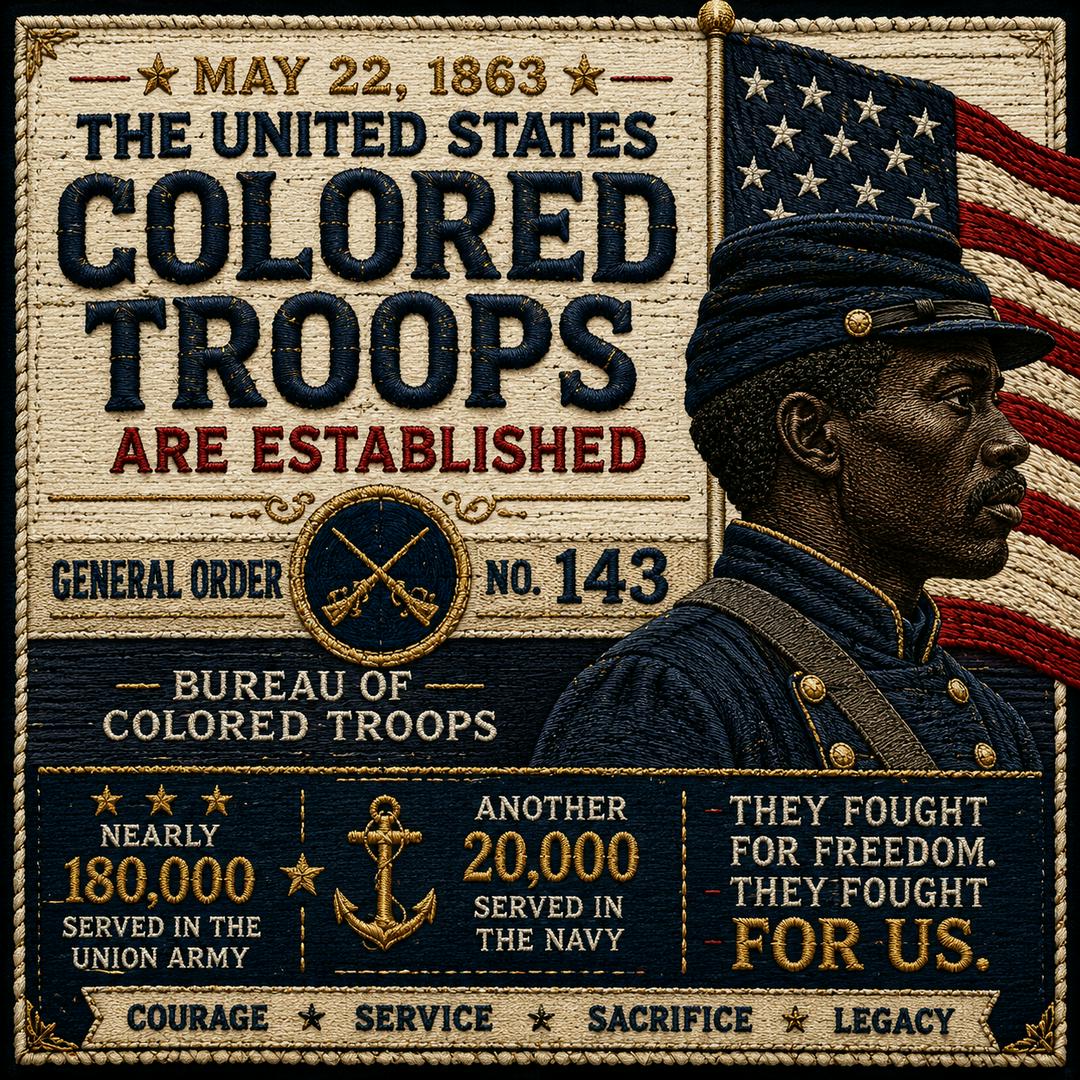
On this day in 1863, the Connecticut General Assembly met in a special session to decide whether Black men could serve as front line soldiers in the Union Army. After a day of debate, lawmakers approved the measure, and Governor William Buckingham signed it into law on November 23. This decision opened the door for Black residents in Connecticut to enlist in a state infantry regiment for the first time. Recruiters began organizing almost immediately, and more than one thousand Black volunteers stepped forward in the following months. Their participation formed the 29th Connecticut Colored Infantry Regiment and helped begin a second unit, the 30th Connecticut. The 29th Connecticut mustered into service in early 1864 and later fought in major campaigns near Petersburg and Richmond. They were also among the first Union troops to enter Richmond when the city fell in April 1865. The decision made on November 23, 1863 marked a turning point in Connecticut’s military history and highlighted the essential role Black soldiers played in the Union’s efforts during the Civil War. #BlackHistory #TodayInHistory #CivilWarHistory #ConnecticutHistory #UnionArmy #29thConnecticut #HistoricalFacts #AmericanHistory #OnThisDay #HistoryMatters

1863… Connecticut Approves a Black Civil War Regiment