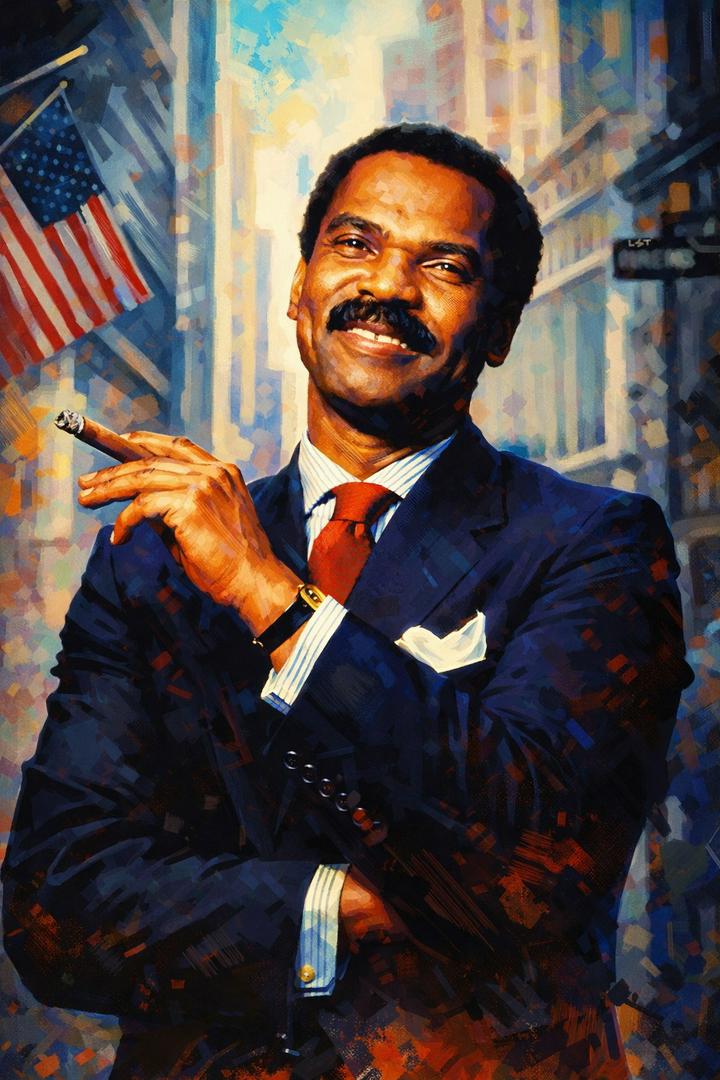
January 19 marks the passing of Reginald F. Lewis, a figure whose impact on American business is still not fully appreciated. Lewis was not a symbol. He was a strategist. A dealmaker. A man who entered financial spaces that were never built with him in mind and performed at the highest level anyway.
Born in Baltimore, Lewis learned early that waiting for opportunity was a losing game. After graduating from Harvard Law School, he rejected the traditional route of working inside established firms and chose to build his own. He believed progress required motion, not permission. That belief shaped every decision that followed.
In 1987, Lewis led the leveraged buyout of TLC Beatrice International for 985 million dollars. At the time, it was one of the largest transactions of its kind. Under his leadership, the global food company expanded aggressively, eventually generating more than one billion dollars in annual sales. With that achievement, Lewis became the first African American to build and lead a billion-dollar company. This was not theoretical success. It was documented, measurable, and global.
Lewis changed how private equity was viewed. He proved that these markets were not closed due to lack of talent, but due to gatekeeping. Preparation, legal expertise, and strategic risk allowed him to operate at levels many believed were unreachable.
Beyond the boardroom, Lewis was deeply committed to reinvestment. He donated millions to Harvard Law School, where the International Law Center bears his name. He also supported cultural institutions in Baltimore dedicated to preserving African American history. To Lewis, wealth without responsibility was incomplete.
He passed away in 1993 at the age of 50 after battling brain cancer. His legacy remains a reminder that opportunity is not handed out evenly, but excellence leaves evidence that cannot be ignored.
#ReginaldFLewis #BusinessHistory #AmericanBusiness #EntrepreneurLegacy #PrivateEquity #WallStreetHistory