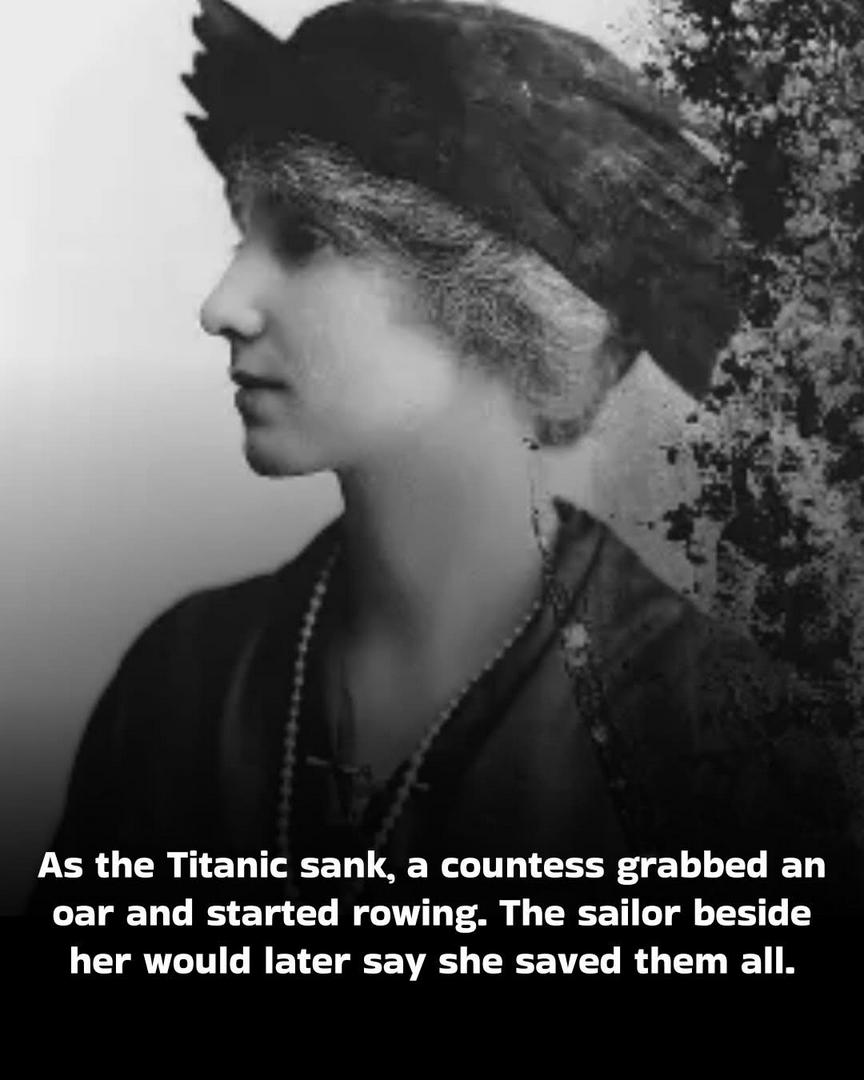
As the Titanic sank, a countess grabbed an oar and started rowing. The sailor beside her would later say she saved them all.
April 14, 1912. 11:40 PM.
The RMS Titanic, the largest and most luxurious ship ever built, struck an iceberg in the North Atlantic.
Within hours, the "unsinkable" ship would slip beneath the icy waters, taking over fifteen hundred souls with it.
In the chaos of evacuation, social class meant everything and nothing simultaneously.
First-class passengers received priority access to lifeboats. But in those lifeboats, drifting in freezing darkness far from the dying ship, titles and wealth couldn't row an oar or calm a panicked heart.
Lifeboat 8 was lowered at 1:10 AM with twenty-eight people aboard, mostly women and children from first and second class.
One of those women was Lucy Noël Martha Leslie, Countess of Rothes.
She was thirty-three years old. Traveling with her cousin Gladys Cherry and maid Roberta Maioni. Returning to Britain after spending time in America.
She had every reason to huddle in the bottom of that lifeboat, wrapped in blankets, waiting to be rescued like the titled lady she was.
Instead, she grabbed an oar.
The boat's commander was Able Seaman Thomas Jones, one of only two crew members assigned to the lifeboat. He was responsible for navigating and managing twenty-eight terrified people in a small wooden boat in the middle of the freezing Atlantic at night.
When #CourageInCrisisCountess of Rothes asked what she could do to help, Jones later recalled that he could barely believe what happened next.
This aristocratic woman took a position at the oars beside him and began rowing.
Not delicately. Not symbolically.
She actually rowed. For hours. Through the darkness and cold.
But it wasn't just the physical labor that made the difference.
It was her voice. Her presence. Her refusal to let fear consume the lifeboat.