Tag Page CulturalHistory

#CulturalHistory
LataraSpeaksTruth

Romare Bearden was one of the most influential American artists of the twentieth century, known for turning everyday Black life into unforgettable visual stories. Born on September 2, 1911 in Charlotte, North Carolina, he moved to New York City as a child during the Great Migration. Harlem became his creative home, a place filled with music, literature, and bold ideas that shaped how he saw the world. Bearden studied at New York University and explored different paths early on, but art kept calling him back. He began as a cartoonist and painter, then found the style that made him famous: collage. He combined photographs, painted paper, magazine clippings, and textured materials to build layered scenes that felt like memory brought to life. His work captured church gatherings, family moments, Southern roots, Harlem streets, and the rhythm of jazz. Instead of spotlighting a single person, he often showed the shared experience of a community. His images feel musical, like stories told in chords and fragments, then stitched into something whole. Bearden’s work has been shown in major museums, and in 1987 he received the National Medal of Arts. He passed away in 1988, but his influence is still everywhere, in exhibitions, classrooms, and in the artists who keep learning from his vision. #RomareBearden #BlackHistory #BlackArtists #ArtHistory #AmericanArt #Harlem #GreatMigration #CollageArt #CulturalHistory #HistoryMatters #HiddenHistory

LataraSpeaksTruth

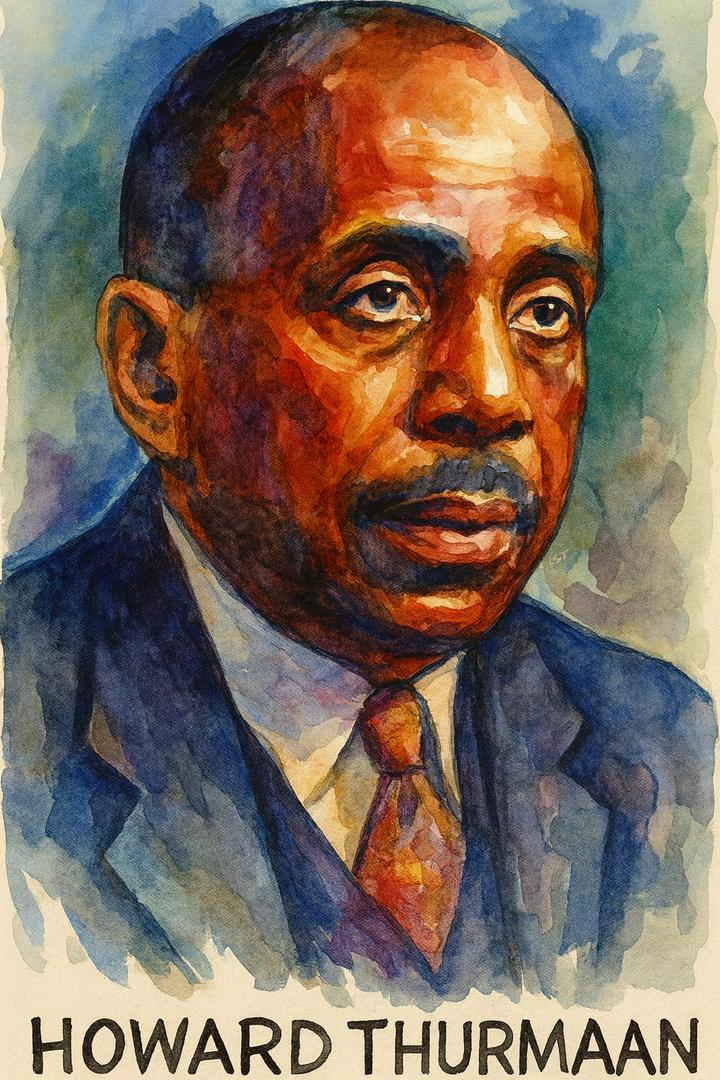
Howard Thurman, Born Around This Time In 1899, Became One Of The Quiet Architects Of A Movement

Howard Washington Thurman entered the world in late November of 1899 in Daytona Beach, Florida, during a time when Black spiritual leadership was still fighting for its full voice. He would grow into one of the most influential theologians of the twentieth century, guiding generations through a faith rooted in dignity, nonviolence, and moral clarity. Thurman later served as dean of Rankin Chapel at Howard University and Marsh Chapel at Boston University, using both spaces to shape conversations that reached far beyond religion. His writings on nonviolence became essential reading for young seminarians in the 1950s, including Martin Luther King Jr., who carried Thurman’s work into marches, pulpits, and national debates. Thurman rarely sought headlines, but his influence threaded through the movement like a steady hand. His life reminds us that the people who change history are not always the ones at the microphone. Sometimes they are the thinkers whose words steady the crowd. #HistoryMatters #OnThisDay #CulturalHistory #FaithHistory #CivilRightsLegacy #NewsBreakCommunity #LataraSpeaksTruthp

Howard Thurman, Born Around This Time In 1899, Became One Of The Quiet Architects Of A Movement
LataraSpeaksTruth

January 28, 1901 marks the birth of Richmond Barthé, one of the most influential sculptors of the Harlem Renaissance and a quiet giant in American art history. Born James Richmond Barthé in Bay St. Louis, Mississippi, he came of age during a period when Black artists were rarely allowed space to explore complexity, beauty, or interior life. Barthé did not ask permission. He carved it. Best known for his figurative sculptures, Barthé focused on movement, emotion, and dignity. His subjects were often Black men and women captured not as symbols, but as human beings. Thoughtful. Vulnerable. Strong. Alive. At a time when mainstream art reduced Black bodies to stereotypes, Barthé insisted on nuance and grace. His work gained national attention during the Harlem Renaissance, and his reputation extended far beyond it. Barthé created portraits of major cultural figures including Alain Locke, Duke Ellington, and Rose McClendon. His sculptures were collected by major institutions and private patrons, even as he continued to navigate racial barriers and personal isolation. Barthé also lived openly as a gay man during a time when that visibility carried real risk. Rather than dilute his identity or his vision, he allowed both to exist in the work. That honesty gave his art its emotional depth and lasting power. Richmond Barthé died in 1989, but his legacy endures in bronze and stone. His sculptures remind us that history is not only written in speeches and laws, but in hands that shape truth into form. On this day, we remember an artist who refused to flatten humanity, and whose work still asks us to look closer. #RichmondBarthe #HarlemRenaissance #ArtHistory #January28 #BlackArtists #AmericanSculpture #CulturalHistory #ArtLegacy #OnThisDay

You've reached the end!
Tag: CulturalHistory - Page 2 | LocalAll