Tag Page Democracy

#Democracy
GlacialGazelle

When Democracies Start Worrying About Invisible Enemies

The UK’s new inquiry into foreign financial interference reflects a growing anxiety across democratic systems. The threat isn’t tanks or troops. It’s money flows, digital influence, and opaque networks that operate below public visibility. The challenge is structural. Democracies depend on openness, but openness creates vulnerabilities. Closing those gaps requires surveillance, regulation, and suspicion — tools that democracies are historically uncomfortable using against themselves. That tension has no clean resolution. Investigate too aggressively, and you risk politicizing national security. Investigate too weakly, and interference becomes normalized. Either way, trust erodes. The deeper question isn’t whether foreign influence exists. It’s whether democratic systems can defend themselves without becoming less democratic in the process. #UKPolitics #Democracy #NationalSecurity #PoliticalSystems

When Democracies Start Worrying About Invisible Enemies
GlacialGazelle

How “Technical Adjustments” Start Undermining Democracies

When governments talk about election rules, the language is always administrative. Updates. Revisions. Cleanups. Nothing political, just maintenance. That’s the problem. In India’s ongoing voter roll debates, the official framing is efficiency. Accuracy. Modernization. Critics hear something else entirely: exclusion, especially of vulnerable groups. Both sides insist they are defending democracy. What gets lost is a basic truth. Democracies don’t collapse only through dramatic power grabs. They erode through small procedural changes that are difficult to explain, harder to contest, and easy to dismiss as boring. By the time the impact is visible, the argument has already shifted. The issue is no longer fairness, but legality. Not participation, but compliance. Democracy rarely disappears in one moment. More often, it gets quietly redesigned. #Democracy #IndiaPolitics #Elections #Governance #PoliticalSystems

How “Technical Adjustments” Start Undermining Democracies
LataraSpeaksTruth

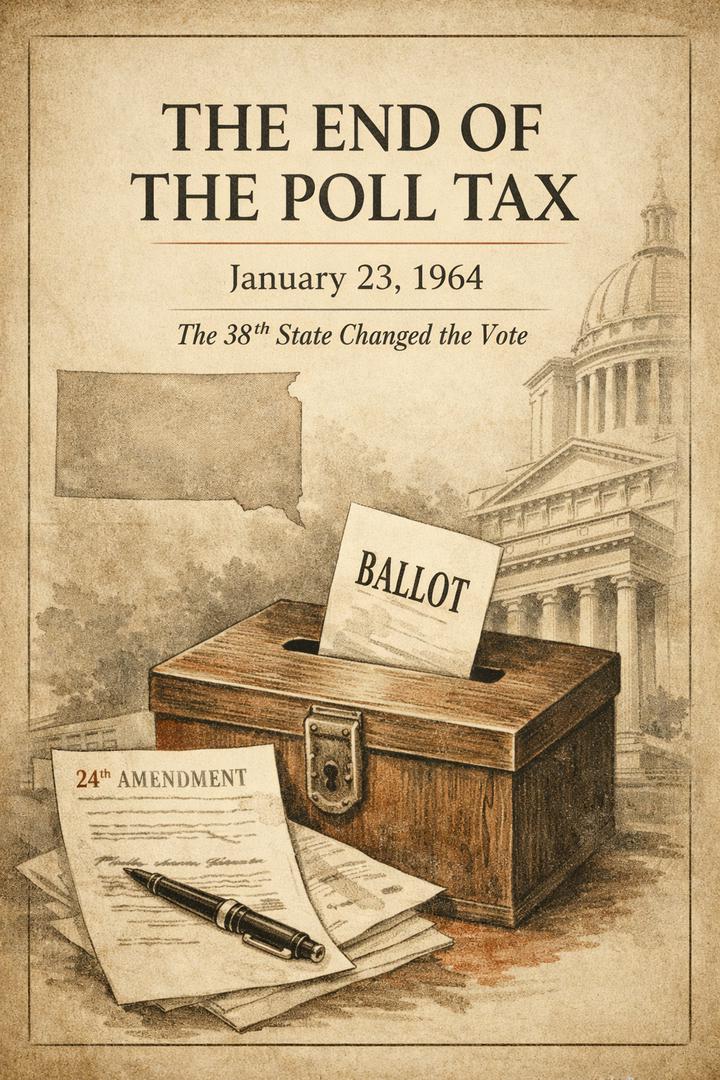
On January 23, 1964, a quiet legislative vote in South Dakota echoed across the entire United States. By becoming the 38th state to ratify the 24th Amendment, South Dakota provided the final “yes” needed to cement a fundamental change in American democracy…the official end of the poll tax in federal elections. For decades, the poll tax had operated as a so-called legal barrier to the ballot box. Framed as a simple administrative fee, it was anything but neutral in practice. In many Southern states, voters were required to pay not only the current tax but accumulated fees for every year they had not voted. This system disproportionately blocked Black Americans and poor white citizens from participating in elections. Combined with literacy tests, intimidation, and economic retaliation, the poll tax ensured political power remained tightly controlled. The road to the 24th Amendment was long and deliberate. Proposed by Congress in 1962, it required approval from three-fourths of the states. As 1964 began, the nation watched the count inch closer to the threshold. When South Dakota’s legislature ratified the amendment on January 23, it crossed the constitutional finish line, making the amendment law. The amendment marked a major victory for voting access by declaring that the right to vote in federal elections could not be conditioned on payment. Still, the work was unfinished. Some states continued to impose poll taxes in state and local elections until the Supreme Court struck them down entirely in 1966. Today, the anniversary of South Dakota’s ratification stands as a reminder that voting rights have never been freely handed over. They have been argued for, organized for, and fought for…often quietly, often against resistance, but always with lasting impact. #OnThisDay #USHIstory #VotingRights #Democracy #24thAmendment #CivilRightsHistory #SouthDakota #HistoryMatters

You've reached the end!
Tag: Democracy | LocalAll