Tag Page Explore

#Explore
justme

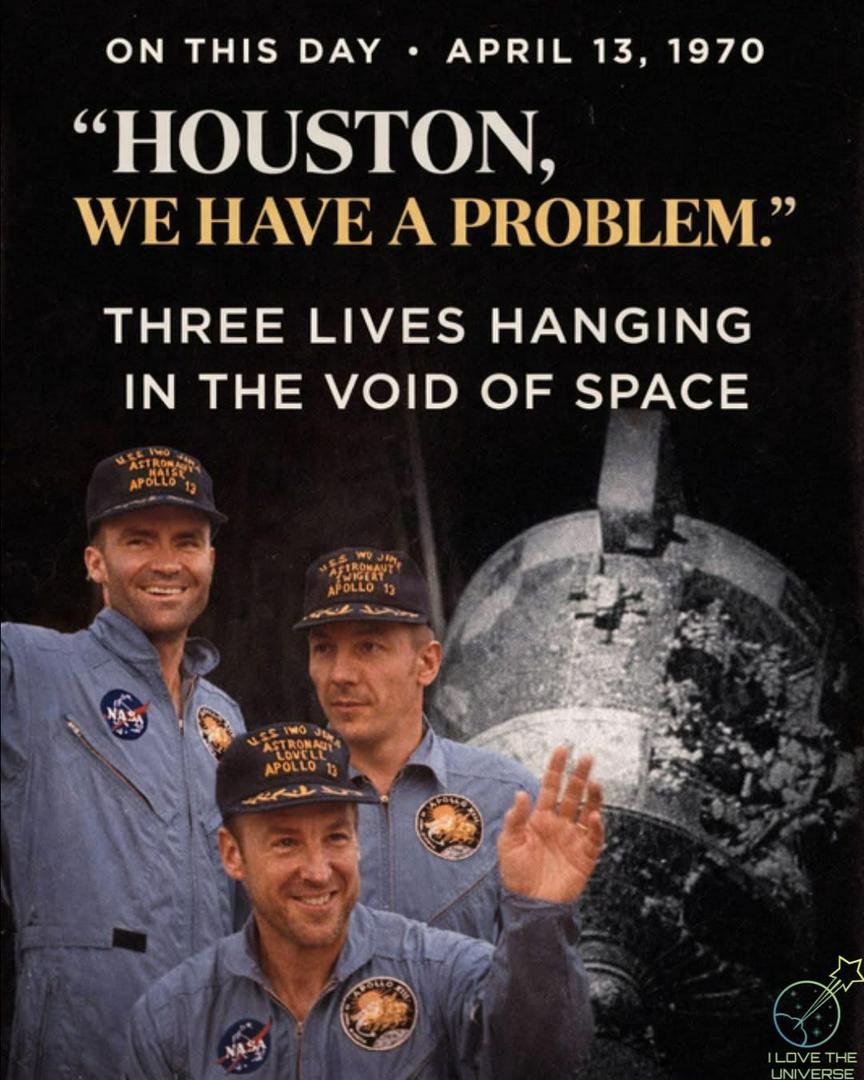
🚀 Apollo 13 — when everything went wrong… and humanity refused to lose On this day, April 13, 1970 — nearly 320,000 kilometers from Earth — an ordinary sentence turned into one of the most chilling moments in space history: “Houston, we’ve had a problem.” A sudden explosion ripped through the service module of Apollo 13, crippling the spacecraft. Oxygen was leaking into space. Power was failing. The Moon landing was instantly abandoned. Three astronauts — Jim Lovell, Jack Swigert, and Fred Haise — were no longer explorers. They were fighting to survive. What followed was not just a mission… It was one of the greatest rescue efforts in human history. Back on Earth, hundreds of engineers at NASA worked around the clock. No sleep. No margin for error. Every calculation mattered. Every decision could mean life or death. They turned the lunar module into a lifeboat. They improvised solutions never tested before. They built survival plans out of pure ingenuity and desperation. At one point, rising carbon dioxide levels threatened to suffocate the crew — until engineers famously created a workaround using nothing but materials available onboard. This was humanity at its absolute best. Against impossible odds, Apollo 13 didn’t land on the Moon. But it did something even greater. It brought its crew home. Alive. The story became legendary — and was later immortalized in the film Apollo 13, starring Tom Hanks — but no movie can fully capture the tension, the fear, and the brilliance of those real moments. Because this wasn’t fiction. This was real. And it proved something we still believe today: Even in the darkest moment… humanity finds a way. #Apollo13 #NASA #Space #Astronomy #History #OnThisDay #Explore #NeverGiveUp

justme

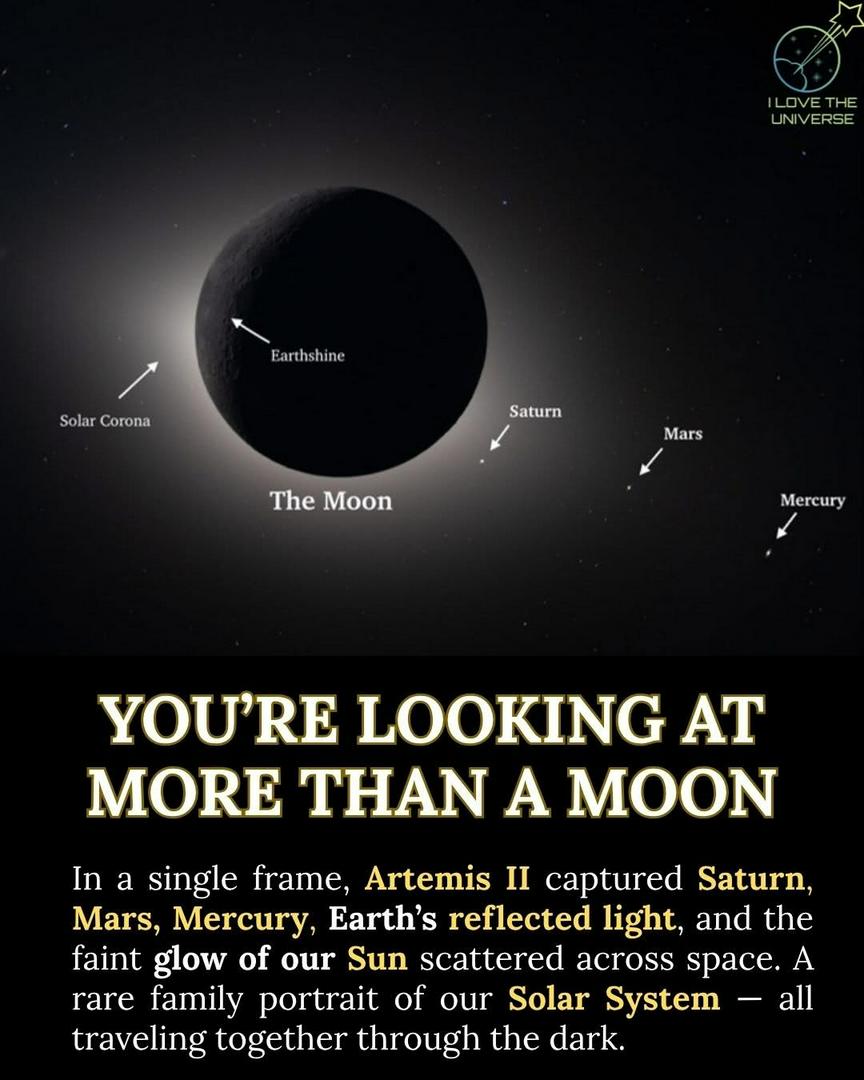
This image captures more than just the Moon… 🤯 Captured by the Artemis II crew, this view reveals not just the Moon, but a quiet alignment of worlds — Saturn, Mars, and Mercury, all shining across the same sky. Even Earth is here, its light softly illuminating the dark side of the Moon. What looks like empty space is anything but — sunlight scattered through interplanetary dust creates a faint glow, reminding us that we are all part of one vast, connected system. Venus sits just beyond the edge of this frame, while Neptune is here too — hidden in the darkness, too faint to be seen. A rare and humbling family portrait of our Solar System — seen not from afar, but from within. 🚀 Credits: NASA/ Artemis II #ArtemisII #NASA #Space #Astronomy #SolarSystem #Moon #Earth #Explore #Cosmos

justme

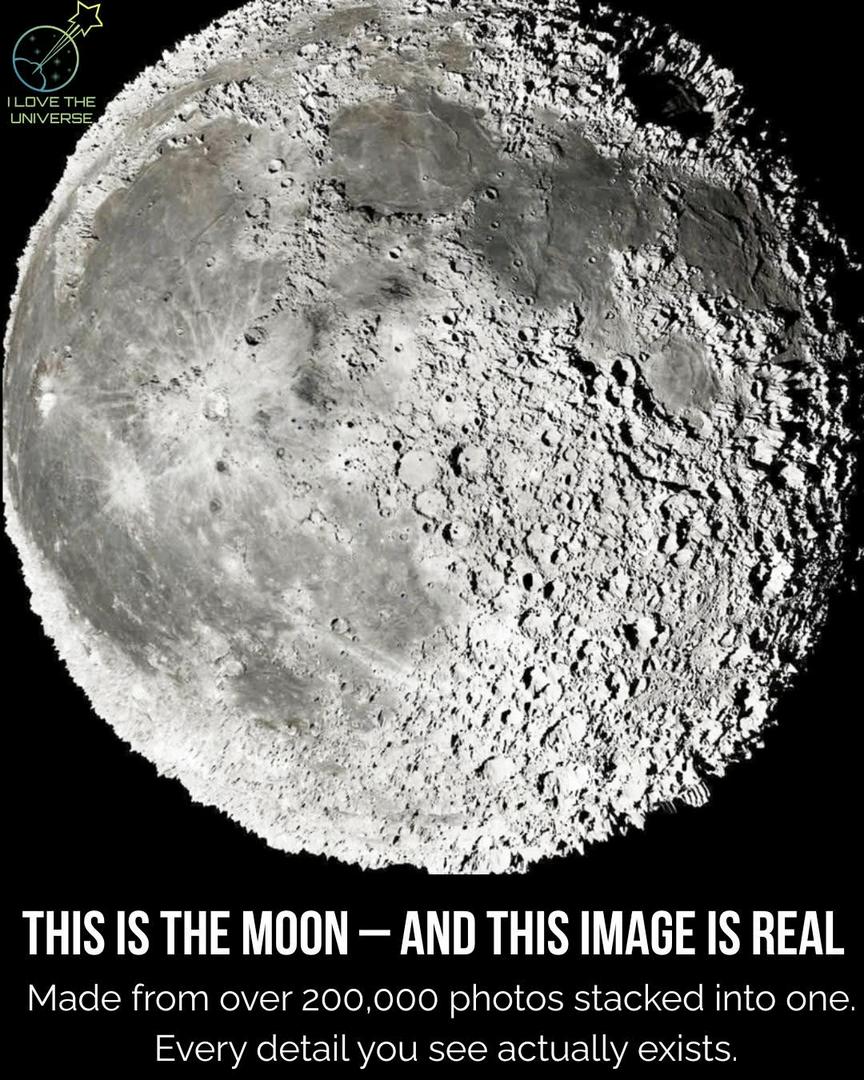
200,000 photos. One Moon. 🌕 Astrophotographer Andrew McCarthy didn’t capture this image in a single shot. He pointed his telescope at the Moon… and started recording. For hours, his camera collected over 200,000 individual frames — each one capturing tiny fragments of detail: craters, ridges, shadows, subtle textures. But raw images aren’t enough. Using a technique called stacking, he combined thousands of the sharpest frames together — reducing atmospheric distortion and revealing details normally blurred by Earth’s turbulent air. Then came the precision work. The Moon was divided into multiple sections, each processed separately at extreme resolution. Every segment was sharpened, aligned, and stitched into a single massive mosaic. And finally — color. Not added for style, but carefully enhanced to reveal real mineral differences across the lunar surface — tones our eyes can’t naturally see. What you’re looking at isn’t just a photo. It’s the result of: • patience measured in hours • processing measured in weeks • and precision measured in pixels Next time you look at the Moon… remember: This is what it really looks like — when nothing is left hidden. Image Credit: Andrew McCarthy and @cosmic_background #Moon #Astrophotography #Space #Astronomy #Universe #NightSky #Explore #Science

Tag: Explore | LocalAll