Tag Page History

#History
1776 Patriot

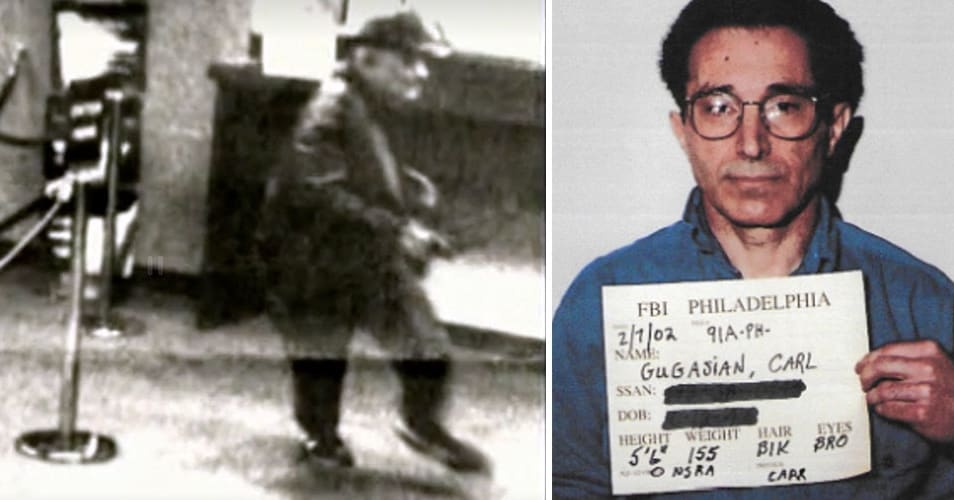
America’s Most Elusive Bank Robber: Carl Gugasian Carl Gugasian, known as the Friday Night Bank Robber, is considered the most prolific solo bank robber in American history. Over a criminal career spanning roughly three decades from the early 1970s until his arrest in 2002, Gugasian carried out more than fifty confirmed bank robberies across multiple states on the East Coast. His operations were highly methodical and precise. He targeted small town banks often located near wooded areas or highway on ramps to make escape easier and reduce the chance of police interception. He typically struck on Friday nights shortly before closing time to minimize customers while maximizing cash on hand. Gugasian carefully disguised himself with masks and loose clothing to conceal his identity and appearance. He conducted detailed surveillance of each target, sometimes visiting a bank multiple times over weeks to note employee routines, security camera placements, and the timing of cash deliveries. His robberies were executed quickly, often lasting less than two minutes. He would vault over counters, grab cash from the tills, and disappear into nearby woods or back roads. Many times he used a dirt bike to escape into forested terrain and then transitioned to a waiting vehicle. He kept detailed notes, maps, and surveillance of potential targets in his home along with a large cache of weapons and disguises. Despite decades of robberies, he evaded capture until 2002, when law enforcement tracked him through his patterns, surveillance notes, and escape routes. He admitted to more than 50 robberies totaling around $2.3 million. He was sentenced to over 100 years in federal prison, reduced to 17 years due to cooperation, and served approximately 15 years before being released in 2017 at age 69. Gugasian stands out not for a single spectacular heist but for the number and consistency of his crimes carried out with precision over decades. #TrueCrime #USHistory #America #USA #History

Curiosity Corner

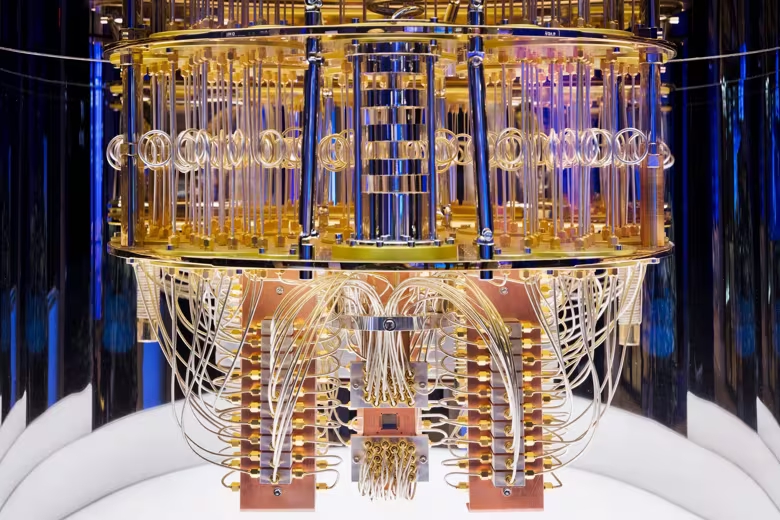
Did a Quantum Computer Use a Parallel Universe to Solve a Complex Equation? Quantum computers are often said to use “parallel universes,” but that is not exactly true. Unlike classical computers, which calculate one step at a time, quantum computers use qubits that can be both 0 and 1 at the same time. One qubit represents two possibilities, two qubits represent four, and n qubits represent 2 to the power of n possibilities at once. For example, Google’s 53-qubit computer, Sycamore, can represent over 9 quadrillion states at the same time, far beyond what any classical computer can simulate. This allows quantum computers to solve certain problems much faster. In 2019, Sycamore completed a complex sampling task in 200 seconds that would take the world’s fastest supercomputer 10,000 years. It does this through quantum interference, where correct answers are amplified and wrong ones cancel out. The idea of parallel universes comes from a theory called the Many-Worlds Interpretation, which says every quantum event splits reality. But this is just a way to think about it, not how the computer works. Scientists only observe the final result, not other “worlds.” Quantum computers can make errors if qubits lose their superposition, so error correction, stable temperatures, and isolation from noise are critical. Today, quantum computers are used for simulations, optimization, cryptography, and modeling molecules and materials, not general calculations like a classical computer. In short, quantum computers do not literally use parallel universes. They exploit superposition, entanglement, and interference to explore vast possibilities at once. “Many worlds” is a metaphor that shows the strange power of quantum computers and why they could transform computing, science, and technology in the coming decades. #ParallelUniverse #Science #History #USHistory #Physics #ScienceNews