Tag Page History

#History
THESE VALUES

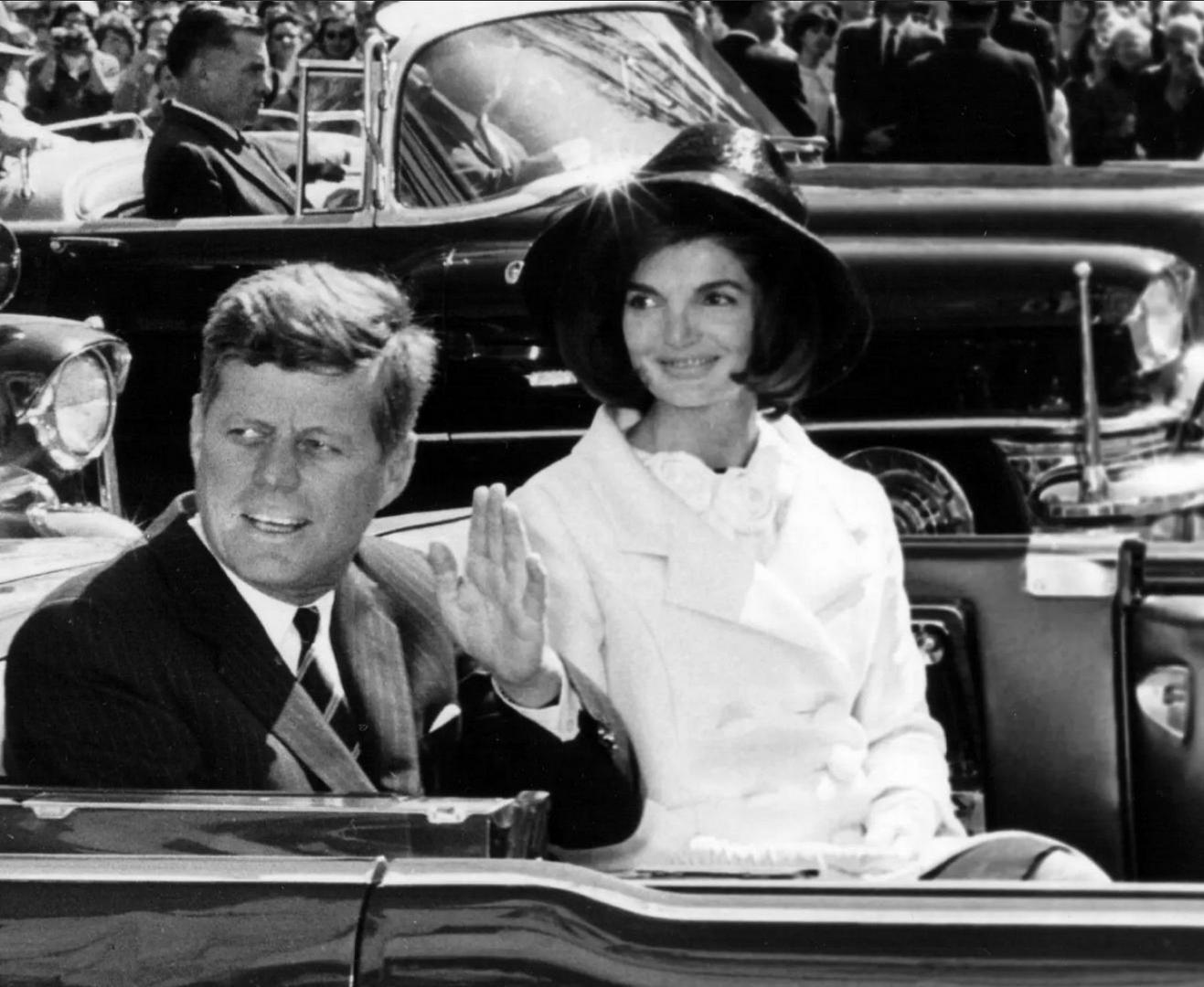
John F. Kennedy: The President with the Highest All Time Approva John F. Kennedy, the thirty fifth president of the United States. is still viewed as one of the most respected leaders in modern American historv. Throughout his presidency, his approval rating stayed near 70 percent, which is one of the highest averages ever recorded. His standing is measured through the modern polling system that began in 1936, allowing his numbers to be compared across generations of presidents. Based on this long record of surveys, Kennedy holds the highest average approval of any president in the polling era. Kennedy's popularity came from his personality, message, and calm eadership during major challenges. His naugural address, urging Americans ta serve their country, became one of the most memorable speeches in US history During the Cuban Missile Crisis in 1962, he quided the country through thirteen davs of extreme tension, preventing nuclear conflict and earning wide respect. His support for early civil rights efforts and his commitment to the space program added to the sense that he was eading the nation into a new ana ambitious era Surveys taken long after his death show how strong his legacy remains. One maior poll found that 85 percent of Americans approved of his performance when looking back on his presidency Even during difficult periods, such as the aftermath of the Bay of Pigs invasion, Kennedy kept approval ratings above 70 percent, something few presidents have matched. His calm approach, clear communication, and ability to connect with the public helped him maintain support across states, age groups, and political backgrounds Kennedy's consistently high approval demonstrates how trust and confidence from the public shape a president's place in history. Although he served less than one full term, his leadership during world crises and his appeal to national unity left a lasting mark #Politics #USA #History #USHistory #America

OrbitalOtter

A Vanishing With No Footprints

There’s a case that’s been haunting me ever since I read about it — the disappearance of 4-year-old Nyleen Marshall in 1983. She was on a family picnic in the Helena National Forest in Montana. One moment she was playing nearby… and the next, she was simply gone. No footprints, no signs of a struggle, no clothing, nothing. Just a child who vanished into the woods without leaving a single trace. Months later, the story took an even darker turn. Authorities received messages from a man claiming: “She was crying and frightened and I decided that I would keep her and love her. I took her home with me.” He described traveling with a little girl, homeschooling her, supposedly “keeping her safe” — but the letters gave no real answers. No identity. No location. And despite decades of searching, neither he nor Nyleen has ever been found. What chills me is how the case sits at the crossroads of every parent’s worst nightmare: a child vanishing in seconds, and the possibility that someone deliberately took her… yet left behind nothing but empty space. There’s something uniquely terrifying about mysteries where nothing adds up — no evidence, no closure, just a story that feels frozen in time. Forty years later, the question remains: How can a person and a child disappear so completely? #History #UnexpectedHistory

A Vanishing With No Footprints
1776 Patriot

Catching America’s Deadliest Serial Killer: The Green River Killer Investigation Gary Ridgway, the Green River Killer, stands among America’s most prolific serial predators, responsible for 49 confirmed victims and claiming up to 80. His crimes spanned from 1982 to 2000 across Washington state. Ridgway targeted vulnerable women, often sex workers or runaways, luring them into isolated areas and strangling them before leaving their bodies in concealed locations along the Green River, which slowed early discovery and hindered investigative progress. Forensic teams relied heavily on microscopic and biological evidence to link him to victims. Minuscule paint spheres measuring roughly 10 microns were recovered from at least six victims. For scale, 10 microns is one tenth the width of a human hair and comparable to a single red blood cell. Infrared microspectroscopy showed the particles matched rare industrial spray paint used at Ridgway’s workplace. Investigators noted that hundreds of spheres in multiple colors created recurring environmental signatures that tied murders to a single source and demonstrated how trace materials could quietly record offender movements. DNA evidence added decisive weight. Preserved samples from several victims were matched to Ridgway’s 1987 saliva sample, confirming direct contact and strengthening the timeline of his activities. These converging forensic streams enabled detectives to confidently link victims separated by many years and refine a consistent offender pattern with greater precision. Ridgway’s methodical tactics and repeated returns to dump sites helped him evade capture for nearly two decades. After his arrest, he entered a detailed confession to avoid capital punishment. He received life imprisonment without the possibility of parole for each count, ensuring he will remain in custody permanently. #TrueCrime #LawEnforcement #History #ForensicScience #SerialKiller #USA

1776 Patriot

Miracle Over Missouri: George Lamson, Sole Survivor of TWA Flight 128, 1967 On November 20, 1967, TWA Flight 128, a domestic passenger flight in the United States, collided midair with a United Airlines aircraft over Missouri at approximately 11,000 feet. The collision destroyed both planes, killing all 7 crew members and 93 passengers aboard TWA Flight 128 and all 58 people aboard the other plane. George Lamson, a passenger from Missouri, survived, making him the sole survivor of 151 fatalities from the two aircraft. Lamson was seated near the rear of the plane. Investigators concluded that structural debris formed a partial protective space around him, absorbing much of the impact energy. He sustained multiple fractures, including a broken leg, several broken ribs, and a crushed pelvis, as well as internal contusions and significant blood loss. His vital organs avoided fatal trauma, a rare outcome in high energy midair collisions. Rescue crews located him within 20 minutes. Emergency responders stabilized him, controlled hemorrhage and shock, and transported him to a regional hospital. Surgeons performed orthopedic stabilization, blood transfusions, and intensive monitoring. Lamson spent 6 weeks hospitalized and underwent 3 major surgeries. Recovery included months of physical therapy to restore mobility and strength. Later in life, Lamson lived a relatively private life in Missouri. He reportedly returned to work in civil service and rarely spoke publicly about the crash, though he occasionally participated in interviews and safety studies. His survival, one of the rarest in American aviation history, demonstrates how seat location, debris orientation, rapid rescue, and sheer chance aligned perfectly. Analysts estimate that in similar midair collisions, the chance of a single passenger surviving is less than 1 percent, underscoring the extreme improbability of sole survival in catastrophic crashes. #PlaneCrash #Aviation #America #USA #History #Survivor

1776 Patriot

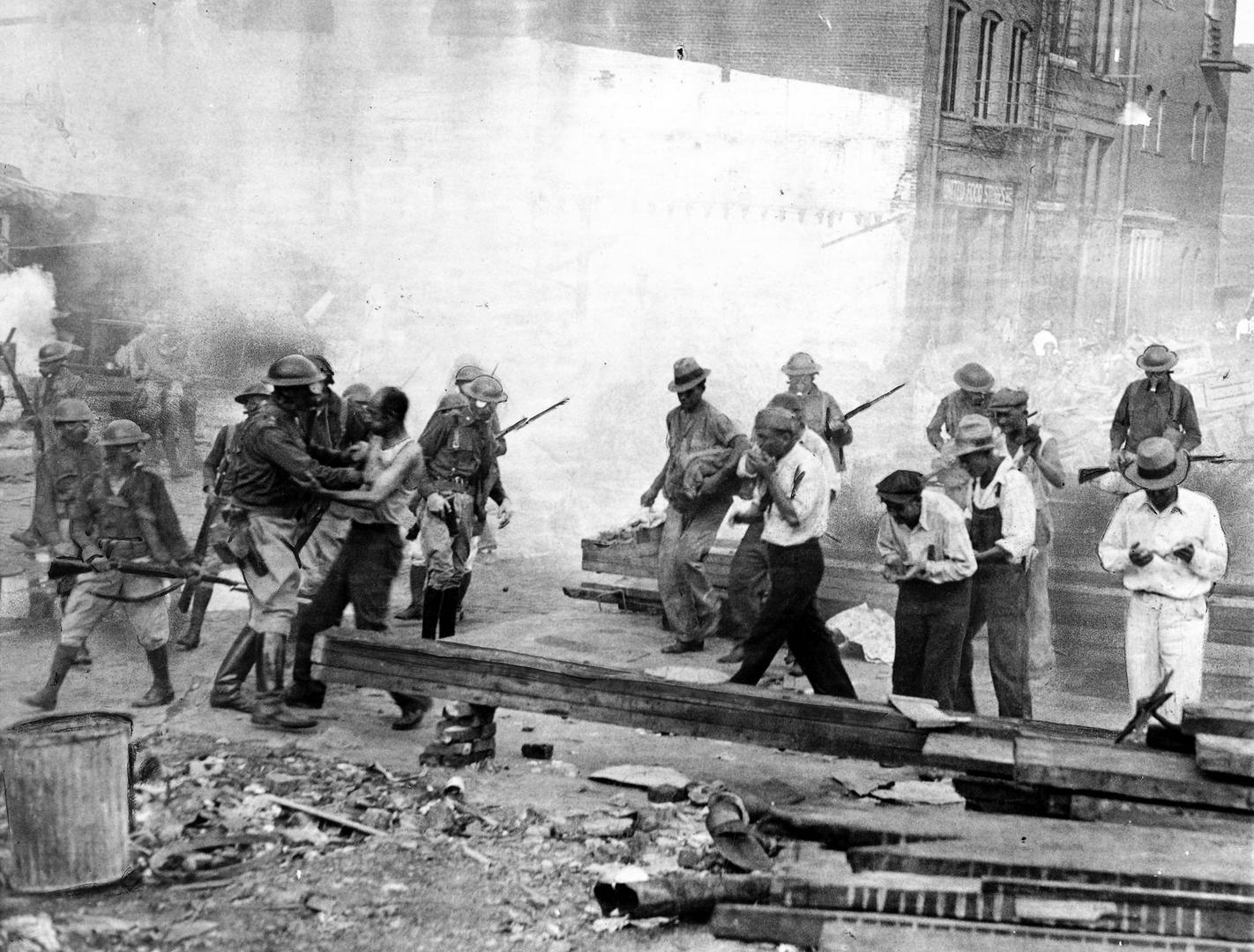
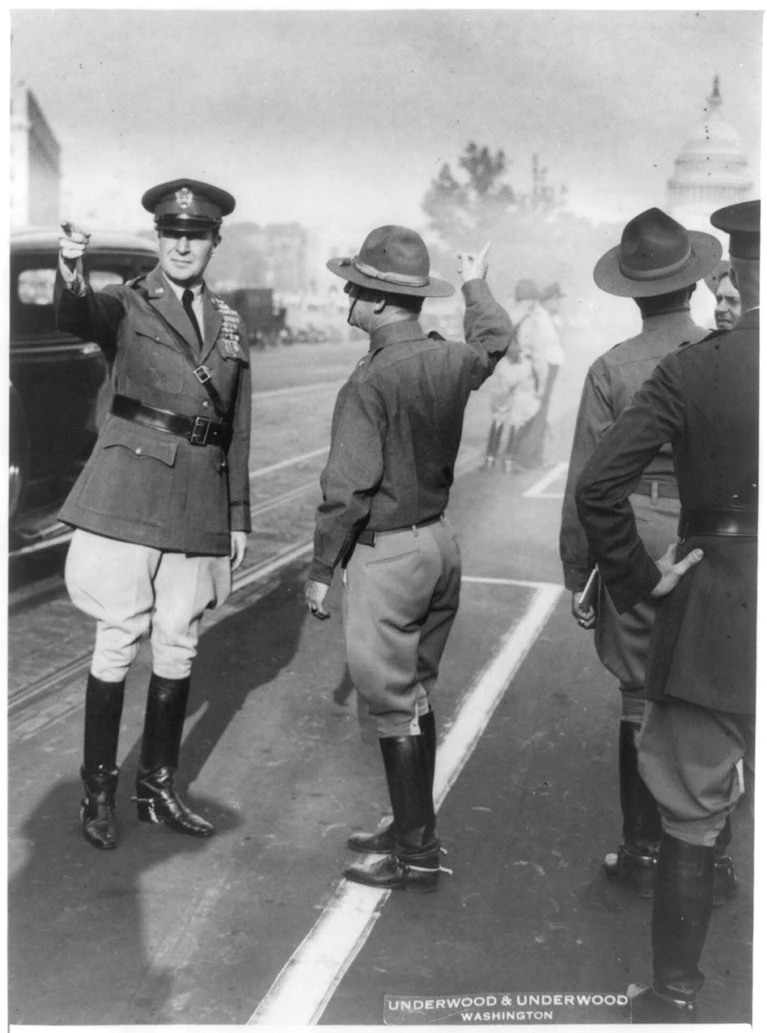
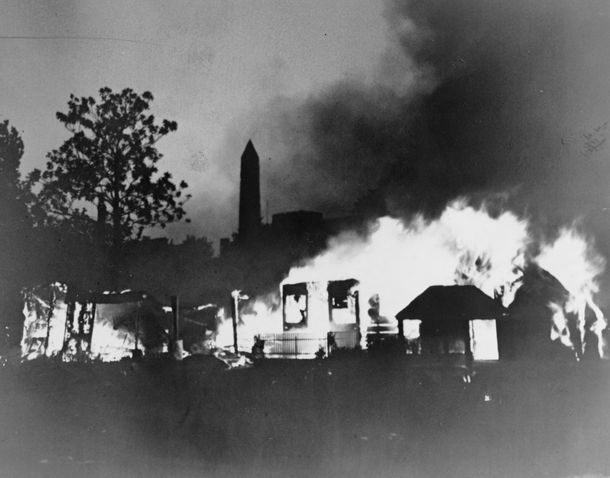
When General Patton and MacArthur Drove Veterans Out of Washington In the summer of 1932, roughly 43,000 people gathered in Washington D.C., including 17,000 World War I soldiers and 26,000 family members. They were the Bonus Expeditionary Force, demanding early payment of a bonus Congress promised in 1924 but scheduled for 1945. Each held a certificate worth $1 per day in the U.S. and $1.25 per day overseas, desperately needed during the Great Depression when unemployment reached 24%. They built over 1,500 huts on the Anacostia Flats. The encampment became the largest Hooverville, a shantytown named after President Hoover, with organized sanitation, streets, a small newspaper, a school, a mess hall, and medical stations. Congress debated their request, but the Senate rejected the bonus on June 17, 1932, by 62 - 18. Many refused to leave. On July 28, President Hoover ordered the camps cleared. Hoover faced declining public support as the economy worsened and unemployment peaked near 24%, contributing to a sharp decline in his popularity, which fell to roughly 23%. With business leaders urging action against perceived disorder, Hoover authorized Army Chief of Staff Douglas MacArthur to lead the operation. MacArthur oversaw 600 troops, including cavalry, infantry, and six M1917 tanks commanded by Major George S. Patton. Soldiers advanced with bayonets and fired tear gas while cavalry pushed crowds through the streets. By nightfall, the camp was set on fire, destroying hundreds of shelters and leaving thousands homeless. Thousands of personal belongings, including blankets and tents, were burned. At least 2 men were killed and more than 1,000 injured or treated for gas exposure. One participant told a reporter, “We fought for this country and now the country fights us.” Images of troops led by MacArthur and Patton driving out these former servicemen shocked the nation and became one of the most damaging moments of Hoover’s presidency. #USHistory #History #America

You've reached the end!