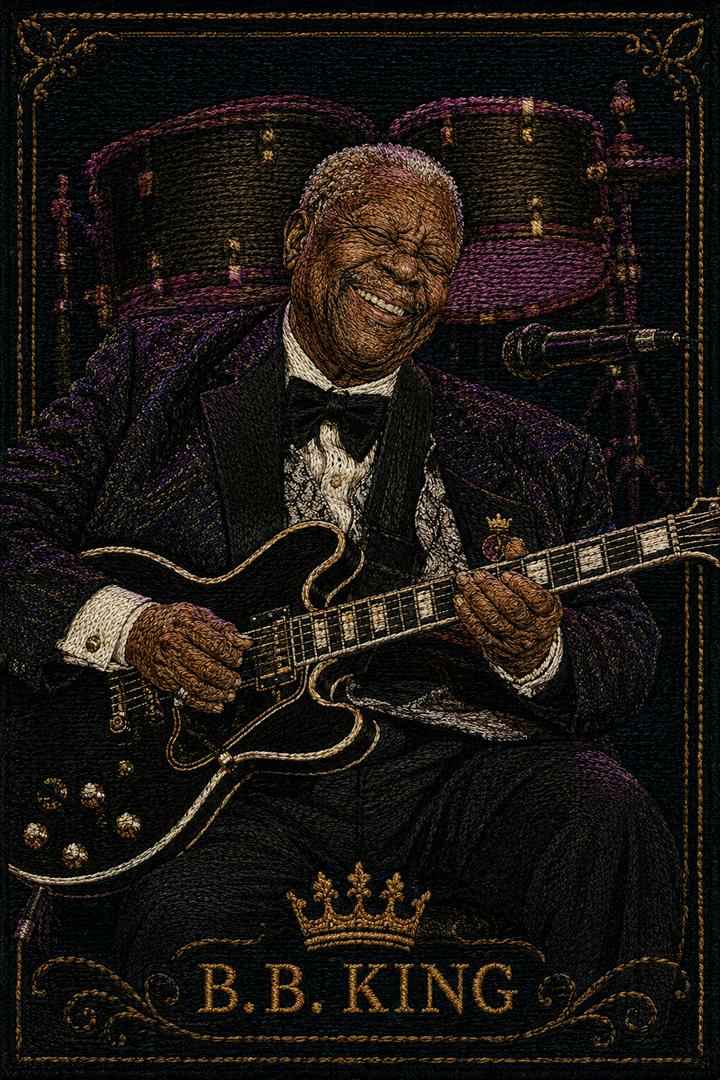
B.B. King died on May 14, 2015, at age 89, but calling that the end of his story would be wrong. His music is still here. His guitar is still speaking. His name still carries weight wherever the blues are respected.
Born Riley B. King near Itta Bena, Mississippi, he came from the Delta, where struggle and sound often lived side by side. Before he became known around the world, he worked the land, sang gospel, played street corners, and followed the music that would eventually carry him far beyond Mississippi.
In Memphis, his nickname began as Beale Street Blues Boy, later shortened to Blues Boy, then B.B. King. That name became one of the most important in American music.
His guitar, Lucille, became almost as famous as he was. Together, they created a sound that did not need to be loud to be powerful. B.B. King could bend one note and make it feel like a whole story. His playing carried pain, love, patience, joy, and memory.
Songs like “The Thrill Is Gone,” “Every Day I Have the Blues,” and “Sweet Little Angel” helped define his legacy, but his influence went far beyond one song or one stage. Blues musicians, rock guitarists, soul artists, and generations of performers learned from his tone, his timing, and his restraint.
PBS called him the legendary blues guitarist and singer. TIME reported that after his death in Las Vegas, he was laid to rest in Indianola, Mississippi, where fans gathered to honor him.
That final journey back to Mississippi mattered. The Delta helped shape B.B. King, and he gave the world a sound that still cannot be copied.
On May 14, we remember more than a musician. We remember the King of the Blues…a man who turned life into music and made Lucille cry in a language everybody could understand.
#BBKing #KingOfTheBlues #BluesMusic #MusicHistory #BlackMusicHistory #OnThisDay