Tag Page LataraSpeaksTruth

#LataraSpeaksTruth
LataraSpeaksTruth

Faith was never meant to be a weapon, a measuring stick, or a license to dehumanize others. At its core, Christianity was built on compassion, humility, and restraint, not superiority or cruelty dressed up as righteousness. History shows us what happens when belief turns inward and self-serving. Harm gets justified. Empathy gets replaced with judgment. And people start confusing personal bias with divine instruction. That is not faith evolving, that is ego taking the wheel. If a belief system hardens your heart instead of softening it, something has gone off course. True faith should challenge us to be better, not give us permission to be worse. It should call us inward before pointing outward. Anything else is just self-worship with religious language layered on top. #FaithAndCompassion #ThoughtfulBelief #SelfReflection #SpiritualGrowth #LataraSpeaksTruth

LataraSpeaksTruth

Point Zero. Before transatlantic slavery, before European colonies in the Americas, Africa was already home to structured societies with governance, trade networks, legal systems, and spiritual traditions. Regions of West and Central Africa included empires such as Mali, Songhai, Benin, Kongo, and others, each with distinct political organization and cultural life. These societies engaged in agriculture, regional and international trade, education, and diplomacy long before sustained European intervention. Early European contact began through commerce, not enslavement. Trade relationships initially focused on goods such as gold, ivory, and textiles. Over time, as European expansion intensified and labor demands increased in the Americas, those trade systems shifted. Human beings were gradually absorbed into commercial exchange through coercion, warfare, and policy. This transition was not accidental. It was documented, regulated, and enforced by emerging colonial economies. Africans taken into the transatlantic system did not arrive without identity or culture. Identity was deliberately dismantled during capture, transport, and sale. The Middle Passage functioned as an organized system of confinement and control, designed to sever language, kinship, and memory. Survivors carried fragments of cultural knowledge that later shaped communities across the Americas, even as legal structures sought to erase their origins. This context forms the foundation for understanding enslavement in the Americas, interactions between Africans and Indigenous nations, and the emergence of mixed identities under colonial rule. Subsequent chapters do not stand alone. They extend from this point. #PointZero #AfricaBeforeEnslavement #HistoricalRecord #ArchivalSeries #LataraSpeaksTruth #BlackHistoryDocumented #AfricanHistory #BeforeTheShips #BeforeTheChains #HistoricalContext #UnfilteredHistory

LataraSpeaksTruth

During the first winter of freedom, the Freedmen’s Bureau was actively operating across the South. Food and clothing were being distributed. Families separated by slavery were searching for one another. Schools were being established. Labor contracts were being negotiated. Protection was promised, though rarely guaranteed. Christmas Eve arrived at a moment where freedom existed in law but not in safety. For many formerly enslaved families, December 24 was not about celebration. It was about survival. Parents were learning how to live without ownership hanging over their heads. Children were navigating a world that still treated them as disposable. Communities were trying to understand what freedom meant when violence, intimidation, and economic control remained constant threats. Freedom was real, but fragile. White resistance to Black autonomy was already organizing across the South. Violence and exploitation followed emancipation almost immediately. While the Freedmen’s Bureau worked to stabilize daily life, its authority was limited and often undermined. Protection depended on location, timing, and luck. December 24, 1865 sits inside that uncertainty. It reminds us that emancipation did not come with peace or security. Freedom had to be learned, defended, and negotiated in real time. For many families that Christmas Eve, hope existed quietly, alongside hunger, fear, and unanswered questions. History does not always announce itself loudly. Sometimes it lives in moments of transition, where survival came before celebration and freedom was still being defined. #OnThisDay #December24 #ReconstructionEra #FreedmensBureau #AmericanHistory #HiddenHistory #WinterOfFreedom #HistoricalTruth #LataraSpeaksTruth

LataraSpeaksTruth

Street Psalm Family Tree 25 When the Blessing Settled Goshen held them. What began as refuge slowly became routine. The famine faded into memory. Children were born who never knew hunger, never knew the road from Canaan, never knew fear the way their elders did. Egypt became normal. Israel grew. Quietly. Steadily. Families multiplied. Livestock increased. Work was available. Food was consistent. What once felt like survival now felt like stability. But blessings that linger too long always attract attention. Growth does not stay invisible forever. Egypt noticed the numbers. The strength. The unity. Joseph was still remembered by some. But time has a way of erasing gratitude. A generation rose that did not know the famine, did not know the favor, did not know the man who saved them all. They saw a people prospering inside their borders and felt threatened by what they did not understand. Goshen was still good land. Still safe. Still productive. But the atmosphere had shifted. What once felt like shelter now carried weight. Comfort began to blur purpose. Because sometimes God allows peace to last long enough for growth, but not long enough for permanence. Sometimes the place that preserves you is not the place meant to define you. Israel was no longer just a family. They were becoming a people. And history was quietly preparing to test whether they remembered who they were and whose they were. The blessing had settled. And the next chapter was already forming. #StreetPsalm #FamilyTree #BiblicalStorytelling #FaithAndHistory #ScriptureInMotion #GenerationalStory #AncientRoots #SpiritualLegacy #LataraSpeaksTruth

LataraSpeaksTruth

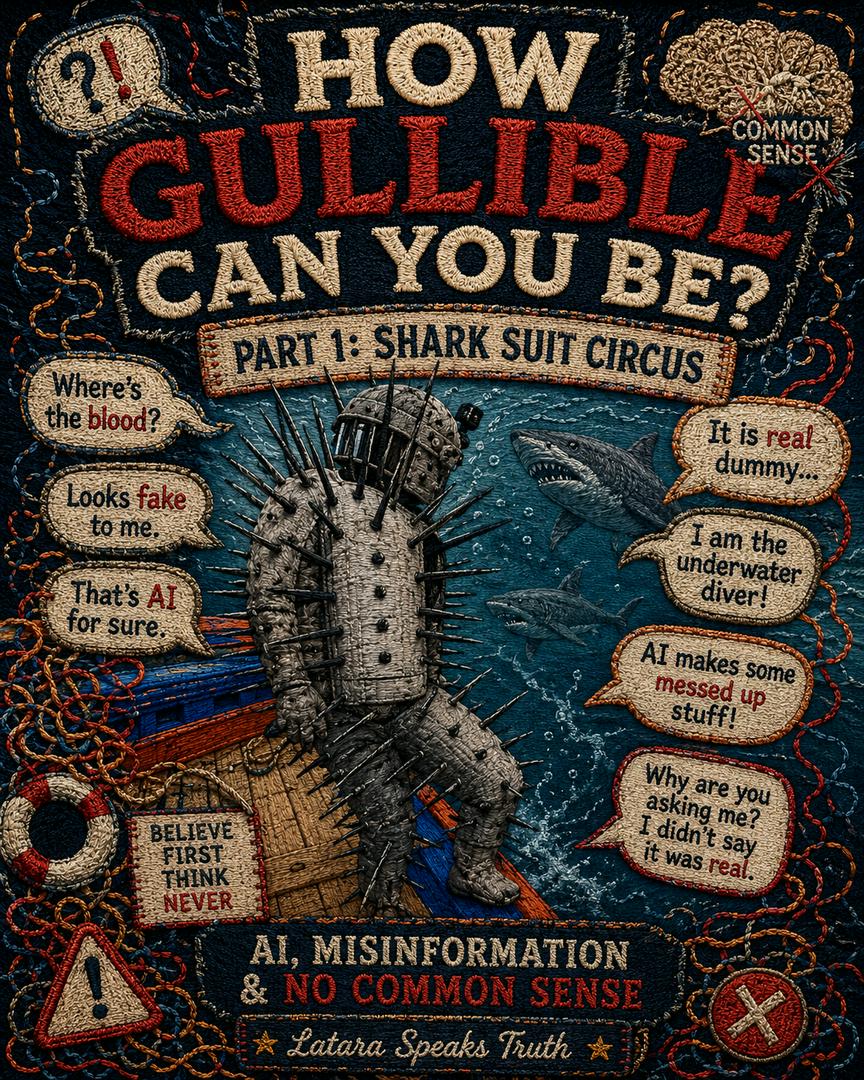
Correcting misinformation should be easy, but somehow it turns into the hardest thing in the room. You bring facts that can be checked in seconds, and instead of people looking them up, they double down on whatever story makes them comfortable. It stops being a conversation and becomes a wall. A wall that refuses to move. A wall that talks back. A wall that gets offended by the truth long before it ever considers reading it. What makes it worse is that the people arguing the loudest usually offer nothing but confidence. No sources. No dates. No history. Just the same recycled talking points that fall apart the moment you hold them up to the light. And when you correct them, the focus shifts. Suddenly the problem is not the false information they posted. The problem is your tone, your firmness, your refusal to let a lie sit in peace. And after a while, that gets heavy. You hold your tongue. You try to stay calm. You try to respond professionally even when someone is calling you a liar about something that is publicly documented. But every now and then, that wall pushes one time too many, and you push back. Not because you hate anyone. Not because you are angry for no reason. But because being treated like your knowledge has no value gets old. Correcting misinformation feels like a fight even when it should not be. The truth is easy. The denial is the wall. #CommunityFeed #OnlineBehavior #TruthMatters #Misinformation #WhyWeSpeak #LataraSpeaksTruth

LataraSpeaksTruth

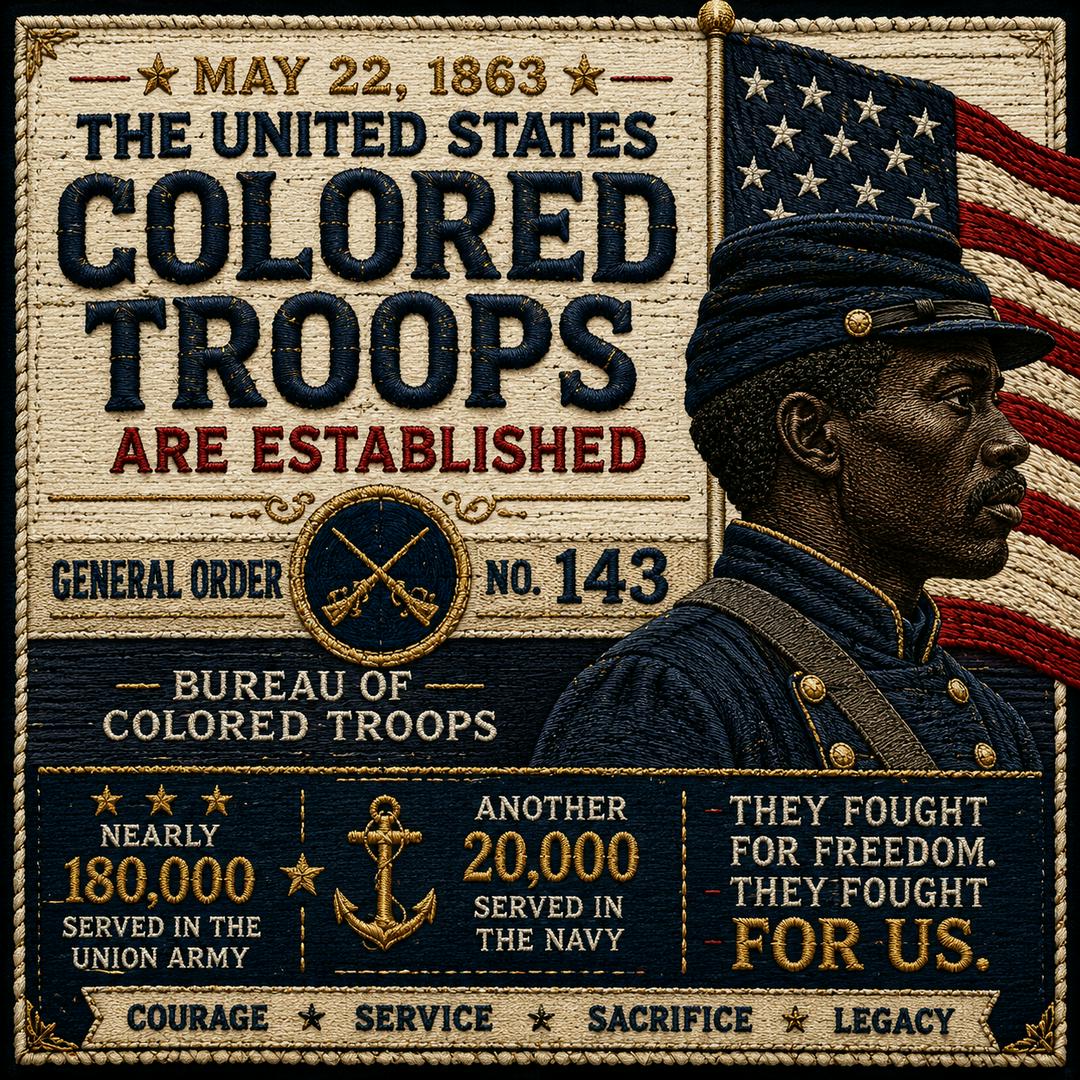
December 1864 marked a pivot point in the last act of the Civil War. When the 5th and 6th United States Colored Cavalry rode with Stoneman’s Raid into Southwestern Virginia, they were not there for appearance. They were there to break the backbone of the Confederacy, and they did exactly that. These units tore through supply lines, wrecked depots, and dismantled the railroads that kept weapons and resources moving through the region. The terrain was rough, the danger constant, yet these soldiers had already proven their skill in earlier battles. Stoneman’s Raid simply offered another moment for their discipline and courage to alter the direction of the war. Their presence on this campaign reveals a larger truth about the conflict. Freedom was not handed out. Black soldiers fought for it with precision, endurance, and grit, even while serving a nation that still denied them full rights. Their work during the raid helped bring down the Confederacy’s supply system and pushed the Union closer to victory. Today their service reminds us that the final years of the war carried layers of struggle and intention. Their contribution was strength, strategy, and a determination to secure a future that many people tried to deny them. #History #AmericanHistory #MilitaryHistory #NewsBreakCommunity #LearnSomethingNew #LataraSpeaksTruth

LataraSpeaksTruth

Michael Manley was born on December 10, 1924, in Jamaica, and rose into one of the most influential Caribbean leaders of the twentieth century. He built his politics on labor rights, economic justice, and the stubborn belief that working-class people deserved far more than society was handing them. His vision did not stop at Jamaica’s shoreline. It connected directly to global movements for Black liberation. Manley served as Jamaica’s Prime Minister across two major eras, and he spent those years challenging inequality, pushing bold social programs, and refusing to let marginalized communities stay invisible. He was not perfect. No leader is. Still, he chose to speak loudly on issues that made the powerful uncomfortable. He understood that Jamaica’s struggles were tied to the wider struggles of the African diaspora. He confronted colonial systems, called out racial injustice, and supported liberation movements in Africa and the Caribbean while many world leaders stayed silent. His courage energized activists in the United States who recognized their own fight in his. Including Manley in conversations about American history is not a stretch. It is a necessary correction. The Caribbean and the United States have always shared more than culture and migration. They have shared labor battles, resistance strategies, and a deep hunger for self-determination. Manley’s work belongs inside that history. To name him is to honor the truth. Liberation has never been a project contained by borders. It is a global story carried across oceans. Michael Manley’s chapter deserves to be read. Michael Manley shaped more than Jamaica. His leadership connected labor rights, global Black movements, and the long push for dignity across the African diaspora. #BlackHistory #OnThisDay #DiasporaHistory #CaribbeanLeaders #HistoryMatters #LataraSpeaksTruth

LataraSpeaksTruth

1948… On this day the United Nations General Assembly adopted the Universal Declaration of Human Rights. It became one of the most influential documents of the modern era, shaping how nations talk about dignity, equality, and the protection of every person. The declaration was created in the aftermath of a world at war. Countries wanted a shared standard for how human beings should be treated. It outlined rights that are supposed to belong to everyone, no matter their background or location. Over time it became a guide for global conversations about fairness. Movements in the United States used it as a reference point when challenging discrimination and unequal treatment. Leaders in the Black freedom struggle cited its language to push the country to live up to the values it claimed to support. The document did not solve the world’s problems, but it created a blueprint that communities continued to hold up. December 10 stands as a reminder that the fight for dignity has both a global history and a local impact. #History #AmericanHistory #OnThisDay #HumanRights #LataraSpeaksTruth

LataraSpeaksTruth

December 10 marks a moment that shook the sports world in 1965. Sugar Ray Robinson, the man many still consider the greatest boxer to ever lace a pair of gloves, officially stepped away from the ring and closed a career that feels almost mythical in hindsight. He retired with world titles in the welterweight and middleweight divisions and more than 100 knockouts across eras where every fight was a battle for legacy. Sugar Ray wasn’t just skilled, he was the blueprint. Footwork light as conversation, timing sharp as intuition, movement that looked like it should have been captured in poetry instead of film. He shifted how fighters trained, strategized, dreamed. Whole generations studied him. Whole styles were born from his rhythm. His retirement on this day was bigger than a personal decision. It marked the end of a chapter in American sports history, a moment where fans knew they were watching the closing of something rare, something unmatched. A career that rewrote expectations. A fighter who redefined excellence. A legend who stood alone. There are champions. There are icons. And then there is Sugar Ray Robinson, a name that still commands respect every single time it’s spoken. His legacy didn’t end with retirement. It expanded, echoing through every fighter who studied the art of footwork, precision, and heart. #BlackHistory #BlackExcellence #OnThisDay #SportsHistory #BoxingHistory #SugarRayRobinson #LataraSpeaksTruth