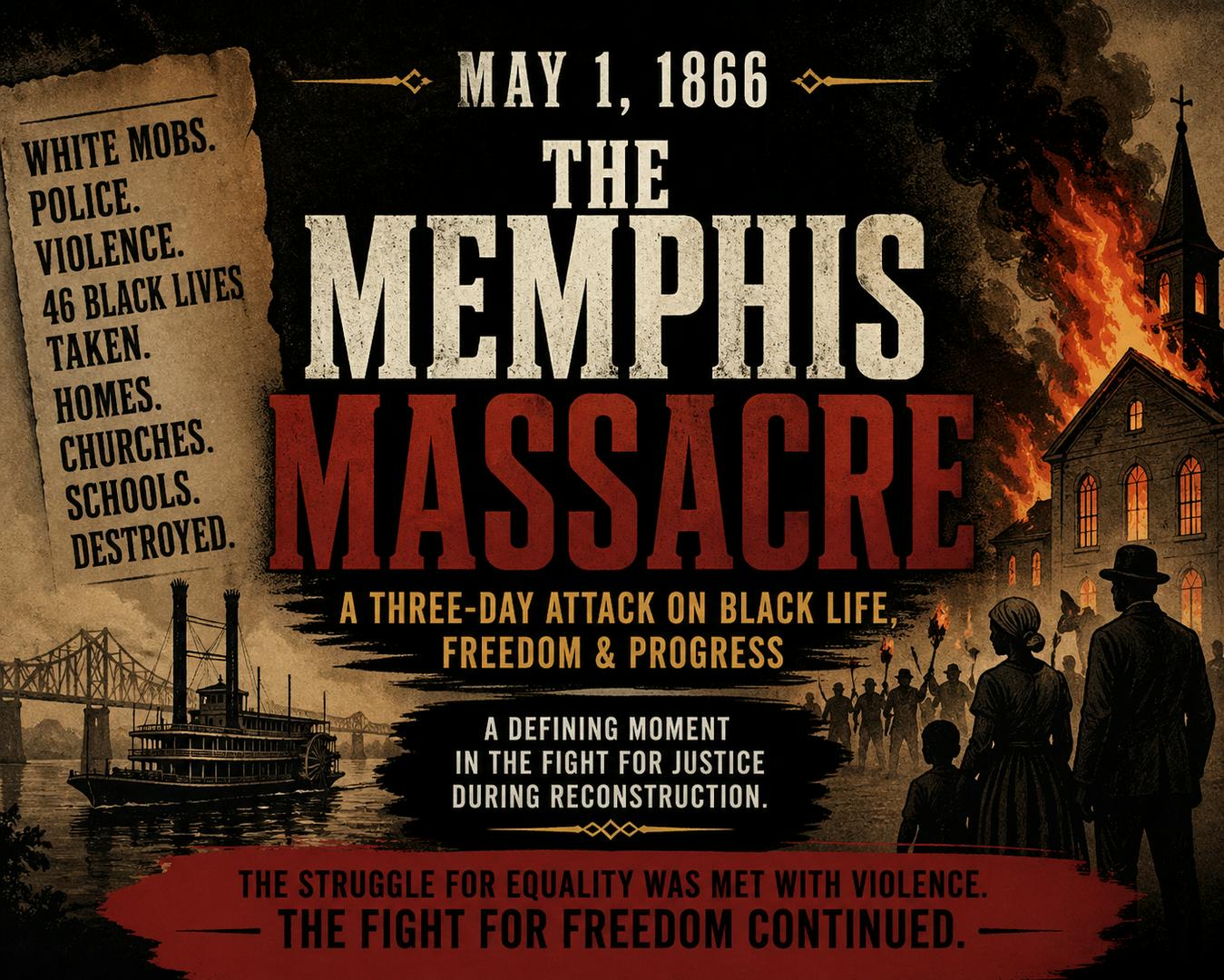
May 1, 1866, marked the beginning of the Memphis Massacre in Memphis, Tennessee.
The Civil War had ended, but freedom was still under attack. Memphis had a growing Black population, including formerly enslaved people and Black Union veterans who had served during the war. Their presence, independence, and military service angered many white residents who wanted the old racial order restored.
Tensions between white police officers and Black veterans escalated, but what followed was more than a street conflict. Over three days, white mobs, including police officers, attacked Black neighborhoods across Memphis.
Black residents were beaten, robbed, and killed. Black Union veterans were targeted. Homes were burned. Black churches and schools were destroyed. Historical accounts report that about 46 Black people were killed, dozens were injured, and more than 90 homes were burned.
The massacre shocked people outside the South and became part of the national debate over Reconstruction. Congressional investigators documented the violence, and the event helped strengthen calls for federal protection of formerly enslaved people and Black communities.
The Memphis Massacre also helped shape support for stronger Reconstruction policies and the Fourteenth Amendment, which guaranteed citizenship and equal protection under the law.
This was not just local violence. It was a warning about what freedom looked like when the law failed to protect the people it claimed were free.
#BlackHistory #MemphisMassacre #Reconstruction #AmericanHistory #HistoryMatters