Tag Page Moon

#Moon
justme

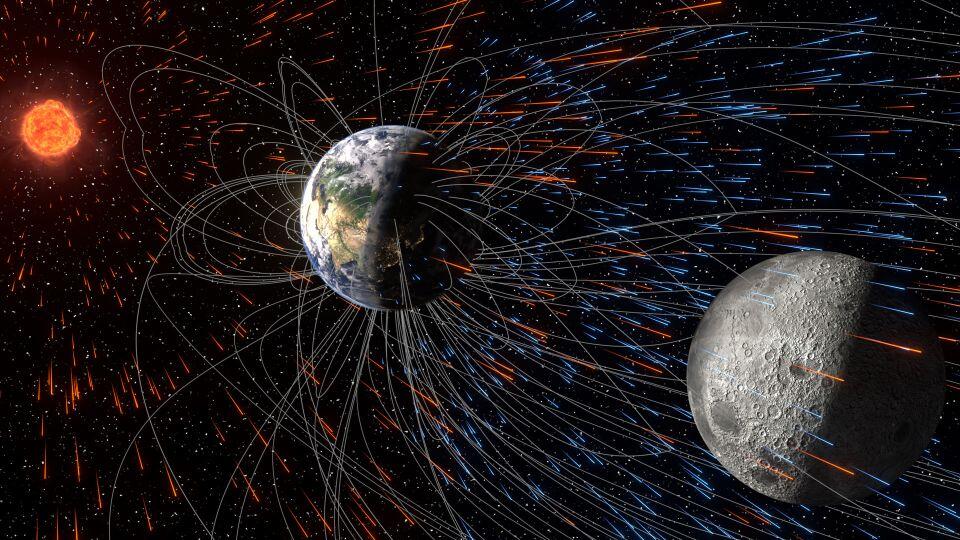
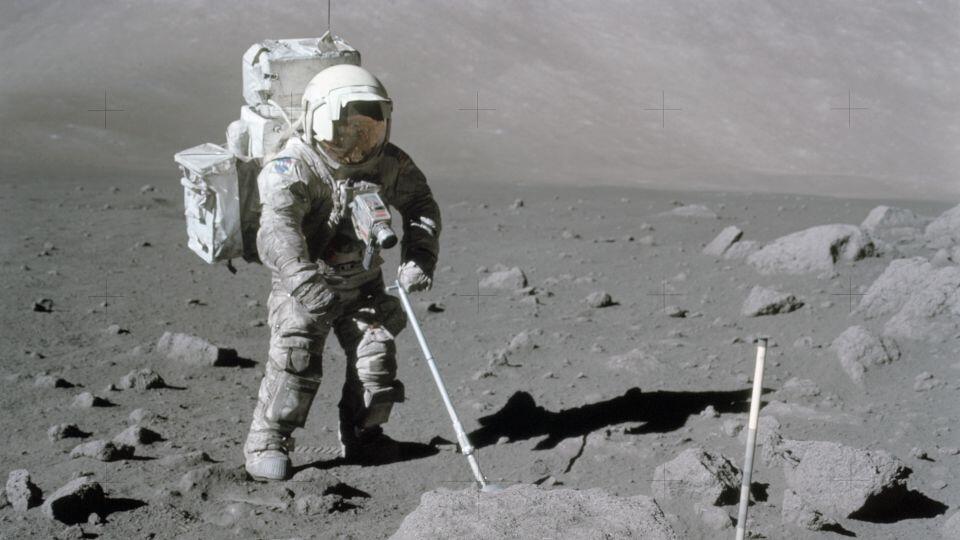
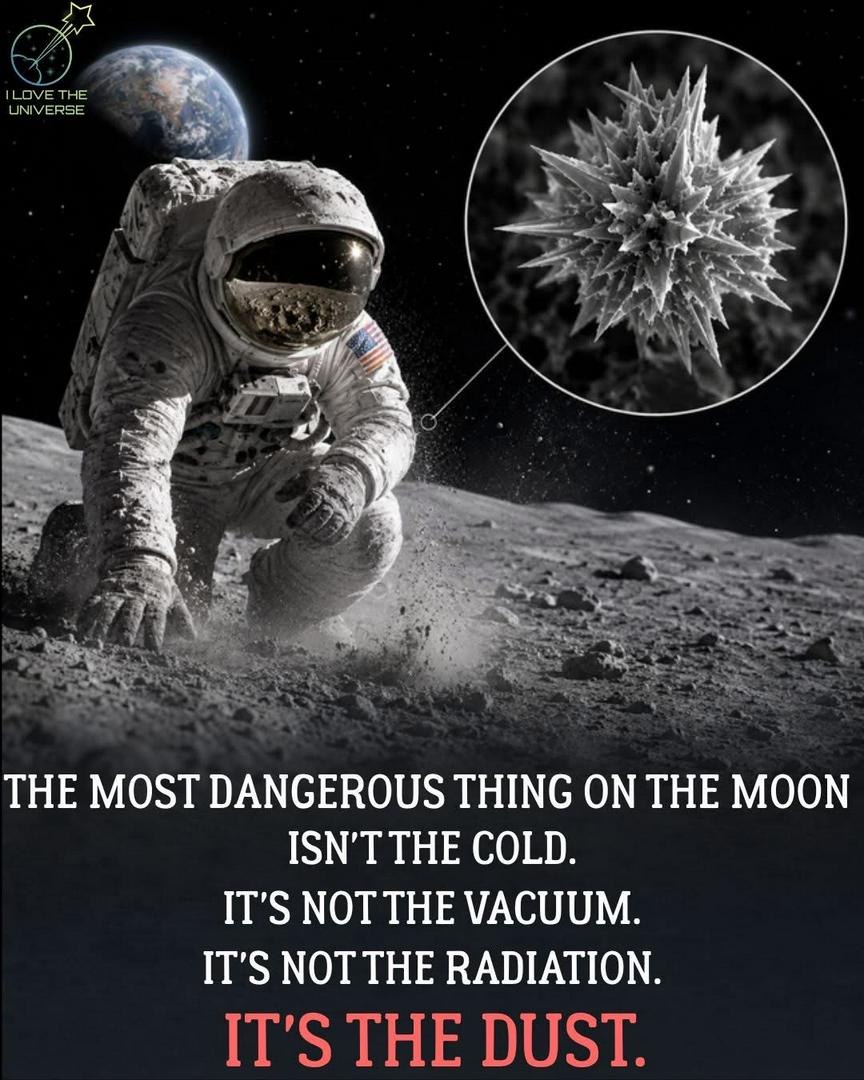
🌕 Imagine dust finer than powder, sharper than broken glass, and capable of sticking to absolutely everything. That's lunar dust. When Apollo astronauts returned to their lunar modules after walking on the Moon, they carried large amounts of this dust back inside with them. It clung to their suits, coated equipment, and quickly filled the cabin. But then something unexpected happened. The astronauts started sneezing. Their eyes became irritated. Their throats felt scratchy. The symptoms were so similar to an allergic reaction that some even nicknamed it "Moon Hay Fever." The reason is fascinating. Unlike dust on Earth, which is gradually smoothed by wind and water, lunar dust remains razor-sharp. For billions of years, tiny meteorite impacts have shattered lunar rocks into microscopic fragments with jagged, glass-like edges. And it gets even stranger. Lunar dust can become electrically charged by solar radiation, allowing it to cling stubbornly to spacesuits, machinery, and almost any surface it touches. Scientists even believe some particles can briefly levitate above the lunar surface. As humanity prepares to return to the Moon and build permanent bases there, lunar dust may become one of the greatest challenges future astronauts face. Not the cold. Not the vacuum. Not even the darkness. Dust. Sometimes the biggest obstacles in space come in the smallest packages. 🚀 Here's a mind-blowing thought: During the Apollo missions, lunar dust was so abrasive that it damaged spacesuits, scratched visors, and wore down seals after only a few days of use. Future Moon explorers may need entirely new technologies just to keep dust out. 💬 What do you think will be harder for humanity: reaching other worlds... or learning how to live on them? #Moon #Apollo #NASA #Artemis #SpaceExploration #Astronomy #MoonDust #SpaceFacts #Science #ILoveTheUniverse

justme

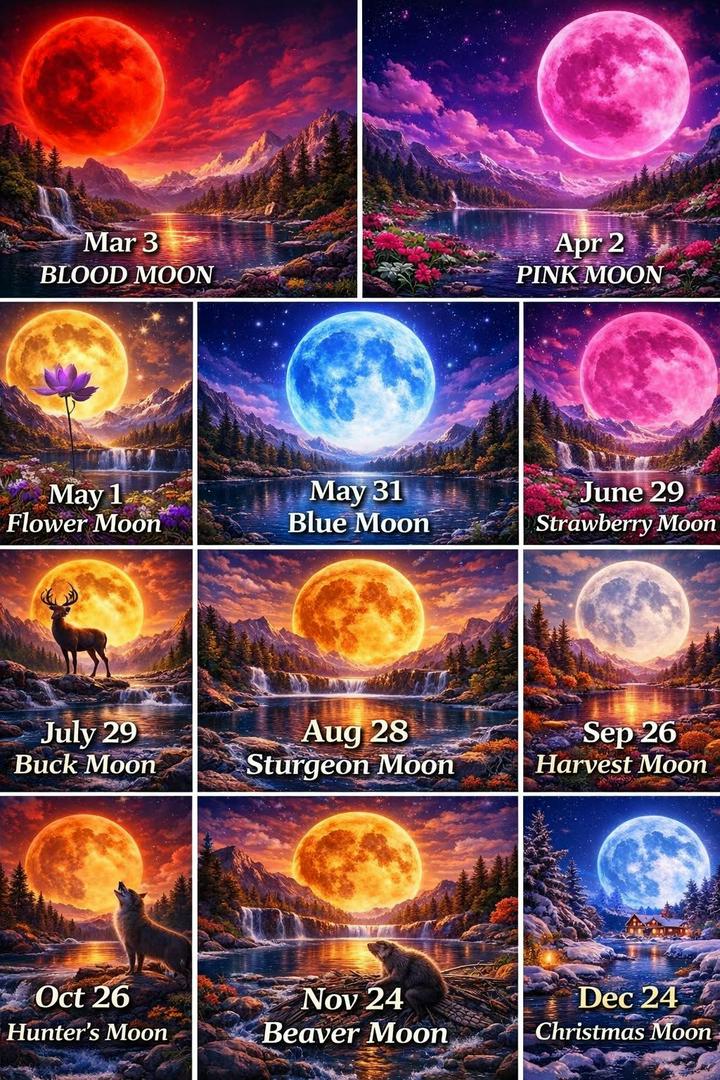
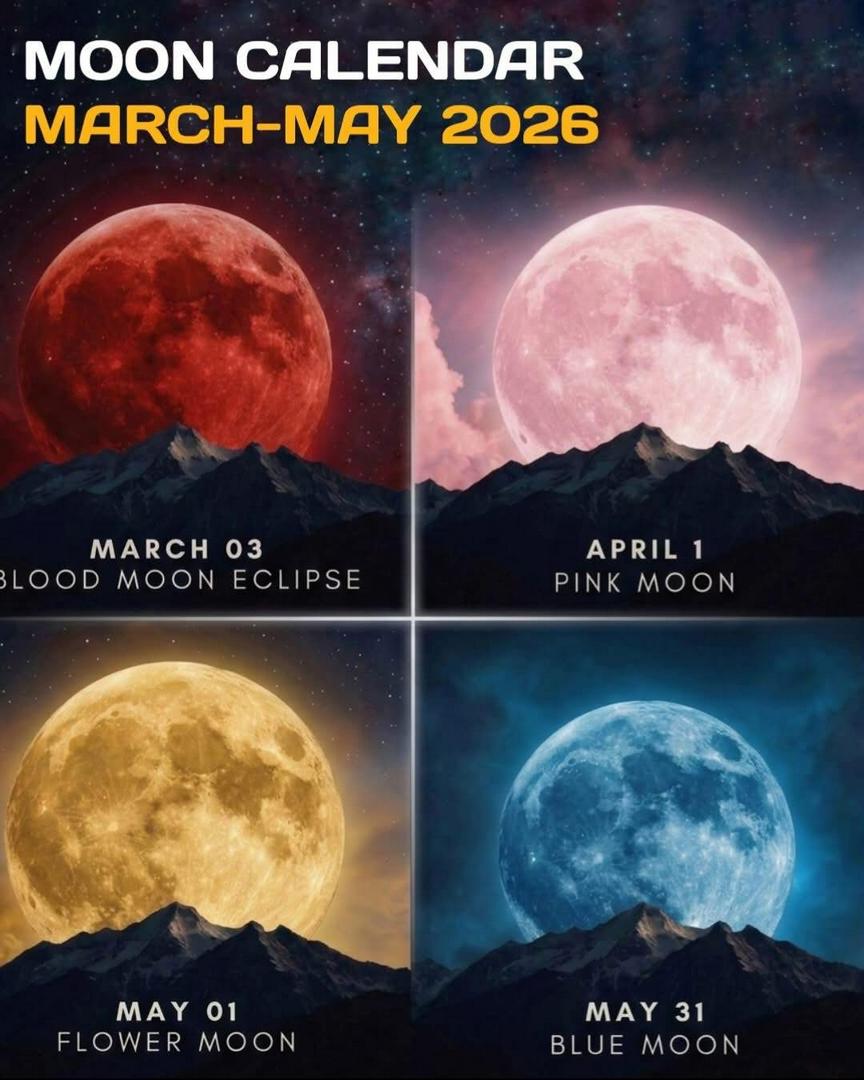
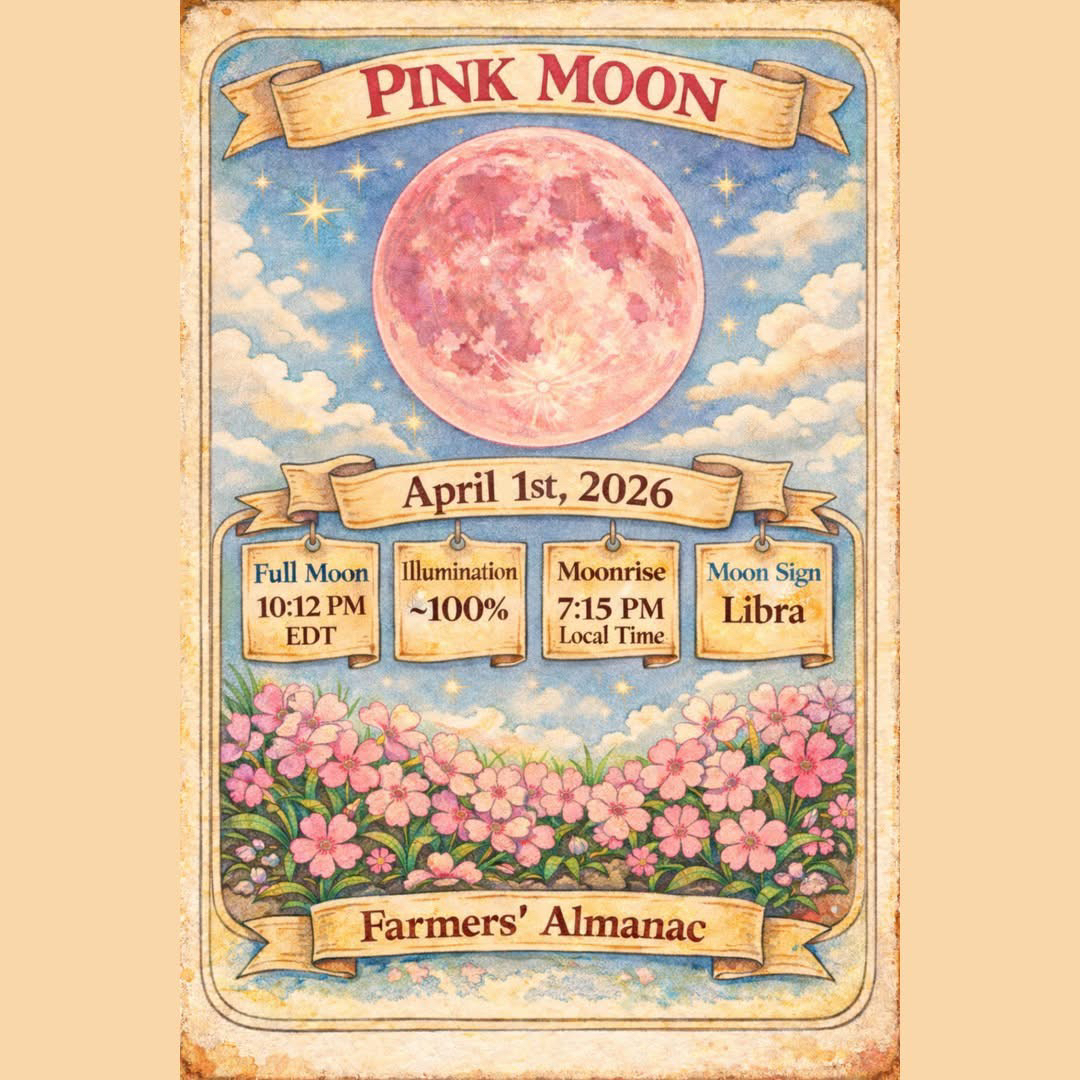
😯👉🌕✨ 2026 Full Moon Calendar — Sky Events You Shouldn’t Miss! Each full moon comes with its own name… and behind every name is a unique story 🌌 Here’s a simple and beautiful guide to all the full moons of 2026 👇 🔴 March 3 — Blood Moon A stunning lunar eclipse will give the Moon a deep red color, creating one of the most breathtaking views in the night sky 🌸 April 2 — Pink Moon Inspired by blooming spring flowers — it’s not actually pink, but still a lovely sight 🌼 May 1 — Flower Moon Represents nature in full bloom and the peak of springtime 🔵 May 31 — Blue Moon A rare second full moon in a single month — the famous “once in a blue moon” event 👀 🍓 June 29 — Strawberry Moon Named after strawberry harvesting season, often glowing with a warm golden tone 🦌 July 29 — Buck Moon Marks the time when deer begin growing new antlers — symbolizing strength and renewal 🐟 August 28 — Sturgeon Moon Named by early tribes for the best fishing period of the year 🌾 September 26 — Harvest Moon The brightest full moon near autumn, traditionally helping farmers work late into the night 🐺 October 26 — Hunter’s Moon Historically used to prepare for winter by hunting under its bright light 🦫 November 24 — Beaver Moon A time when nature prepares for the cold season ahead 🎄 December 24 — Christmas Moon A rare full moon close to Christmas — adding a magical holiday glow ✨ 🌌 Every month brings a new story 🌕 Same Moon… different meaning 👉 Which full moon are you most excited to watch in 2026? 👀 #Moon #FullMoon2026 #fblifestyle #NightSky #Space

justme

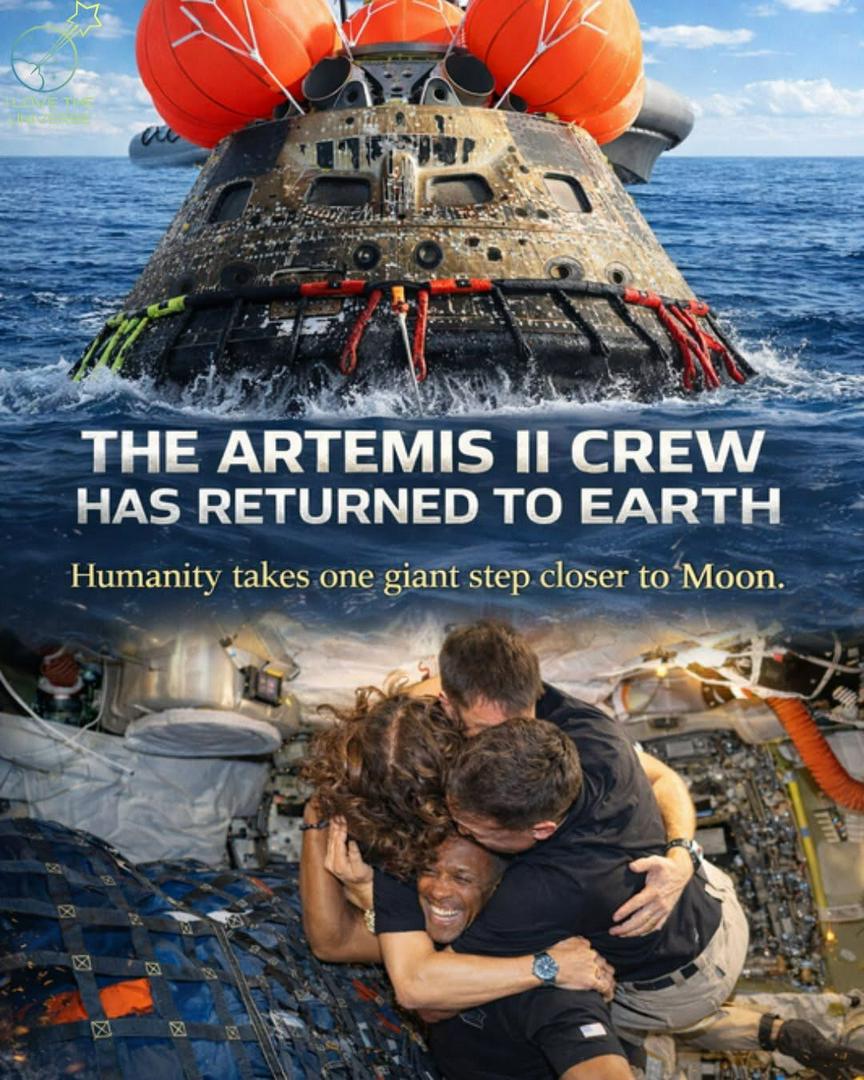
WE DID IT. THEY’RE HOME. 🌍🚀 After traveling hundreds of thousands of kilometers through the silent void, after pushing the limits of human courage and engineering, the crew of Artemis II has safely returned to Earth. The most dangerous moment… came last. Reentry — when the spacecraft becomes a fireball, when temperatures rise to thousands of degrees, when everything depends on precision, physics, and trust. And they made it through. Today, we didn’t just witness a successful mission. We witnessed humanity proving—once again—that we are capable of going farther, risking more, and coming back stronger. This mission wasn’t only about reaching the Moon and returning. It was about testing the path for all who will follow. It was about showing that deep space is no longer a distant dream—it’s our next destination. To the Artemis II crew: Welcome home. You carried all of us with you. You inspired millions. And you reminded the world what we can achieve when we dare to explore. And this is only the beginning. Next stop: Artemis III — humanity returns to the surface of the Moon. 🌕 A new era has begun… and we are living in it. #ArtemisII #NASA #Space #Moon #Astronomy #SpaceExploration #WelcomeHome #Artemis #Humanity #NextStep

justme

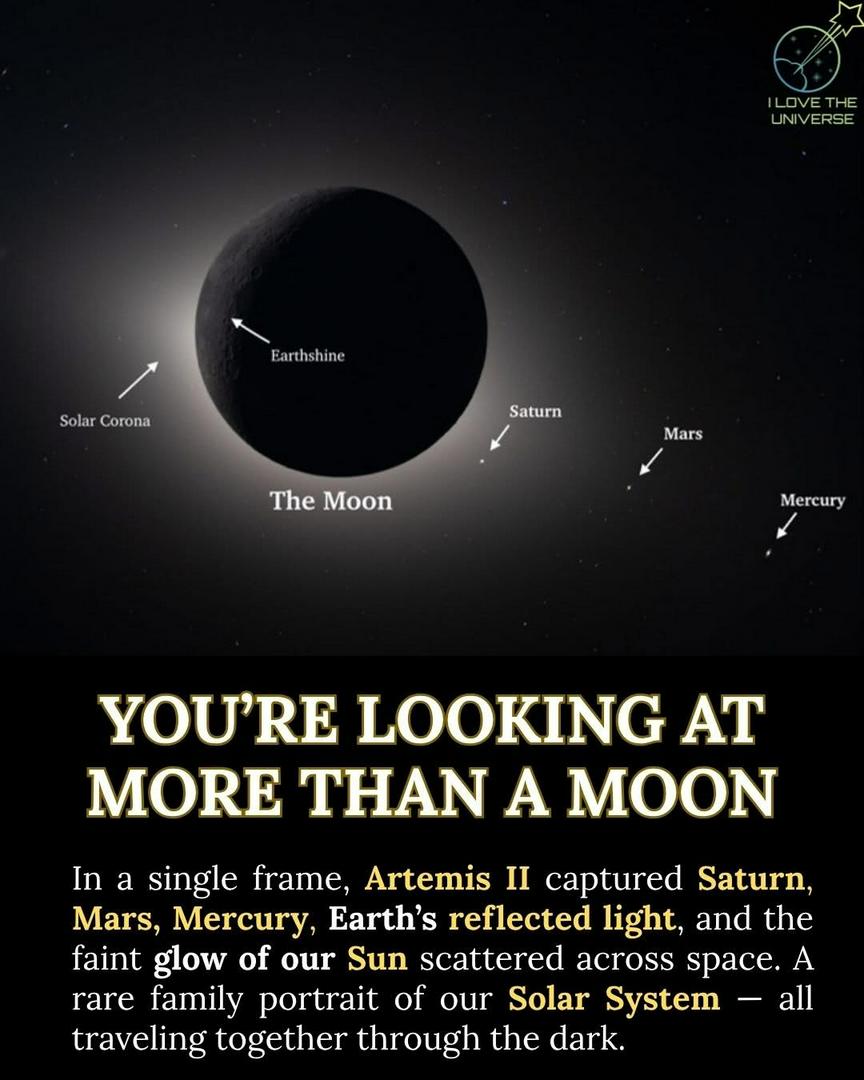
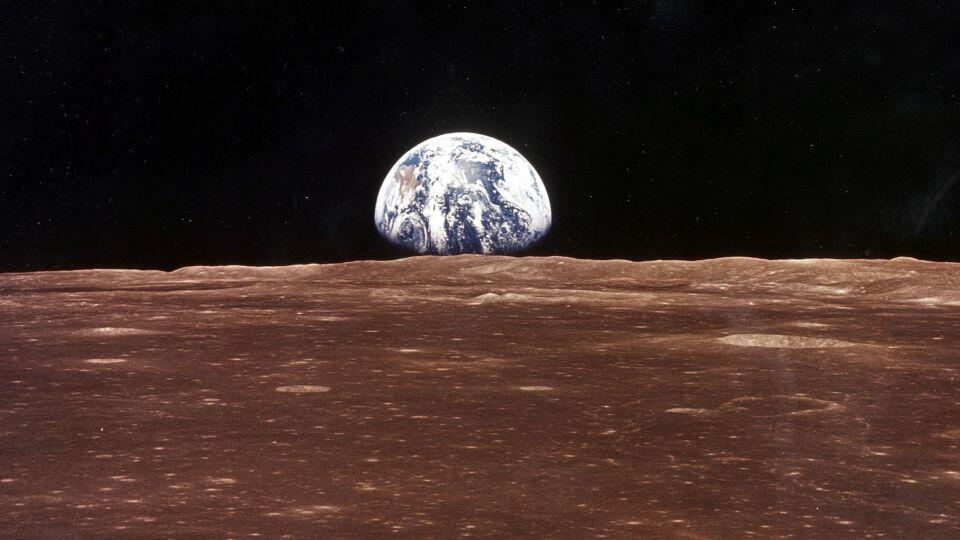
This image captures more than just the Moon… 🤯 Captured by the Artemis II crew, this view reveals not just the Moon, but a quiet alignment of worlds — Saturn, Mars, and Mercury, all shining across the same sky. Even Earth is here, its light softly illuminating the dark side of the Moon. What looks like empty space is anything but — sunlight scattered through interplanetary dust creates a faint glow, reminding us that we are all part of one vast, connected system. Venus sits just beyond the edge of this frame, while Neptune is here too — hidden in the darkness, too faint to be seen. A rare and humbling family portrait of our Solar System — seen not from afar, but from within. 🚀 Credits: NASA/ Artemis II #ArtemisII #NASA #Space #Astronomy #SolarSystem #Moon #Earth #Explore #Cosmos

justme

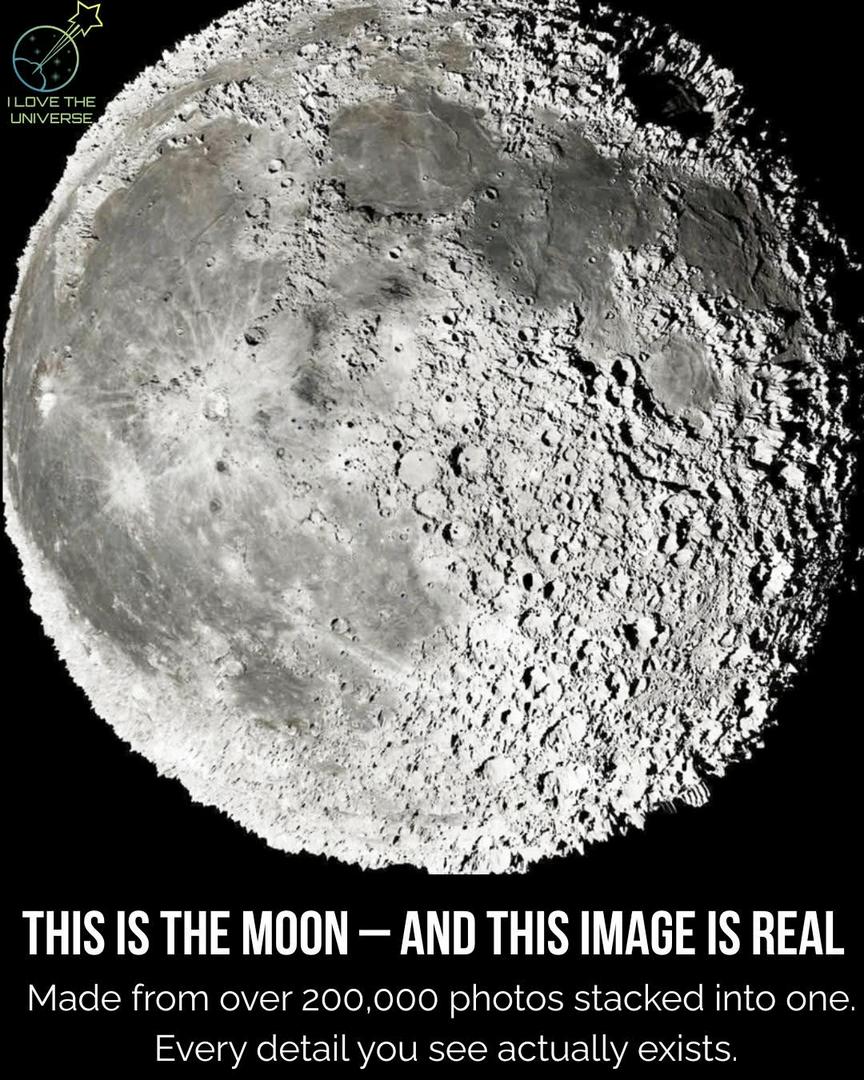
200,000 photos. One Moon. 🌕 Astrophotographer Andrew McCarthy didn’t capture this image in a single shot. He pointed his telescope at the Moon… and started recording. For hours, his camera collected over 200,000 individual frames — each one capturing tiny fragments of detail: craters, ridges, shadows, subtle textures. But raw images aren’t enough. Using a technique called stacking, he combined thousands of the sharpest frames together — reducing atmospheric distortion and revealing details normally blurred by Earth’s turbulent air. Then came the precision work. The Moon was divided into multiple sections, each processed separately at extreme resolution. Every segment was sharpened, aligned, and stitched into a single massive mosaic. And finally — color. Not added for style, but carefully enhanced to reveal real mineral differences across the lunar surface — tones our eyes can’t naturally see. What you’re looking at isn’t just a photo. It’s the result of: • patience measured in hours • processing measured in weeks • and precision measured in pixels Next time you look at the Moon… remember: This is what it really looks like — when nothing is left hidden. Image Credit: Andrew McCarthy and @cosmic_background #Moon #Astrophotography #Space #Astronomy #Universe #NightSky #Explore #Science

justme

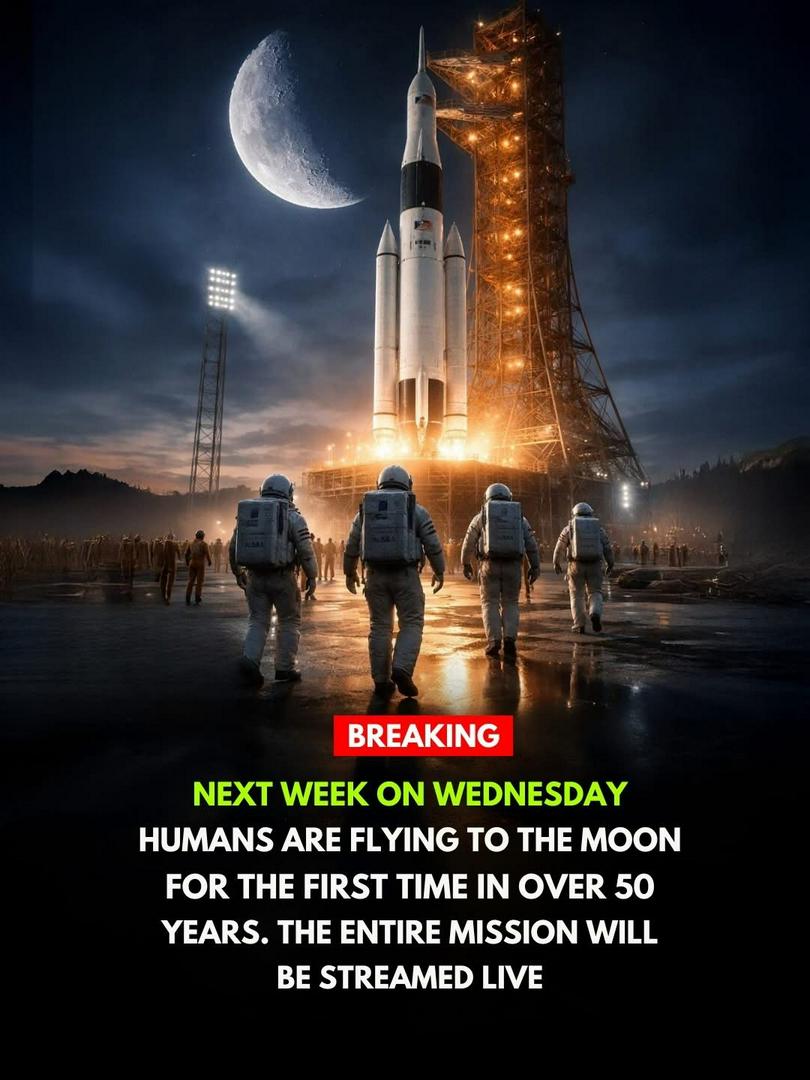
The last time humans ventured beyond Earth orbit was December 1972. Apollo 17. Gene Cernan and Harrison Schmitt walked on the lunar surface. Then they climbed back into their spacecraft, lifted off, and left. And for 54 years — no human being went back. That changes in six days. Artemis II will carry four astronauts on a 10-day journey around the Moon and back to Earth. Not a landing. Not yet. But a free-return trajectory that will carry them farther from Earth than any human being has traveled since the final Apollo mission — swinging them around the far side of the Moon before gravity pulls them back home. The crew: Reid Wiseman — Commander. A Navy test pilot and veteran astronaut who has already spent 167 days aboard the International Space Station. Victor Glover — Pilot. A Navy aviator and NASA astronaut who will become the first person of color to travel beyond Earth orbit. Christina Koch — Mission Specialist. A NASA astronaut who holds the record for the longest single spaceflight by a woman, spending 328 consecutive days in space. Jeremy Hansen — Mission Specialist. A Canadian Space Agency astronaut and former Royal Canadian Air Force fighter pilot. This will be his first spaceflight — and he will become the first Canadian to leave Earth orbit. Four people. Four firsts. One mission. They won't land on the Moon. But they will do something that hasn't happened in over half a century: they will see it up close, with their own eyes, through a window, from a spacecraft they are flying themselves. They will watch it fill the entire frame as they swing around its far side — a view so rare that only 24 human beings in history have ever experienced it. All of them in the 1960s and 70s. The entire mission will be streamed live by NASA. Every burn. Every maneuver. Every moment the crew looks out that window at a Moon that suddenly isn't a dot in the sky anymore — it's a world, and they're next to it. The launch window opens April 1 at 4:20 UTC. Six days from now. We are

justme

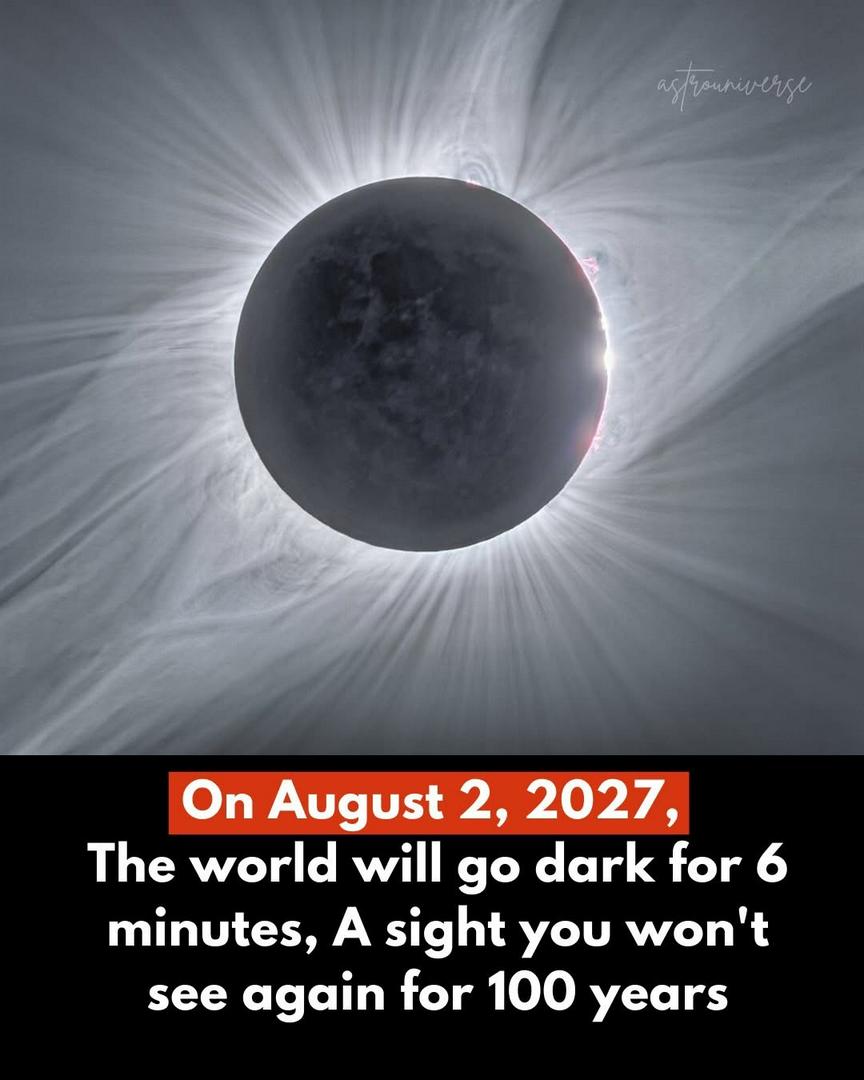
On August 2, 2027, the world will witness the longest total solar eclipse of the 21st century. 🌑☀️ At maximum duration, totality will last an extraordinary 6 minutes and 23 seconds, far longer than the typical 2 to 3 minutes seen during most total eclipses. The longest views will occur near Luxor, Egypt, as the Moon’s shadow crosses parts of Europe, North Africa, and the Middle East. The unusually long eclipse is caused by orbital geometry. The Moon will be near perigee, appearing slightly larger in the sky and allowing its shadow to cover the Sun for an extended period. During totality, daylight will briefly fade into twilight, temperatures may drop, stars can appear overhead, and the Sun’s glowing corona will become visible around the darkened Moon. Even with modern science explaining every detail, a total solar eclipse remains one of the most extraordinary sights on Earth. #SolarEclipse #Eclipse2027 #NASA #Space #Astronomy #Science #Sun #Moon #Cosmos #SpaceFacts