Tag Page OnThisDay

#OnThisDay
LataraSpeaksTruth

On This Day: Monroe, North Carolina Draws National Attention in 1960

On November 26, 1960, The New York Times published a front-page report titled “Klan and Negroes March in North Carolina Town,” highlighting rising tensions in Monroe, North Carolina, during a pivotal moment in the early civil rights era. Throughout the 1950s, Monroe’s Black residents reported ongoing instances of unequal treatment and intimidation as they pressed for constitutional rights and improved public safety. Community leaders documented these concerns and increasingly organized local efforts calling for fair protection under the law. During this same period, the Ku Klux Klan expanded its presence in the region, holding public demonstrations and increasing its visibility around the town. These activities generated significant local unease and deepened divisions within the community. The march referenced in the Times article brought national visibility to these conflicting forces. Local Black residents mobilized to advocate for equal treatment and greater security, while members of the Klan held their own demonstration representing an opposing stance. The two groups appearing on the same day underscored how sharply divided the town had become. The decision by The New York Times to place this story on its front page had a major impact. It brought attention to conditions in Monroe that had previously received little national coverage, highlighting that civil rights struggles were taking place not only in major cities but also in smaller towns across the South. The headline did not signal the end of the conflict, but it marked a moment when wider audiences could no longer overlook what local residents had been raising concerns about for years. #OnThisDay #AmericanHistory #NorthCarolinaHistory #CivilRightsEra #1960sHistory

On This Day: Monroe, North Carolina Draws National Attention in 1960
LataraSpeaksTruth

December 20, 1868 marks the birth of Harvey Firestone, an American industrialist best known for founding the Firestone Tire and Rubber Company. Firestone was not a Black American, but his relevance to Black history is tied to the influence he exercised during a critical period of educational development in the early twentieth century. Firestone formed a professional relationship with Booker T. Washington, one of the most influential Black educators of the era. Washington promoted industrial education and economic self reliance as practical strategies for advancement within a segregated society. Firestone supported this philosophy through financial contributions and public advocacy, particularly in support of Tuskegee Institute. At a time when Black educational institutions were consistently underfunded, private donations often determined whether schools could expand programs or continue operating at all. Firestone’s backing helped strengthen Tuskegee’s vocational and industrial training initiatives, which emphasized skilled trades and applied learning. These programs prepared students for economic participation during an era when access to professional opportunities was severely restricted. This relationship reflects a broader historical reality. Progress frequently depended on decisions made behind the scenes by individuals who held financial power and social access. While such support did not challenge segregation directly, it helped build durable educational infrastructure that served generations of Black students. In this context, Firestone’s legacy is not one of leadership but of influence. His role illustrates how quiet financial support helped shape access and opportunity during a formative chapter in American history. #OnThisDay #BlackHistoryContext #EducationHistory #TuskegeeInstitute #AmericanHistory

LataraSpeaksTruth

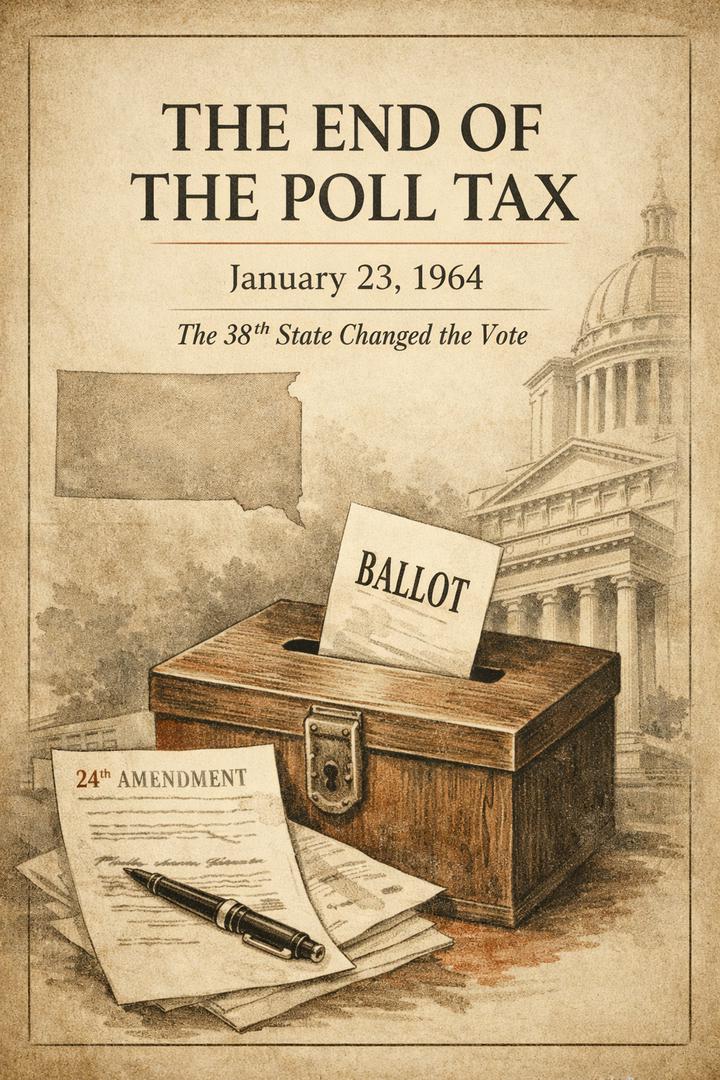
On January 23, 1964, a quiet legislative vote in South Dakota echoed across the entire United States. By becoming the 38th state to ratify the 24th Amendment, South Dakota provided the final “yes” needed to cement a fundamental change in American democracy…the official end of the poll tax in federal elections. For decades, the poll tax had operated as a so-called legal barrier to the ballot box. Framed as a simple administrative fee, it was anything but neutral in practice. In many Southern states, voters were required to pay not only the current tax but accumulated fees for every year they had not voted. This system disproportionately blocked Black Americans and poor white citizens from participating in elections. Combined with literacy tests, intimidation, and economic retaliation, the poll tax ensured political power remained tightly controlled. The road to the 24th Amendment was long and deliberate. Proposed by Congress in 1962, it required approval from three-fourths of the states. As 1964 began, the nation watched the count inch closer to the threshold. When South Dakota’s legislature ratified the amendment on January 23, it crossed the constitutional finish line, making the amendment law. The amendment marked a major victory for voting access by declaring that the right to vote in federal elections could not be conditioned on payment. Still, the work was unfinished. Some states continued to impose poll taxes in state and local elections until the Supreme Court struck them down entirely in 1966. Today, the anniversary of South Dakota’s ratification stands as a reminder that voting rights have never been freely handed over. They have been argued for, organized for, and fought for…often quietly, often against resistance, but always with lasting impact. #OnThisDay #USHIstory #VotingRights #Democracy #24thAmendment #CivilRightsHistory #SouthDakota #HistoryMatters

LataraSpeaksTruth

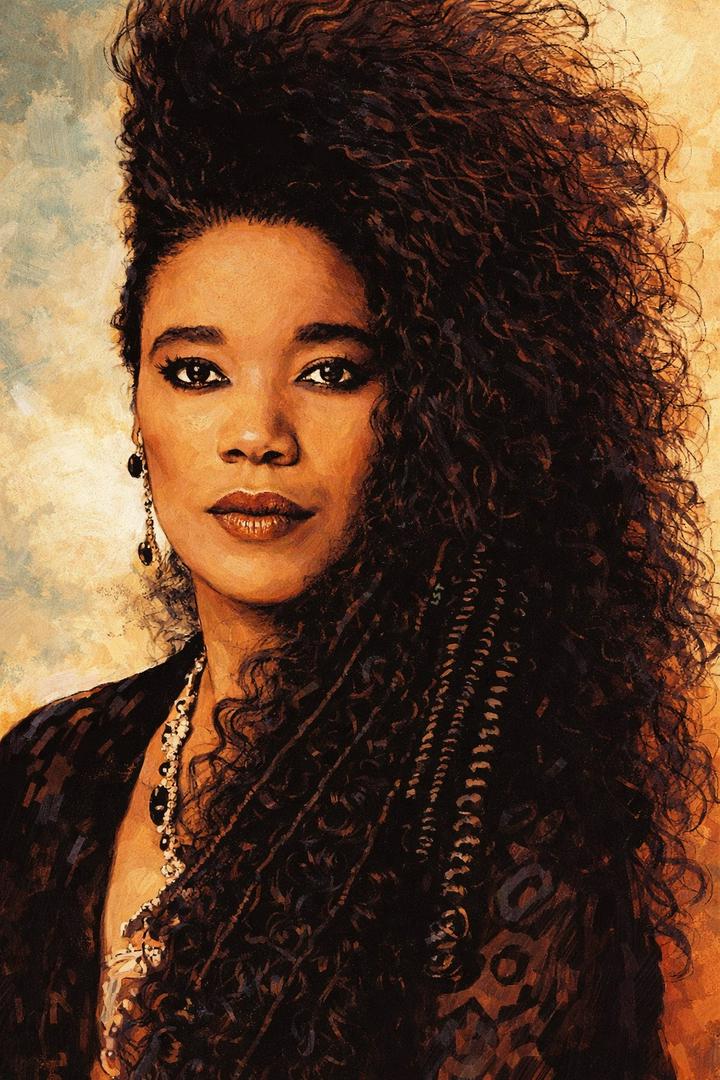
Obba Babatundé Born on This Day in 1951

From Broadway stages to classic films, he built a career defined by range and longevity. On December 1, 1951, Obba Babatundé was born in Queens, New York. His path from a kid with talent to a nationally respected actor shows what happens when discipline and versatility work hand in hand. He began in local performances and quickly stood out as someone who could master any role placed in front of him. Audiences on Broadway watched him rise in the original production of Dreamgirls where he played C. C. White. The role earned him a Tony Award nomination and made it clear that he belonged in the ranks of top stage performers. His work reached well beyond the theater. Babatundé became a recognizable force in film and television, taking on roles that required both emotional depth and sharp comedic timing. One of his most memorable pop culture appearances came in the movie How High where he played Dean Cain, the stressed and uptight administrator shocked by the chaos unfolding around him. It was a small role but the impact was immediate. His delivery, presence, and comedic control added another layer to the film and showed how effortlessly he could shift from drama to humor. Babatundé built a career rooted in dedication, heritage, and range. His birthday marks the rise of a performer who continues to influence stages, screens, and generations of actors who follow after him. #ObbaBabatunde #OnThisDay #BlackHistory #EntertainmentHistory #Dreamgirls #HowHigh #FilmAndStage #ActingLegend #NewsBreakCommunity

Obba Babatundé Born on This Day in 1951
Brandon_Lee

On April 25, 1961, Malcolm X and James Baldwin appeared in a WBAI radio broadcast in New York titled Black Muslims vs. the Sit-ins. The conversation also included Leverne McCummins. and it was not casual talk. It was a serious public exchange about racism, protest, integration, dignity, and what real freedom was supposed to mean in America At the time. sit-ins had become one of the most visible forms of protest against segregation. Young people were sitting at unch counters, refusina to move, and challenging a system that told them where they could eat, sit, learn, live, and belong. Malcolm X, speaking from the position of the Nation of Islam, challenged the idea that gaining access to spaces controlled by white societv should be treated as thehighest expression of freedom. His argument was not simplv about restaurants. It was about power. He questioned whether ntegration alone could solve a deeper problem rooted in racism, dependency, and control. James Baldwin brought another kind of weight to the discussion. Baldwin understood the moral violence of racism but he also understood the human cost of being forced to fight for basic recognition His voice often pushed bevond slogans and into the painful question underneath it all: what does America do to the people it refuses to fullv see? That is what made this exchange so mportant. It was not just a disagreement. It was a window into a larqer debate happening across the country. Should freedom mean access to the same public spaces, or should it meanself-determination beyond a system that had already proven itself hostile? More than six decades later, the conversation still hits because the questions were never small. Equality, power dentity, protest, and dignity were all sitting at that table Heavy hitters in one room. No small talk. No soft edges. Just truth beina tested out loud #MalcolmX #JamesBaldwin #OnThisDay #HistoryMatters #AmericanHistory

LataraSpeaksTruth

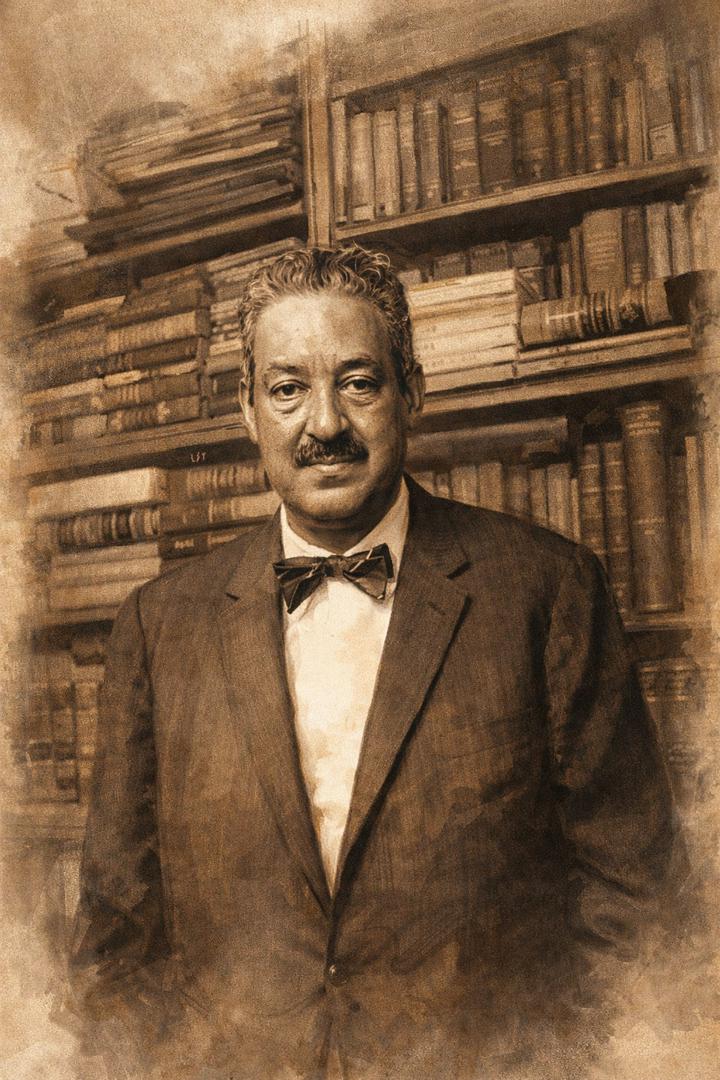
January 1, 1931 marks a quiet but serious turning point in American history. Charles Hamilton Houston becomes vice-dean of Howard University School of Law and almost immediately reshapes it into something more than a classroom. He builds a legal training ground with a single purpose: strategy. Houston understood that segregation would not fall simply because it was unjust. It would fall only if it could be proven unconstitutional. So he trained lawyers to work with discipline and precision, to identify weaknesses in the law, document inequality in detail, and build cases strong enough to force the courts to act. This was not protest law. It was methodical law. Students were sent into the South to gather evidence, photograph conditions, interview communities, and expose how “separate but equal” failed in practice. Houston demanded excellence because he knew the stakes. Courts move slowly and only when the record leaves them no alternative. That strategy later became the legal foundation for cases like Brown v. Board of Education. Lawyers such as Thurgood Marshall did not emerge by chance. They were shaped by years of deliberate training and long-term planning. January 1, 1931 reminds us that some of the most important changes in history do not arrive with noise. They begin quietly, in classrooms, with patience, discipline, and a clear understanding of how power actually works. #January1 #OnThisDay #AmericanHistory #LegalHistory #HowardUniversity #CivilRightsHistory #BlackHistory #LongGame #QuietPower

LataraSpeaksTruth

February 22, 1950…Julius “Dr. J” Erving is born in Roosevelt, New York…and basketball gets one of its first true skywalkers. Before the NBA became a nonstop highlight reel on your phone screen, there was Dr. J making entire arenas lean forward like, Wait…did he just do that. He came up in a time when most stars stayed on the floor and finished simple. Erving played like the rim was a suggestion…long strides, smooth hang time, and that calm face while doing something that looked impossible. His legend caught fire in the ABA, where style and speed were the heartbeat of the league. With the Virginia Squires and then the New York Nets, he turned the fast break into theater. He won three straight ABA MVP awards, helped make the Nets the league’s standard, and led them to ABA championships in 1974 and 1976. The ABA didn’t just have flair…Dr. J was the flair. When the ABA and NBA merged, his game came with it…and the whole sport leveled up. In the NBA, he became the face of the Philadelphia 76ers, a yearly problem in the playoffs, and one of the biggest stars in the league. He won NBA MVP in 1981, kept knocking on the door, then finally grabbed an NBA title in 1983. The trophies matter, but the real impact is what he handed down…proof that grace can still be power, that flight can be controlled, that a wing can attack the basket like the air belongs to him. You can draw a straight line from Dr. J to the modern above the rim era, because his fingerprints are all over it. Happy birthday to the man who made flying look normal. #JuliusErving #DrJ #NBAHistory #ABAHIstory #Basketball #Philadelphia76ers #NewYorkNets #VirginiaSquires #ABA #NBA #OnThisDay #SportsHistory #Hoops #AboveTheRim #HallOfFame #Legend #Birthday #RooseveltNY #76ers #Nets #MVP #Championship #BasketballCulture

LataraSpeaksTruth

Marshall Major Taylor Born November 26, 1878

Marshall Major Taylor was born on November 26, 1878, in Indianapolis. He would rise to become one of the most accomplished cyclists of the early twentieth century at a time when organized racing was dominated by white athletes and shaped by racial barriers that followed him at every turn. His career showed what discipline and unmatched talent could overcome long before fairness became part of the conversation. Taylor’s speed gained attention when he was still a child performing bicycle tricks outside a local shop. Those early demonstrations led to training opportunities that pushed him toward competitive racing. By his late teens he began entering professional events where he quickly stood out not only for his ability to accelerate but also for the composure he carried during hostile environments. In 1899 he won the world one mile sprint championship, which placed him among the top athletes of his era. His titles and records reached international audiences including races in Europe and Australia where he found greater professional respect. He set multiple world records during his career, showing how far his skills could go even without the full support many of his competitors enjoyed. Taylor’s legacy represents strength, discipline, and achievement under pressure. His accomplishments influenced future generations of athletes who saw proof that excellence could not be denied even in the face of exclusion. His name remains an important part of cycling history and a reminder of what it looks like to keep moving forward with purpose. #OnThisDay #MarshallTaylor #SportsHistory #CyclingLegend #LataraSpeaksTruth

Marshall Major Taylor Born November 26, 1878
justme

#OnThisDay in 1913, more than 5,000 women marched down Pennsylvania Avenue in D.C. to demand the right to vote, marking the first suffrage parade and the first large, organized march on Washington for political purposes. The 1913 Woman Suffrage Procession through Washington, D.C. changed the way protests were viewed and carried out by the American public, and laid the foundation for future marches. The Procession, unprecedented in both its scale and its tactics, was a major turning point for the woman suffrage movement in the United States. Suffrage leader Alice Paul, who was recently elected head of the National American Woman Suffrage Association’s Congressional Committee, devised the idea for a large-scale public demonstration. Paul, who had spent time in England, witnessed the more militant tactics that the British suffragists used to draw attention to their cause. Parade organizers strategically selected March 3, 1913 for the march. Woodrow Wilson was to be inaugurated as the new President the following day, and national press was in town and idly awaiting the inaugural festivities. Paul insisted that the parade march down Pennsylvania Avenue, deliberately following the same route that the inaugural parade would take the next day. The contrast between the two parades would prove striking. Reporters flocked to the suffrage parade, leaving Wilson to arrive at the train station unheralded. Despite the chaos and violence that initially ensued during the parade, Paul declared the event a success. The parade made national headlines and once again captured the public’s interest in the suffrage movement. Even those who opposed votes for women acknowledged that, as citizens, the women had the right to peacefully assemble.

LataraSpeaksTruth

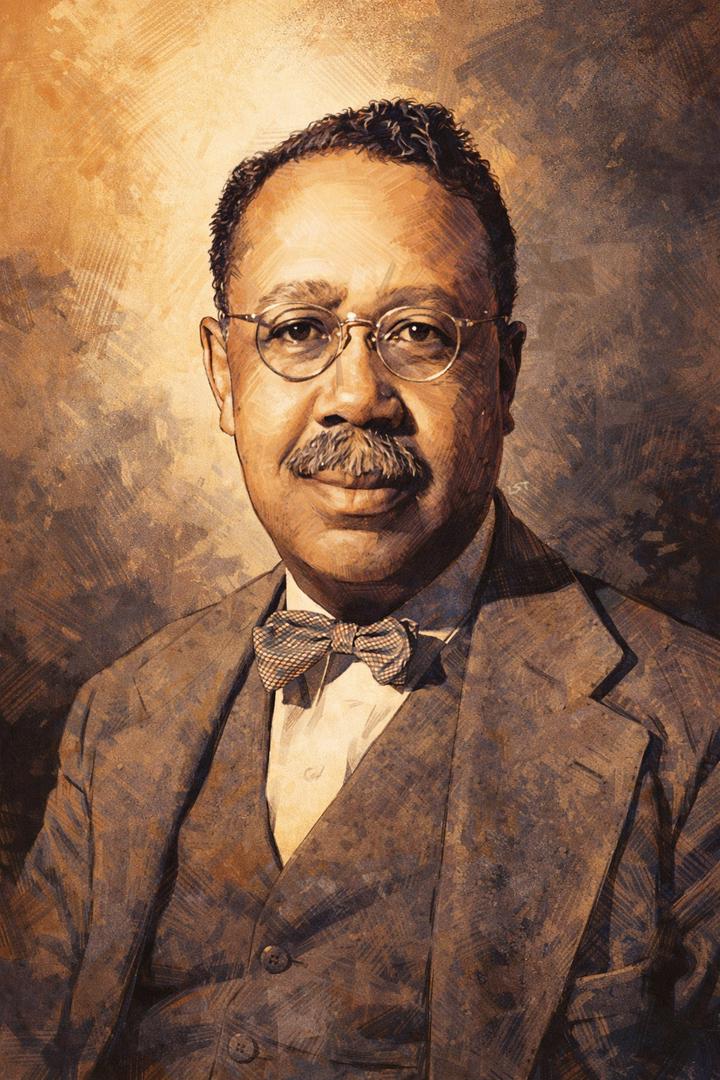
W.C. Handy, Blues Legend

On November 16, 1873, Florence, Alabama welcomed W. C. Handy… the man who turned the everyday sounds of Black life into the written language of the blues. He didn’t invent the music our people were already creating. He honored it. He organized it. He made sure the world could finally recognize what had been here all along. With songs like “Memphis Blues” and “St. Louis Blues,” Handy opened the door for generations of artists to walk through. His influence shows up in everything from soul to jazz to rock to gospel… the entire family tree. Remembering him today is simple. Give credit to the blueprint behind the music we hear everywhere. Handy made sure those roots didn’t disappear. #WCHandy #OnThisDay #MusicHistory #BluesLegend #AmericanMusic #CulturalRoots #BlackMusicalHeritage #TheBlueprint #HistoryPost #LataraSpeaksTruth

W.C. Handy, Blues Legend
Tag: OnThisDay - Page 12 | LocalAll