Tag Page OnThisDay

#OnThisDay
LataraSpeaksTruth

January 1, 1931 marks a quiet but serious turning point in American history. Charles Hamilton Houston becomes vice-dean of Howard University School of Law and almost immediately reshapes it into something more than a classroom. He builds a legal training ground with a single purpose: strategy. Houston understood that segregation would not fall simply because it was unjust. It would fall only if it could be proven unconstitutional. So he trained lawyers to work with discipline and precision, to identify weaknesses in the law, document inequality in detail, and build cases strong enough to force the courts to act. This was not protest law. It was methodical law. Students were sent into the South to gather evidence, photograph conditions, interview communities, and expose how “separate but equal” failed in practice. Houston demanded excellence because he knew the stakes. Courts move slowly and only when the record leaves them no alternative. That strategy later became the legal foundation for cases like Brown v. Board of Education. Lawyers such as Thurgood Marshall did not emerge by chance. They were shaped by years of deliberate training and long-term planning. January 1, 1931 reminds us that some of the most important changes in history do not arrive with noise. They begin quietly, in classrooms, with patience, discipline, and a clear understanding of how power actually works. #January1 #OnThisDay #AmericanHistory #LegalHistory #HowardUniversity #CivilRightsHistory #BlackHistory #LongGame #QuietPower

LataraSpeaksTruth

Mob Attempts Lynching Near the U.S. Capitol (1909)

In October 1909, a mob surrounded a Washington, D.C. jail demanding that officers hand over a 26-year-old Black man named Walter Ford, who had been accused of a crime near Landover, Maryland. The mob grew to more than one hundred people and camped outside through the night, armed and ready for violence. Police calmed the situation by promising to turn Ford over in the morning, but when daylight came, the mob had dispersed and Ford was never surrendered. This attempted lynching, just blocks from the U.S. Capitol, revealed how deeply racial violence had spread across the country, even in the nation’s capital. It serves as a reminder that equality under the law was still an unfulfilled promise for many Black Americans at the time. #OnThisDay #BlackHistory #AmericanHistory

Mob Attempts Lynching Near the U.S. Capitol (1909)
LataraSpeaksTruth

Born in 1942, Marlena Shaw came out of the jazz tradition sharp, politically aware, and unapologetically Black in her sound and subject matter. She could swing with the best of them, but she also spoke directly to the conditions of the time. Songs like Woman of the Ghetto didn’t whisper social commentary…they stated it plainly. Poverty, neglect, dignity, and survival weren’t metaphors in her music. They were facts. Then there’s California Soul…a song that somehow managed to be joyful, defiant, and timeless all at once. It became an anthem not because it chased trends, but because it captured a feeling that never left. Decades later, hip hop heard what jazz heads already knew. Marlena Shaw’s voice had weight. Her phrasing had attitude. Her tone carried authority. That’s why her work has been sampled by generations of artists who recognized the power embedded in her sound. She existed in that sacred space between jazz, soul, and social consciousness. Never overexposed. Never watered down. Just solid. Just real. Marlena Shaw didn’t need chart domination to leave fingerprints on the culture. She left echoes instead…and echoes last longer. Her passing on January 19 feels less like an ending and more like a reminder. Some voices don’t fade. They circulate. They resurface. They keep teaching new listeners what substance sounds like. Rest well to a woman who sang with purpose and never begged for permission. #MarlenaShaw #CaliforniaSoul #WomanOfTheGhetto #JazzHistory #SoulMusic #MusicLegacy #SampledNotForgotten #OnThisDay #GiveHerHerFlowers

LataraSpeaksTruth

William Augustus Hinton 1883 to 1959 was a pioneering bacteriologist, pathologist, and educator whose work helped shape modern public health in the United States. Born on December 15, 1883, Hinton came of age during a time when medical education and scientific research were largely inaccessible to Black Americans. Despite those barriers, he earned his degrees at Harvard University and went on to make contributions that would save countless lives. Hinton is best known for developing what became known as the Hinton test, a blood test used to detect syphilis. At a time when existing tests were often unreliable, his method stood out for its accuracy and consistency. The test was adopted widely by public health departments and hospitals across the country, becoming a standard tool in disease detection and prevention. Beyond the laboratory, Hinton was a dedicated educator. He taught at Harvard Medical School for decades, training generations of physicians in bacteriology and pathology. In 1949, after years of teaching and research, he became the first Black professor in Harvard’s history, a milestone that reflected not a sudden breakthrough but a lifetime of quiet excellence. Hinton also authored a major medical textbook that further shaped laboratory medicine and public health practice. His legacy lives not only in scientific innovation but in the doors he opened through persistence, rigor, and commitment to saving lives. #WilliamAugustusHinton #MedicalHistory #PublicHealth #HarvardHistory #BlackExcellence #HiddenFigures #ScienceHistory #OnThisDay #HealthInnovation #LaboratoryMedicine

LataraSpeaksTruth

Browder v. Gayle on November 13: The Case That Broke Bus Segregation but Revealed Deeper Fault Lines

On November 13, 1956, the United States Supreme Court upheld a federal ruling in Browder v. Gayle, a decision that struck down Alabama’s bus segregation laws and reshaped public transportation practices in Montgomery. The case was built on the earlier arrests of Aurelia Browder, Claudette Colvin, Susie McDonald, and Mary Louise Smith, four Black women whose experiences formed the legal foundation of the challenge months before Rosa Parks became widely recognized. Their involvement secured a critical breakthrough, but their stories were pushed to the margins for decades due to concerns about how the public would judge their age, backgrounds, or personal circumstances. Even after the legal victory, the reality on the ground was far more complicated. Some Black riders faced harassment from bus drivers, intimidation from segregationist groups, and increased police surveillance in their neighborhoods. Local officials delayed enforcement, and white citizens’ councils organized resistance campaigns meant to discourage further challenges to entrenched customs. Browder v. Gayle ended the legal mandate for separation on buses, yet the backlash made it clear that changing a law did not change the hostility aimed at those who demanded equal treatment. The decision shifted policy, but daily life revealed how long it would take for the community to feel the impact of that victory. #BlackHistory #OurStory #HiddenHistory #FullContext #OnThisDay #NewsBreakCommunity

Browder v. Gayle on November 13: The Case That Broke Bus Segregation but Revealed Deeper Fault Lines
LataraSpeaksTruth

Edward Brooke’s journey didn’t begin with a viral moment or a spotlight. It began at Howard University, where he earned his undergraduate degree in 1941 at a time when Black excellence was expected to survive quietly, not be celebrated. Howard wasn’t just a campus. It was a proving ground for minds forced to understand systems never designed for them. Brooke left with discipline and direction, then stepped into World War II, serving as a U.S. Army officer and returning home with a Bronze Star and a sharper understanding of the country he was expected to serve. After the war, Brooke earned his law degree from Boston University School of Law in 1948. No shortcuts. No favors. Just credentials, patience, and persistence layered over experience. That steady climb carried him somewhere the system never expected him to land. In 1966, Edward Brooke became the first Black U.S. senator elected by popular vote. Not appointed. Not inherited. Voted in. By the people. In Massachusetts. His rise mattered because it wasn’t loud. It was deliberate. He didn’t break the system with spectacle. He forced it to acknowledge him through preparation and endurance. In a country built to block the stairs, he climbed them anyway. Step by step. Howard wasn’t the finish line. It was the foundation. And the rest of the story proves that history doesn’t always announce itself. Sometimes it shows up early, does the work quietly, and waits decades for the room to change. #OnThisDay #December11 #EdwardBrooke #HowardUniversity #BostonUniversityLaw #USHistory #PoliticalHistory #CivilRightsEra #BlackExcellence

LataraSpeaksTruth

Wilson Pickett did not sing quietly. He didn’t ask permission. He arrived loud, sharp, and unapologetic, and soul music was never the same after that. Known as “Wicked” Wilson Pickett, he helped define the raw, gritty sound that turned Southern soul into a force that could not be ignored. Born in Alabama and shaped by church, Pickett carried gospel fire straight into secular music. His voice had grit in it, pain in it, and joy too, often all in the same breath. When he recorded In the Midnight Hour, it became more than a hit…it became a blueprint. The song captured movement, urgency, and desire in a way that felt physical. You didn’t just hear it. You felt it. Then came Mustang Sally, a track that still refuses to age out. Pickett’s delivery turned a simple story into an anthem, powered by his unmistakable shout-singing style. His performances were explosive, driven by emotion rather than polish, and that was the point. Soul music wasn’t meant to be neat. It was meant to be honest. Pickett recorded for Stax and Atlantic during soul music’s most influential years, working with legendary musicians and producers who recognized that his voice didn’t need restraint. It needed room. Across the 1960s and early 1970s, he released a string of records that blended gospel roots, Southern rhythm, and a hard edge that pushed soul forward. When Wilson Pickett passed away on January 19, 2006, at age 64, it marked the loss of a voice that helped shape American music. But his sound didn’t leave. It stayed in the grooves, the shouts, the call-and-response energy that still echoes through modern music. Some voices fade. His still kicks the door open. #WilsonPickett #SoulMusic #MusicHistory #RAndBSoul #AmericanMusic #Legends #OnThisDay #MidnightHour #MustangSally

LataraSpeaksTruth

The First Black Heisman Winner… Ernie Davis Makes History (1961)

In 1961, Ernie Davis changed the entire landscape of college sports without raising his voice or asking for permission. Syracuse University’s star running back became the first Black athlete to win the Heisman Trophy… and that moment hit a lot harder than a highlight reel. Davis was one of those players who made the game look easy. Smooth balance, impossible strength, and the kind of vision that made defenses question their life choices. But behind all that talent was a young man pushing through barriers that had been in place for generations. College football was still wrestling with segregation and resistance, and a lot of doors were never meant to open for athletes who looked like him. Yet he walked right through them. His Heisman win wasn’t just about statistics or a shiny award. It was a shift… a crack in a wall. Davis stood on that stage in New York City representing every player who had been told “not yet” or “not here.” He was drafted first overall into the NFL, but leukemia took his life before he could ever take the field. He was only 23. Even so, his story didn’t fade. Syracuse retired his number, and generations of players still see him as proof that purpose shows up even when the world tries to look away. Today, his legacy still stands tall: talent, dignity, and impact that reaches far past the field. #ErnieDavis #Heisman #SportsHistory #BlackAthletes #OnThisDay #LataraSpeaksTruth

The First Black Heisman Winner… Ernie Davis Makes History (1961)
LataraSpeaksTruth

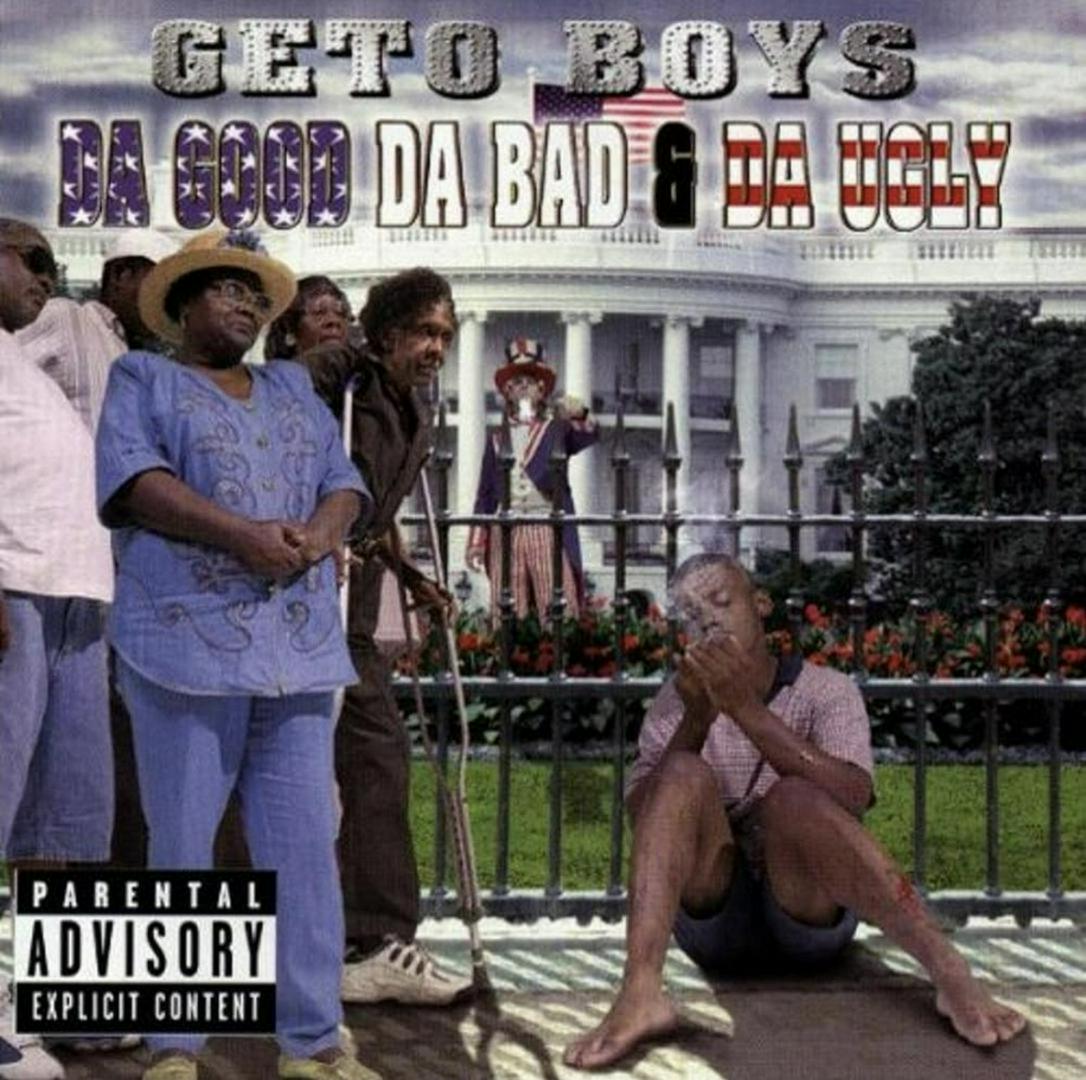
Geto Boys Drop Da Good, Da Bad & Da Ugly… The South Spoke Loud

On November 17, 1998, the Geto Boys came back with Da Good, Da Bad & Da Ugly, a project carved straight out of the Southern hip-hop landscape they helped build. Houston had already claimed its voice thanks to them… raw, unfiltered, and unapologetically Southern, but this album showed the world that the South wasn’t a “side conversation” anymore. It was the main stage. The album held that signature Geto Boys energy… dark storytelling, sharp social commentary, and the kind of life observations you only get from people who’ve seen both sides of the street. Even with lineup changes, the crew held on to what made them legendary in the first place… honesty, edge, and a refusal to water anything down for mainstream comfort. By the late ‘90s, hip-hop was shifting fast, but the Geto Boys reminded everybody that Southern rap didn’t need approval to be iconic. They were already stamped. Already respected. Already shaping the direction of a whole region. Da Good, Da Bad & Da Ugly stands as one of those albums that marks a moment… the South saying “we’re here, we’re staying, and we’re not taking our foot off nothing.” #HipHopHistory #GetoBoys #SouthernRap #HoustonLegends #OnThisDay #BlackMusicHistory #LataraSpeaksTruth #CultureStories #Lemon8Creator #1998Vibes

Geto Boys Drop Da Good, Da Bad & Da Ugly… The South Spoke Loud