Tag Page OurHistory

#OurHistory
LataraSpeaksTruth

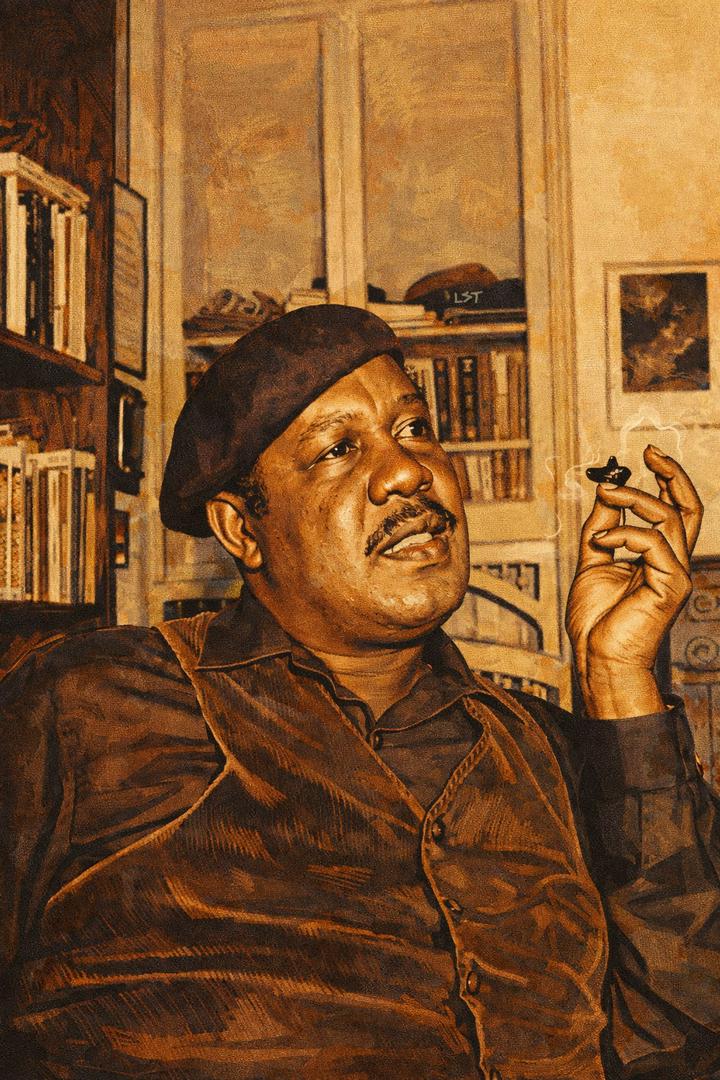
Ernest J. Gaines wrote with the patience of someone who understood that stories do not rush to prove themselves. His work captured rural Louisiana life with restraint, moral clarity, and deep respect for ordinary people carrying extraordinary weight. He did not write spectacle. He wrote consequence. Family, justice, responsibility, memory, and community sat at the center of his work, shaped by oral tradition and lived experience rather than literary trend. Gaines spent his earliest years in a plantation community in Oscar, Louisiana, absorbing the rhythms of storytelling passed down through elders who spoke plainly and with purpose. That foundation never left him, even after he moved to California as a teenager. The South remained present in his voice, not as nostalgia, but as truth. His characters were farmers, teachers, elders, and young men navigating dignity under pressure, each written with care rather than judgment. Born January 15, 1933, Gaines would go on to become one of the most respected American novelists of the twentieth century. His best known works include The Autobiography of Miss Jane Pittman and A Lesson Before Dying, stories that reached wide audiences through film and television adaptations. A Lesson Before Dying earned major literary recognition and became a staple in classrooms for its quiet examination of humanity and moral choice. Ernest J. Gaines passed away in 2019, but his voice remains steady. He proved that rural stories matter, that oral tradition belongs on the page, and that power does not need volume to endure. #ErnestJGaines #AmericanLiterature #LiteraryHistory #SouthernStories #BlackAuthors #GiveHimHisFlowers #OurHistory

LataraSpeaksTruth

In 1944, Harriet Ida Pickens and Frances Elizabeth Wills made history as the first Black women commissioned as officers in the United States Navy. Their achievement came through the WAVES program, which stood for Women Accepted for Volunteer Emergency Service. The program had been created during World War II to allow women to serve in the Navy, but Black women were initially excluded. For years, the Navy resisted allowing them into the program. That changed in October 1944 when the Navy finally opened the WAVES program to Black women after pressure from civil rights advocates and the growing demand for personnel during the war. Harriet Pickens and Frances Wills were among the first selected for officer training. Both women attended the U.S. Naval Reserve Midshipmen’s School at Smith College in Northampton, Massachusetts. In December 1944, they completed their training and were officially commissioned as officers in the United States Navy. Harriet Ida Pickens came from a family known for leadership and public service. She was the daughter of William Pickens, a prominent civil rights leader connected to the NAACP. Frances Wills was a trained social worker who later documented her experience in her memoir Navy Blue and Other Colors. Their commissioning did not immediately end discrimination inside the military. Opportunities for Black service members remained limited and segregation still existed across much of the armed forces. Even so, their presence in uniform marked an important turning point. Harriet Ida Pickens and Frances Wills showed that Black women could serve as leaders in roles the Navy had long denied them. Their achievement in 1944 remains an important milestone in the history of military service and expanding opportunity. #OurHistory #HarrietIdaPickens #FrancesWills #MilitaryHistory #WomensHistory #LataraSpeaksTruth

LataraSpeaksTruth

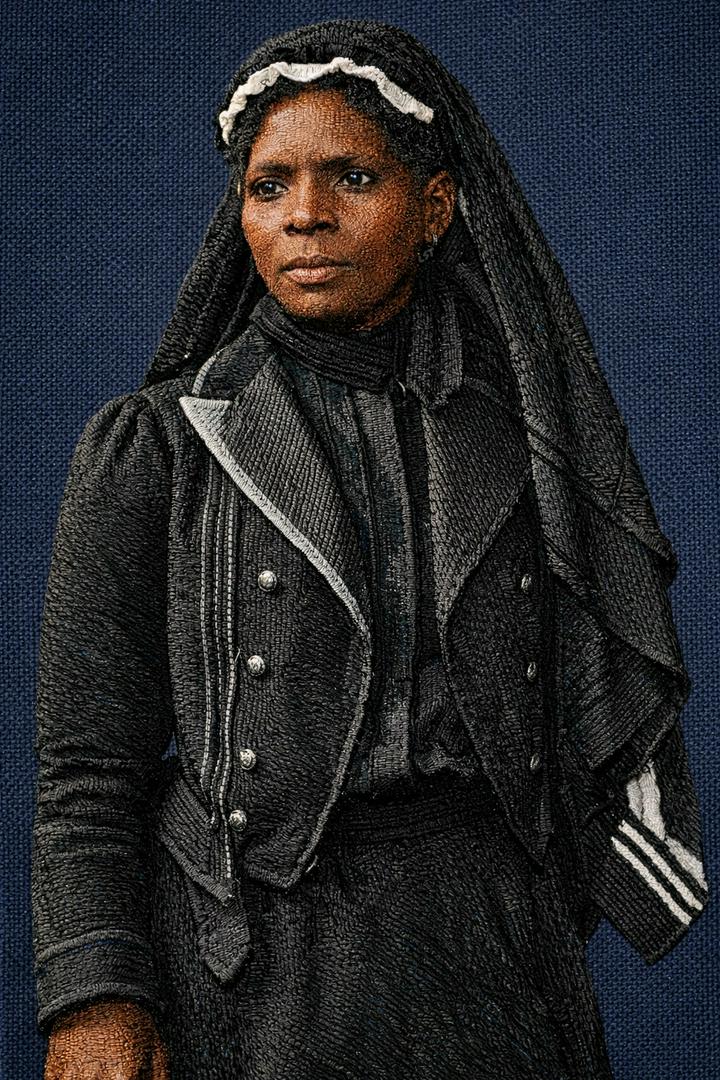
Some names get monuments. Others get buried in the footnotes. Susie King Taylor deserves better. Born enslaved in coastal Georgia in 1848, she learned to read and write in secret, a bold act in a world designed to keep her silent. When the Civil War cracked open a narrow door to freedom, she walked through it as a teenager, making her way to Union lines on the Sea Islands. Freedom did not mean rest. She began teaching immediately, helping newly freed children and adults claim what slavery tried hardest to steal…education, voice, and self possession. She soon worked alongside the 1st South Carolina Volunteers, also known as the 1st South Carolina Colored Infantry, one of the earliest Black regiments fighting for the Union. Later, that unit was reorganized and redesignated as the 33rd United States Colored Troops. On official records she was listed as a laundress. In lived reality she was a teacher, a caregiver, and a nurse to soldiers facing disease, wounds, hunger, and exhaustion. She did the kind of work that keeps people alive, even when the system refused to fully recognize it, or compensate it with the respect it deserved. After the war, she kept serving her community through teaching and organizing, including support for veterans through the Women’s Relief Corps in Boston. Even then, honor came slow, and benefits did not match the sacrifice. But she left proof. In 1902, she published her memoir Reminiscences of My Life in Camp, a rare first person account from a Black woman who lived the war beside Black troops and recorded what she saw, what she did, and what they endured. Her words are not rumor, not legend, not somebody else telling the story for her. They are testimony. Susie King Taylor died in Boston on October 6, 1912, and was buried at Mount Hope Cemetery. Her story is still breathing. If we say we care about history, we have to care about the people who kept it, even when nobody was clapping. #SusieKingTaylor #OurHistory #HiddenFigures

LataraSpeaksTruth

Born on July 2, 1925, in Decatur, Mississippi, Evers grew up in a state where segregation shaped nearly every part of daily life. After serving in the United States Army during World War II, he returned home determined to build a better future. He later attended Alcorn Agricultural and Mechanical College, where he studied business administration and became active in student leadership. In 1954, Evers became the NAACP’s first field secretary in Mississippi. In that role, he traveled across the state organizing local branches, encouraging voter registration, investigating racial violence, and helping challenge segregation in schools and public spaces. His work placed him on the front lines of one of the most dangerous battles in the South. Evers also helped investigate the 1955 murder of Emmett Till and worked to expose the brutal realities Black families faced in Mississippi. He pushed for equal access to education, fought discriminatory laws, and worked to expand basic rights that had long been denied. Because of his work, Evers lived under constant threat. His home was attacked, his family lived with fear, and he knew that speaking openly against injustice could cost him his life. Still, he refused to step away from the work. On June 12, 1963, Medgar Evers was assassinated outside his home in Jackson, Mississippi. His murder shocked the nation and became one of the defining tragedies of the civil rights era. Though his life was cut short, his courage left a lasting mark on American history. Medgar Evers is remembered not only as a leader, but as a man who kept showing up for the work even when the danger was clear. His legacy lives on in the continued fight for justice, dignity, and equal protection under the law. #OurHistory #MedgarEvers #AmericanHistory #CivilRightsHistory #LataraSpeaksTruth

You've reached the end!