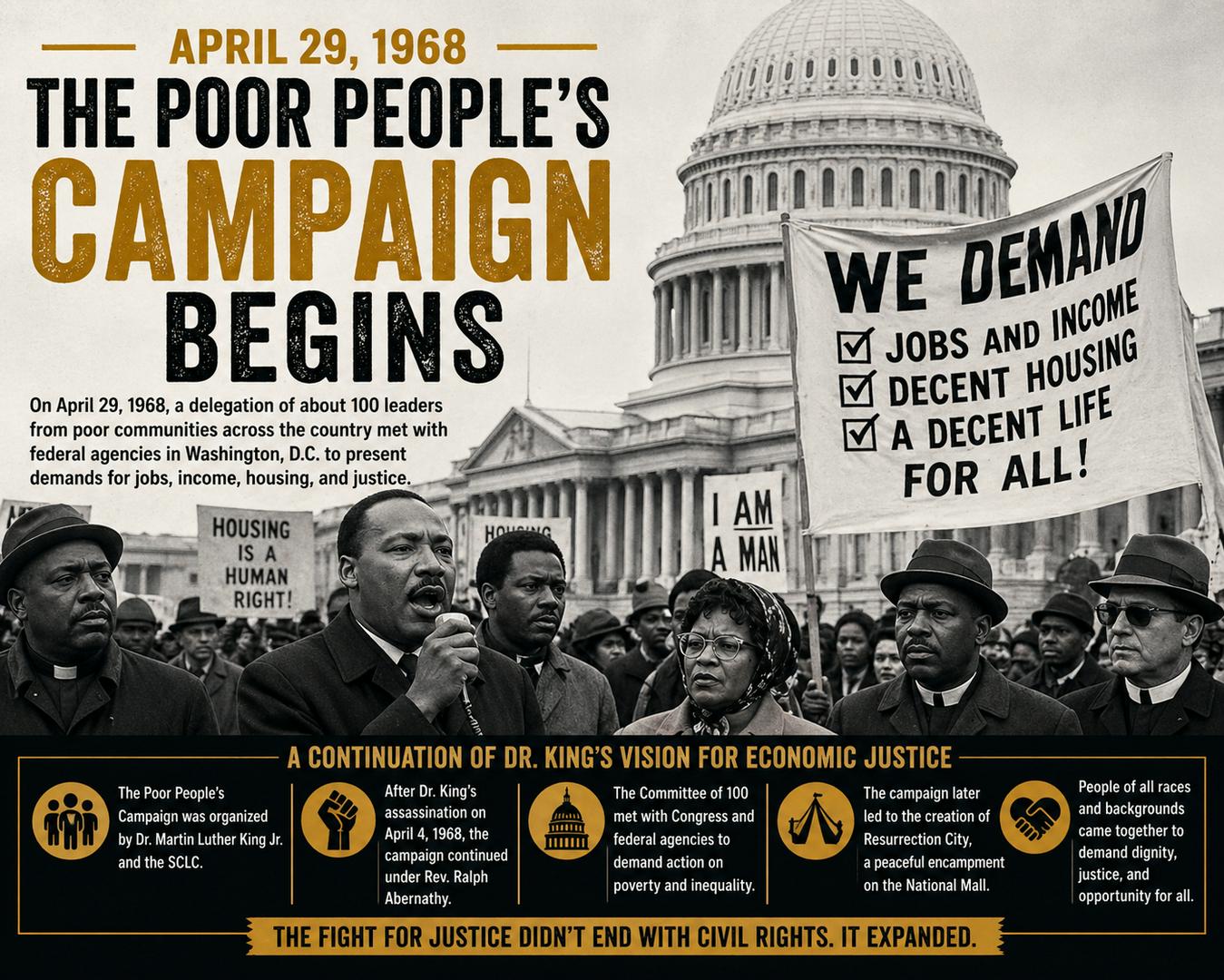
On April 29, 1968, the Poor People’s Campaign moved into a new public phase in Washington, D.C., when a group known as the Committee of 100 began meeting with members of Congress and federal agencies.
The campaign had been planned by Dr. Martin Luther King Jr. and the Southern Christian Leadership Conference as a national effort to confront poverty in America. King had argued that legal rights alone were not enough if people were still trapped without jobs, decent housing, food, education, or a secure income.
After King was assassinated on April 4, 1968, the campaign continued under the leadership of Rev. Ralph Abernathy and other SCLC organizers. The goal was to bring poor people from across the country to the nation’s capital and force the federal government to face the conditions millions of Americans were living under.
The Committee of 100 included representatives from poor communities across racial and regional lines. The campaign brought together Black, white, Latino, Native American, and other poor Americans who were demanding economic justice.
Their demands included jobs at living wages, income support for those unable to work, affordable housing, emergency food assistance, collective bargaining rights for farmworkers, and stronger federal action against poverty.
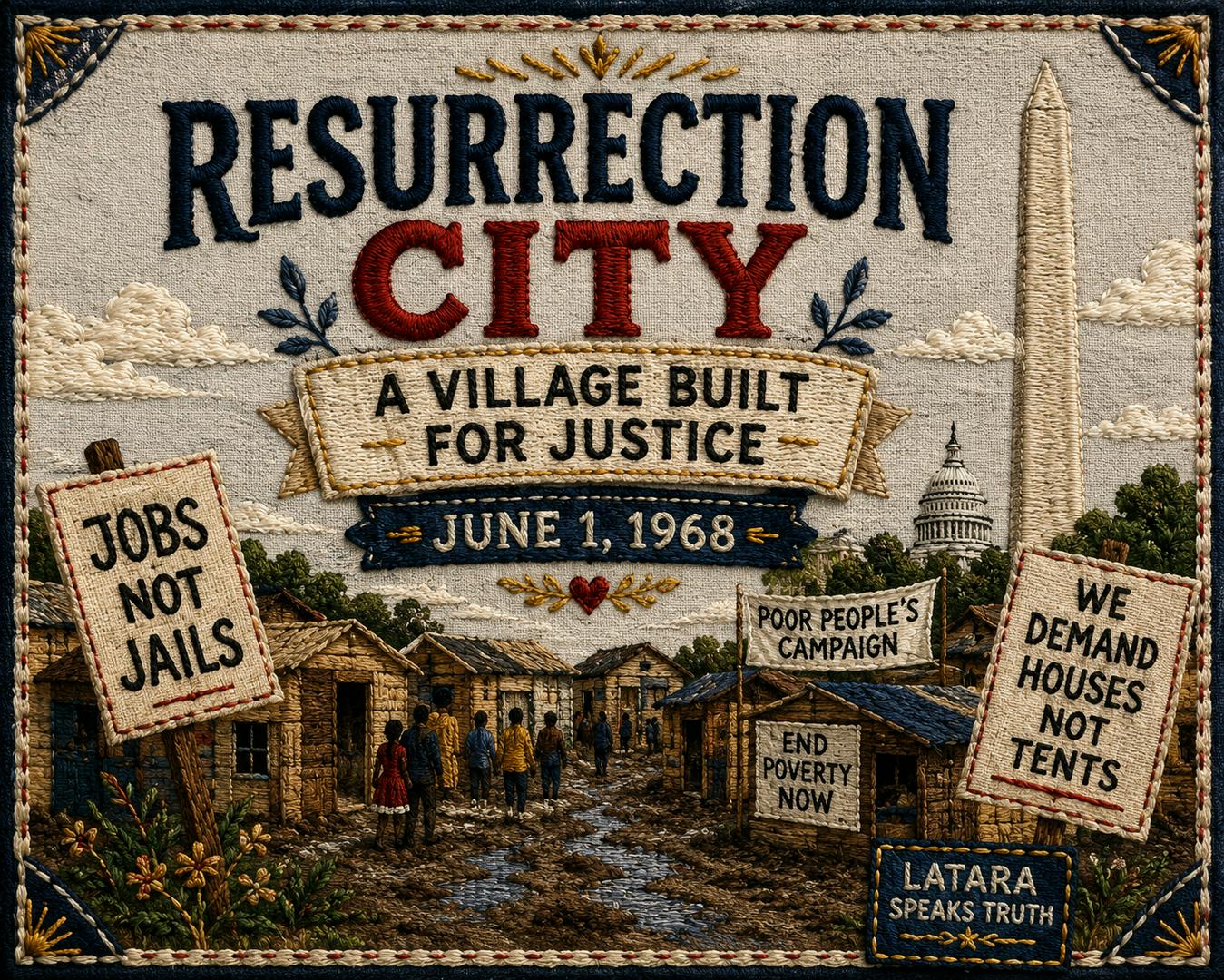
The campaign later led to the building of Resurrection City, a protest encampment on the National Mall where demonstrators lived for weeks while pressing the government to respond.
The Poor People’s Campaign was one of Dr. King’s final visions. It showed that his work was not only about ending segregation. It was also about challenging the economic systems that left families hungry, workers underpaid, and communities ignored.
April 29, 1968 marked the start of that direct push in Washington. It was a reminder that the fight for dignity included the right to live, work, eat, and be housed with basic human respect.
#BlackHistory #PoorPeoplesCampaign #MLKLegacy #EconomicJustice #OnThisDay