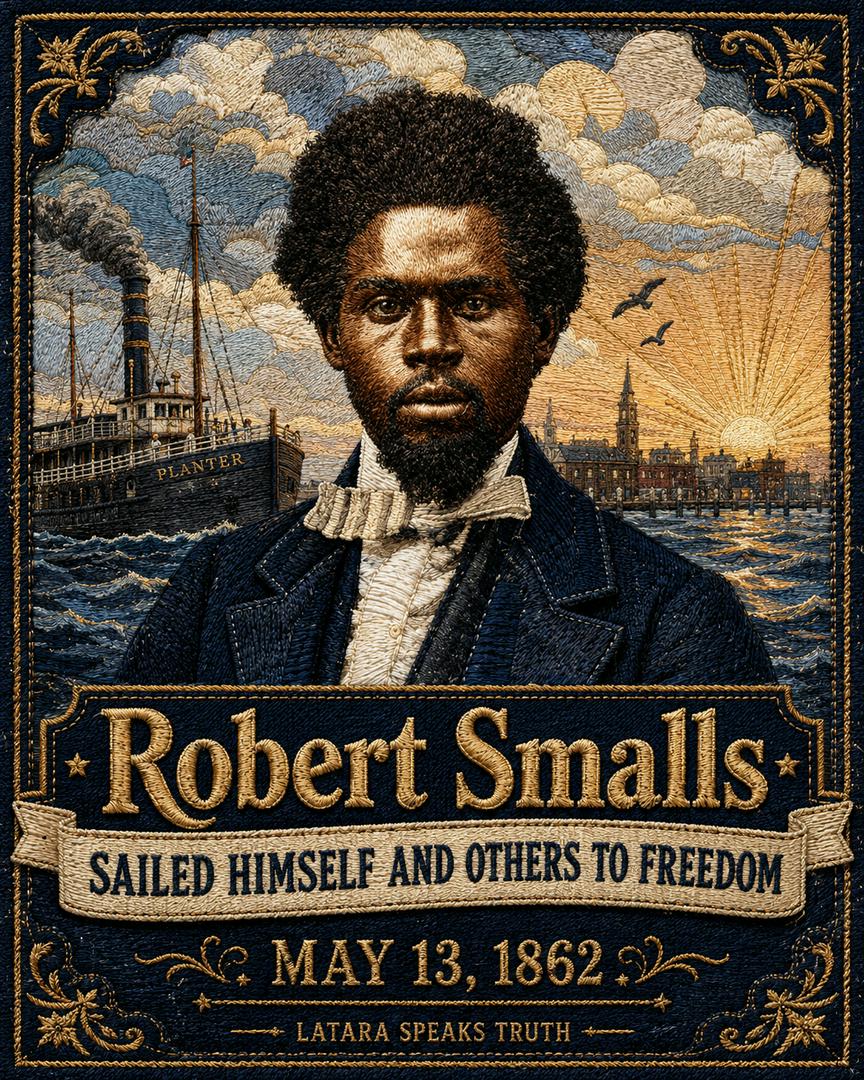
May 13, 1862… Robert Smalls turned a Confederate ship into a vessel of freedom.
Robert Smalls was enslaved in Charleston, South Carolina, but he was no ordinary passenger in history. He worked as a skilled pilot aboard the Confederate steamer Planter, learning the waters, signals, routes, and habits of the men who thought they controlled him.
In the early morning hours of May 13, Smalls and other enslaved crew members made a bold move. While the white officers were away from the ship, they took control of the Planter. Smalls used his knowledge of Confederate routines to guide the vessel through Charleston Harbor, passing checkpoints and heavily armed defenses.
This was not just an escape. It was strategy. It was courage under pressure. It was a man using every skill he had been forced to learn and turning it into a path toward freedom.
The Planter carried more than the men who worked aboard it. It carried families, including women and children, all risking death for a chance to live free. The group made it through Confederate waters and reached the Union blockade that morning. According to the National Park Service, about sixteen freedom seekers escaped aboard the ship.
Smalls did not only free himself. He helped free others. He also delivered the Planter and valuable Confederate materials to Union forces, proving that Black courage and intelligence were already shaping the war long before the nation was ready to fully admit it.
His story did not end on the water. Robert Smalls later became a Civil War hero, a public servant, and a Reconstruction-era political leader. He served in Congress and became one of the most important figures to rise from slavery into national leadership.
May 13 matters because Robert Smalls showed what freedom looked like before it was handed down on paper. He did not wait for someone to write his future. He sailed straight into it.
#RobertSmalls #BlackHistory #CivilWarHistory #FreedomStory