A lot of people may not like these posts, but I’ve never been one to give a damn.
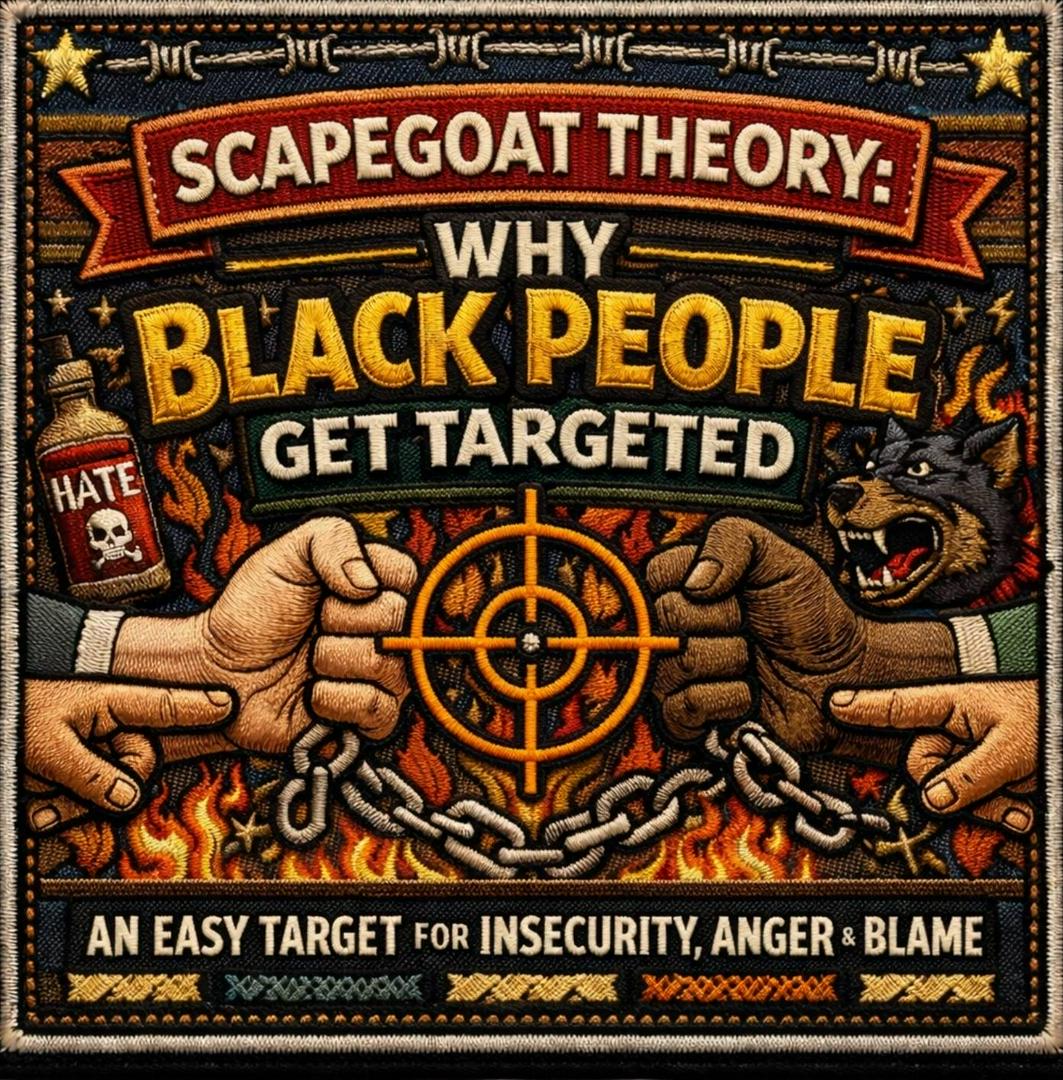
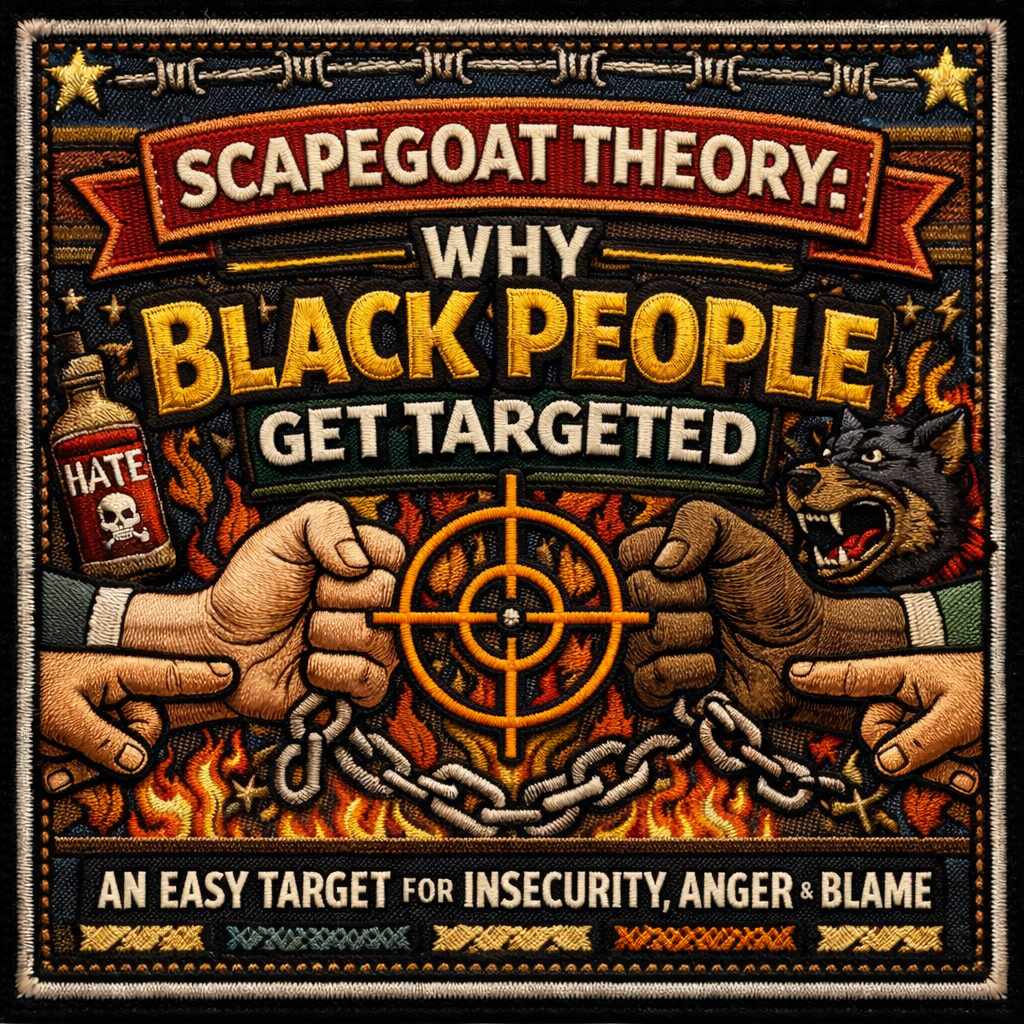
Researchers have spent years trying to understand why certain groups become long term targets of obsession, hostility, and blame. One of the clearest explanations is something called scapegoat theory.
Scapegoat theory says when people feel powerless, angry, insecure, or dissatisfied with their own lives, they often go looking for somebody to dump that frustration on. Instead of confronting the real source of their problems, they pick a target. Somebody visible. Somebody already stereotyped. Somebody society has made easy to blame.
In the United States, Black people have been forced into that role again and again.
That is why the pattern feels so constant. It is not always about what a Black person did. A lot of the time, it is about what Black people represent in the minds of people who are already full of fear, resentment, and ignorance. For generations, Black people have been blamed for problems they did not create, watched like threats, copied for culture, and hated for existing with confidence, presence, talent, and truth.
That is what scapegoating does. It strips people of their humanity and turns them into a dumping ground for other people’s issues.
When society is under pressure, when people are struggling, when change is happening, the same ugly habit shows up. Instead of asking real questions about power, inequality, leadership, or broken systems, some people reach for the easiest target they think they can get away with attacking. And too often, that target has been Black people.
So when folks act like this obsession came out of nowhere, no. It has a name. It has a pattern. And it has a long history.
Scapegoating is not truth. It is projection. It is weakness dressed up as judgment. And once you understand that, a lot of this behavior starts making sick, predictable sense.
#ScapegoatTheory #Psychology #SocialIssues #BlackVoices #Culture #History