Tag Page ScienceFacts

#ScienceFacts
The Story Behind...

Dry skin has been around as long as humans have. The moment early people stepped out into the sun, wind, cold, and dusty air… boom, their skin was fighting for moisture. But the real story starts with how the skin is built. The top layer of your skin, the stratum corneum, is basically a wall made of dead cells stacked like bricks, with natural oils acting as the “mortar.” When that oil disappears? The wall cracks. And that’s what we call dryness. Ancient civilizations were battling dry skin way before lotions existed. Egyptians used olive oil, honey, milk, and animal fats to keep their skin soft in the desert heat. Greeks used beeswax balms. Romans soaked in baths with oils afterward so the skin wouldn’t flake. Even in early African cultures, people used shea butter long before the beauty industry “discovered” it. But why do we get dry today? Modern life makes it worse. Hot showers strip oils. Winter air steals humidity. Indoor heating dries the skin out faster. Soap (especially cheap soap) rips away protective oils. Even genetics can decide if you stay moisturized or look like you’ve been rolling in flour. By the 1900s, scientists finally figured out that skin needs both water AND oil to stay healthy. That’s when commercial lotions started showing up, using things like glycerin, lanolin, petroleum jelly, and plant butters. Today, the skincare industry is worth billions… all because humans never stopped trying to fix the same simple problem our ancestors faced: staying moisturized. Dry skin isn’t just about looks… it’s a window into how our bodies try to protect us. And the solutions we use now? They’re all rooted in what people were trying thousands of years ago. The ancient problem that turned into a billion-dollar industry. #TheStoryBehind #DrySkin #SkinFacts #EverydayHistory #HealthFacts #DidYouKnow #ScienceFacts #SkincareHistory #LearnOnNewsBreak

The Story Behind...

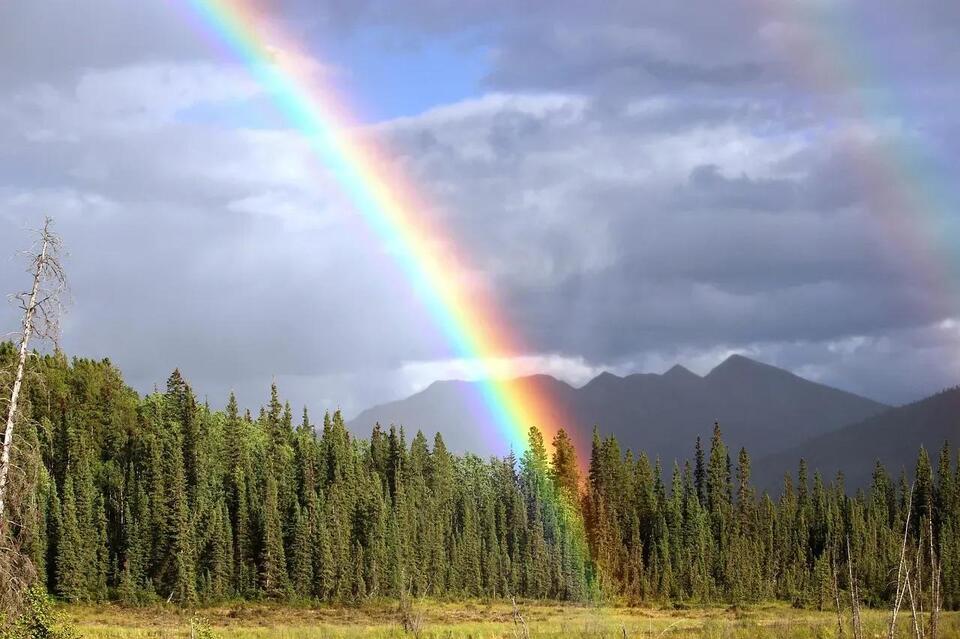
Rainbows have been a symbol of hope, mystery, and magic for thousands of years. Long before scientists understood how light worked, ancient people created stories to explain the colorful arc in the sky. Some believed rainbows were bridges between worlds. Others said they were messages from the gods, signs of peace after storms, or pathways to good fortune. But the real story behind rainbows comes down to sunlight and raindrops working together. When sunlight enters a raindrop, the light bends, bounces inside the drop, and spreads out into different colors. Each color bends at a slightly different angle, and when millions of drops do this at the same time, the sky paints the familiar arc — red at the top, violet at the bottom. You can only see a rainbow if the sun is behind you and rain is in front of you. That’s why they appear after storms or when sunlight cuts through mist. And no matter how fast you run, you can never reach the end of a rainbow — it’s a circle of light that moves with you. From ancient legends to modern science, rainbows have always been reminders that even after the darkest weather, something beautiful can appear. #TheStoryBehindIt #Rainbows #EverydayHistory #LearnSomethingNew #ScienceFacts #HistoryMadeSimple

justme

Long before anyone asked which came first, the world already had eggs. Hard shelled eggs appeared around 312 million years ago, at a time when early reptiles were just starting to spread across the land. These early creatures needed a way to protect their young outside the water, and the egg became their perfect solution. Over millions of years, different animals kept laying eggs, shaping life in all kinds of environments. Chickens, on the other hand, are very new in the timeline of life. They trace their roots to the red junglefowl of Southeast Asia, a wild bird that humans began domesticating roughly 8000 years ago. Little by little, people selected birds with traits they liked, and these choices slowly turned junglefowl into the chickens we know today. This means the bird that laid the first true chicken egg was not a chicken yet but a bird very close to becoming one through tiny genetic changes. So when people ask the old question of which came first, science makes the answer pretty clear. Eggs existed for hundreds of millions of years before the first chicken ever walked the earth. The classic riddle gets settled by evolution itself, showing how long nature has been experimenting with life and how chickens are only the latest chapter in an ancient story. #history #sciencefacts #WittyHistorian

You've reached the end!
Tag: ScienceFacts | LocalHood