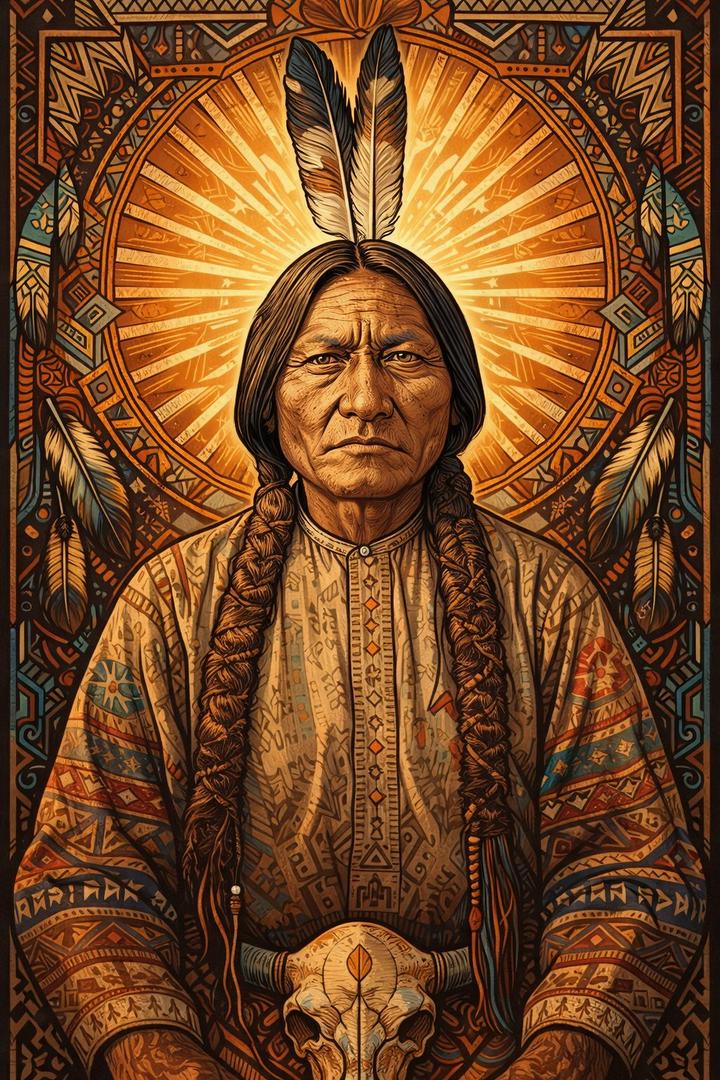
Sitting Bull was a Hunkpapa Lakota leader whose influence extended across spiritual, political, and community life during the late 19th century. Born around 1831, he became widely known for refusing to sign treaties that transferred Lakota land to the United States, particularly after earlier agreements were violated. His opposition centered on the belief that treaties were binding commitments and that forced relocation undermined their legitimacy.
Sitting Bull’s leadership was rooted in consensus rather than formal military authority. While he was associated with resistance during the Plains conflicts of the 1870s, his influence continued well into the reservation era, after large-scale armed resistance had ended. By the late 1880s, Lakota communities were facing severe hardship caused by ration reductions, confinement, and federal assimilation policies.
During this period, the Ghost Dance movement spread among several Native nations. Sitting Bull was not a leader of the movement and did not promote violence, but federal officials viewed his continued influence as a concern amid rising tensions. Surveillance of his activities increased as authorities sought to suppress perceived instability.
On December 15, 1890, U.S. Indian police attempted to arrest Sitting Bull at the Standing Rock Reservation. The arrest was carried out based on concerns about maintaining order rather than any specific criminal charge. Violence broke out during the encounter, and Sitting Bull was killed. No formal inquiry followed to examine the decision-making that led to his death.
His killing did not ease tensions in the region. Instead, instability increased in the weeks that followed, contributing to further military action against Lakota communities. Sitting Bull’s life and death reflect the broader conflict between Native sovereignty and U.S. expansion during a period defined by treaty violations and enforced control.
#SittingBull #Lakota #NativeHistory #USHistory #IndigenousHistory