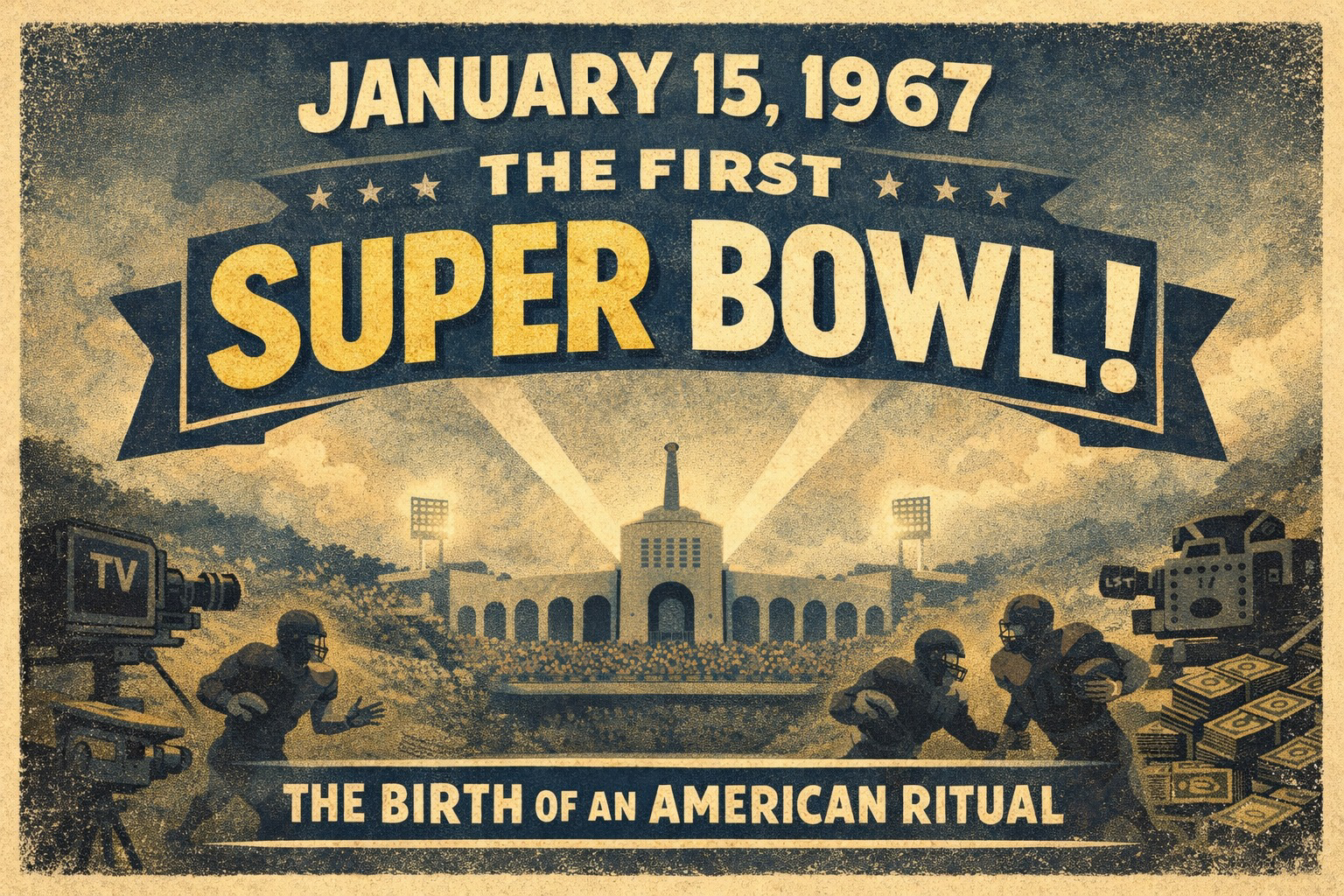
On January 15, 1967, the first championship game between the National Football League and the American Football League was played at the Los Angeles Memorial Coliseum. It was not yet called the Super Bowl. Officially, it was known as the AFL NFL World Championship Game. The name “Super Bowl” existed only as a casual nickname, not yet stamped into culture or commerce.
Few people watching that afternoon understood they were witnessing the birth of what would become the most powerful sports event in American life.
The Green Bay Packers, champions of the NFL, defeated the Kansas City Chiefs, champions of the AFL, 35 to 10 under legendary coach Vince Lombardi. The game itself was not dramatic. The stadium was not sold out. Tickets were inexpensive. Television ads were modest. There was no elaborate halftime show, no nonstop hype, and no sense that history was unfolding.
And yet something permanent clicked into place.
That game marked the true beginning of the modern professional football era. It laid the foundation for a business model built on television dominance, advertising money, and mass spectacle. In the decades that followed, professional football exploded into a cultural and financial force unlike anything American sports had ever seen.
As the league grew, so did its contradictions. Black athletes became the backbone of the sport, driving performance and profits, while ownership and executive power remained largely closed off. The Super Bowl evolved into a celebration on the surface, while deeper questions about labor, race, health, and power lingered beneath it.
Super Bowl I was not about halftime shows or billion dollar commercials. It was about infrastructure. It was the moment sports, media, and capitalism aligned and refused to let go. January 15, 1967 stands as the day professional football stopped being just a game and became a national ritual.
#OnThisDay #January15 #SuperBowlHistory #NFLHistory #AmericanSports #SportsAndCulture #MediaAndMoney