Tag Page SupremeCourt

#SupremeCourt
LataraSpeaksTruth

On May 17, 1954, the United States Supreme Court issued one of the most important education rulings in American history. In Brown v. Board of Education, the Court ruled unanimously that racial segregation in public schools was unconstitutional. The decision struck directly at the old “separate but equal” doctrine that had been used for decades to justify segregated schools. The case is most often connected to Topeka, Kansas, where Oliver Brown challenged the school board after his daughter, Linda Brown, was denied access to a nearby school because she was Black. But Brown v. Board was not just one family’s fight. It brought together several school segregation cases from different states, all pointing to the same truth: separation by race in public education was not equal. Chief Justice Earl Warren delivered the Court’s opinion. The ruling stated that separate educational facilities are inherently unequal and that segregation in public schools violated the Equal Protection Clause of the Fourteenth Amendment. This decision did not magically end school segregation overnight. Many districts resisted, delayed, or fought integration for years. But legally, the foundation had shifted. The highest court in the country had declared that state-mandated school segregation had no place in public education. Brown v. Board of Education became a major turning point in the larger fight for equal rights. It challenged the legal structure that had kept Black children locked out of equal educational opportunities and helped open the door for later civil rights battles. May 17, 1954, was not just a court date. It was a line drawn in American history. The ruling did not solve everything. But it made one thing clear: a school system built on separation could never honestly claim equality. #LataraSpeaksTruth #OnThisDay #BrownVBoard #EducationHistory #BlackHistory #AmericanHistory #CivilRightsHistory #SupremeCourt #HistoryMatters

LataraSpeaksTruth

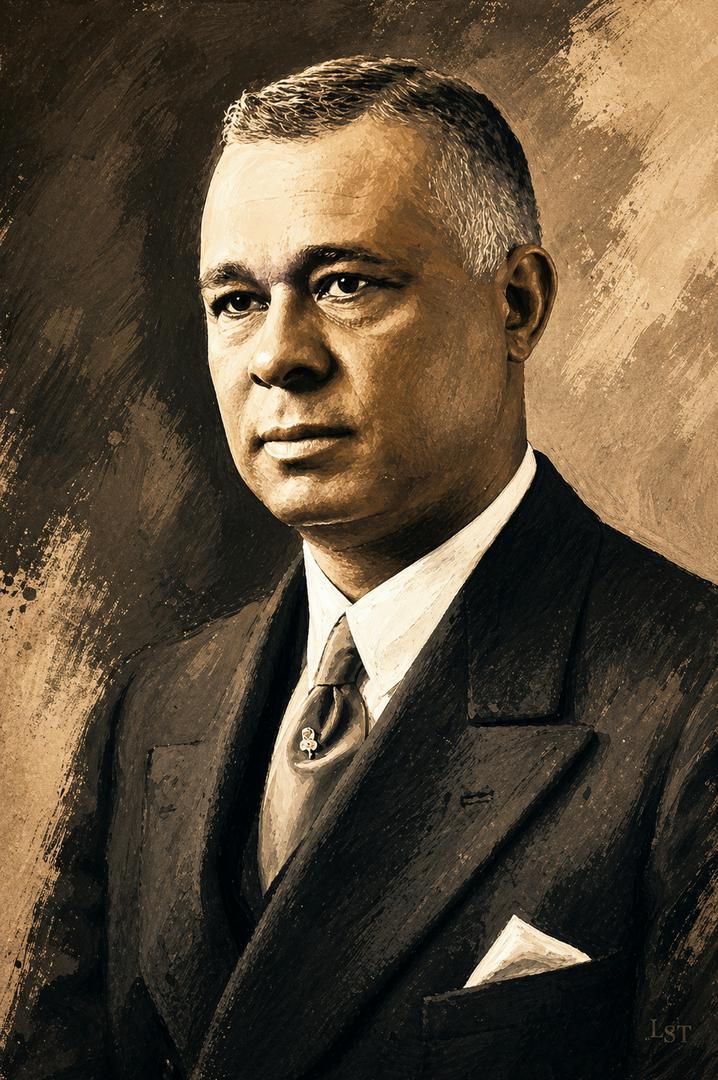
On April 28, 1941, the U.S. Supreme Court handed down a decision that pushed back against racial discrimination in interstate travel. The case centered on Arthur W. Mitchell, a U.S. representative from Illinois and the only Black member of Congress at the time. In April 1937, Mitchell purchased a first-class railroad ticket from Chicago to Hot Springs, Arkansas. But after the train crossed into Arkansas, he was ordered out of the Pullman car because he was Black. Mitchell had paid for first-class travel and offered to pay for the available Pullman seat. Instead, he was forced into a segregated car under threat of arrest. Rather than let the insult disappear into history, Mitchell challenged the treatment through the Interstate Commerce Commission and then the courts. In Mitchell v. United States, the Supreme Court ruled that the discrimination was unlawful under the Interstate Commerce Act. The Court said Black passengers who purchased first-class tickets were entitled to accommodations equal in comfort and convenience to those provided to white passengers. The ruling did not end segregation in America, but it mattered. It came years before Brown v. Board of Education, the Montgomery Bus Boycott, and the Civil Rights Act. Mitchell’s stand helped expose the cruelty and contradiction of Jim Crow in interstate travel. One man bought a ticket. The railroad tried to deny his dignity. The Supreme Court said the law could not excuse that unequal treatment. #BlackHistory #CivilRightsHistory #OnThisDay #SupremeCourt #ArthurMitchell

LataraSpeaksTruth

The Supreme Court once had to decide a case called “Bong Hits 4 Jesus,” and yes, that was real. The case was Morse v. Frederick, decided in 2007. It started in 2002 in Juneau, Alaska, when students were allowed to leave class to watch the Olympic torch relay pass near their school. Joseph Frederick, a high school student, stood across the street with friends and held up a banner that read “Bong Hits 4 Jesus.” Principal Deborah Morse took the banner down and suspended him. She said the message promoted illegal drug use and violated school policy. Frederick argued that his First Amendment rights had been violated because he was not on school property and the banner was not serious political speech. The case eventually reached the U.S. Supreme Court. In a 5 to 4 decision, the Court sided with the principal. The majority ruled that schools may restrict student speech at school-supervised events when the message can reasonably be viewed as promoting illegal drug use. That ruling matters because it showed that students do have free speech rights, but those rights are not unlimited inside school settings. The Court treated the torch relay as a school event because students were released from class and supervised by school staff. But the case was not unanimous. The dissent warned that punishing a student over a vague, silly banner could go too far and weaken free speech protections. Justice John Paul Stevens argued that the message was more nonsense than serious drug advocacy. That is what made the case so strange and important at the same time. A ridiculous banner became a major Supreme Court case about student speech, school authority, and where the First Amendment stops once school supervision begins. The phrase may sound like a joke, but the ruling was not. #SupremeCourt #FirstAmendment #StudentRights #LegalHistory #USHistory #Education

You've reached the end!
Tag: SupremeCourt | LocalAll